Paul Bäumer
Paul Bäumer is the nineteen-year-old narrator and protagonist of Erich Maria Remarque's All Quiet on the Western Front. A German soldier who enlisted with his entire school class under the patriotic pressure of their teacher Kantorek, Paul's first-person account becomes the novel's central consciousness, through which the reader experiences the physical horror of trench warfare, the collapse of pre-war ideals, and the profound, wordless comradeship that alone makes the war endurable. His story is not one of heroic transformation but of systematic destruction—a generation ruined not only by shells and gas but by the impossibility of ever returning to the life they left behind.
Identity and Background
Paul Bäumer is introduced as one of four friends—all nineteen years old, all former classmates who volunteered together for the war. The group includes Albert Kropp, "the clearest thinker among us and therefore only a lance-corporal"; Müller, who still carries his school textbooks and dreams of examinations; and Leer, who wears a full beard and has a preference for girls from officers' brothels. Paul himself is the fourth, and together they form the core of a larger circle that includes Tjaden, a skinny locksmith; Haie Westhus, a peat-digger; Detering, a peasant who thinks of nothing but his farm and his wife; and Stanislaus Katczinsky, the forty-year-old leader of the group, shrewd, cunning, and hard-bitten. Before the war, Paul had begun writing a play called "Saul" and a bundle of poems, and his room at home contains a collection of books—classics bought secondhand, modern works he borrowed and never returned, schoolbooks, and periodicals. This intellectual and artistic life, however, has become utterly unreal to him since he came to the front. The war has cut him off from his early life "without our lifting a hand," leaving him and his fellow twenty-year-olds with nothing but parents and perhaps a girl—"that is not much, for at our age the influence of parents is at its weakest and girls have not yet got a hold over us." Unlike the older men, who have wives, children, and occupations that provide a strong background the war cannot obliterate, Paul and his generation have taken no root; the war has swept them away entirely.
Life and Plot Trajectory
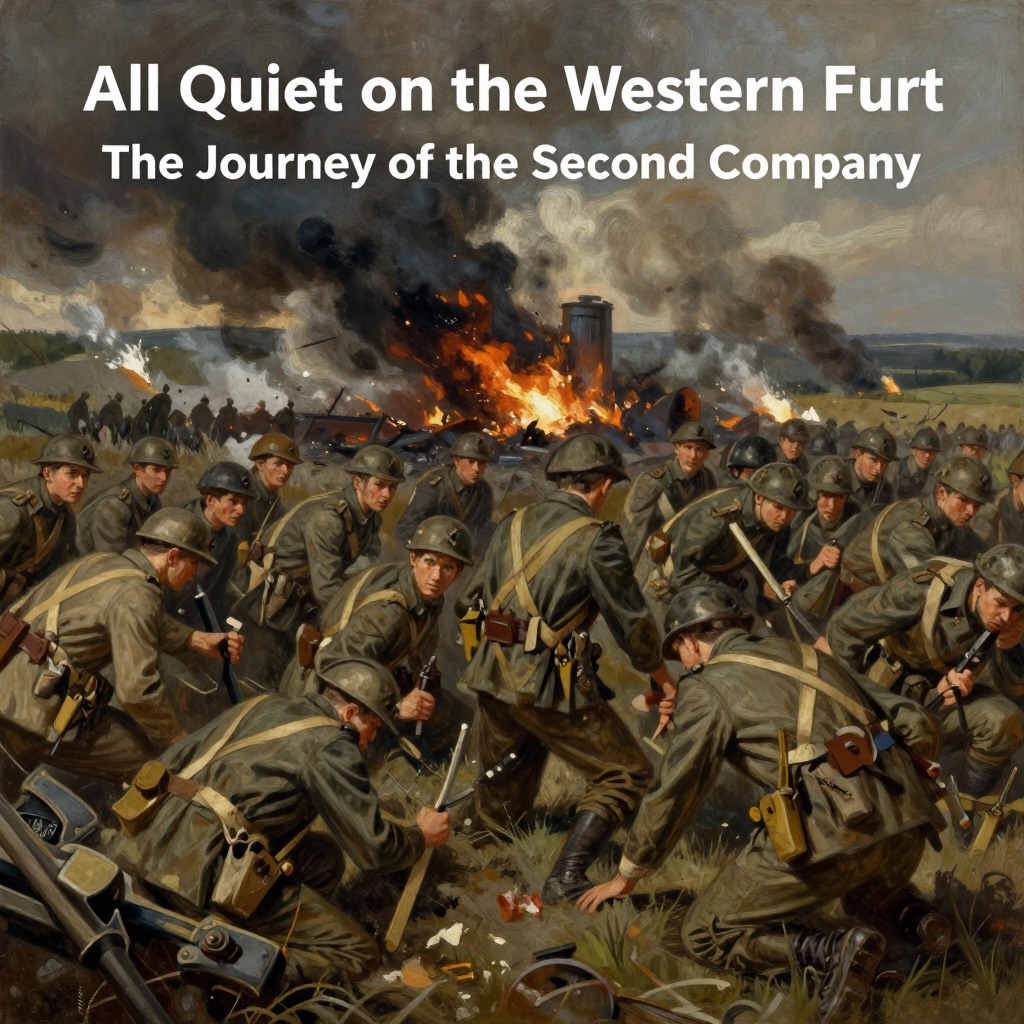
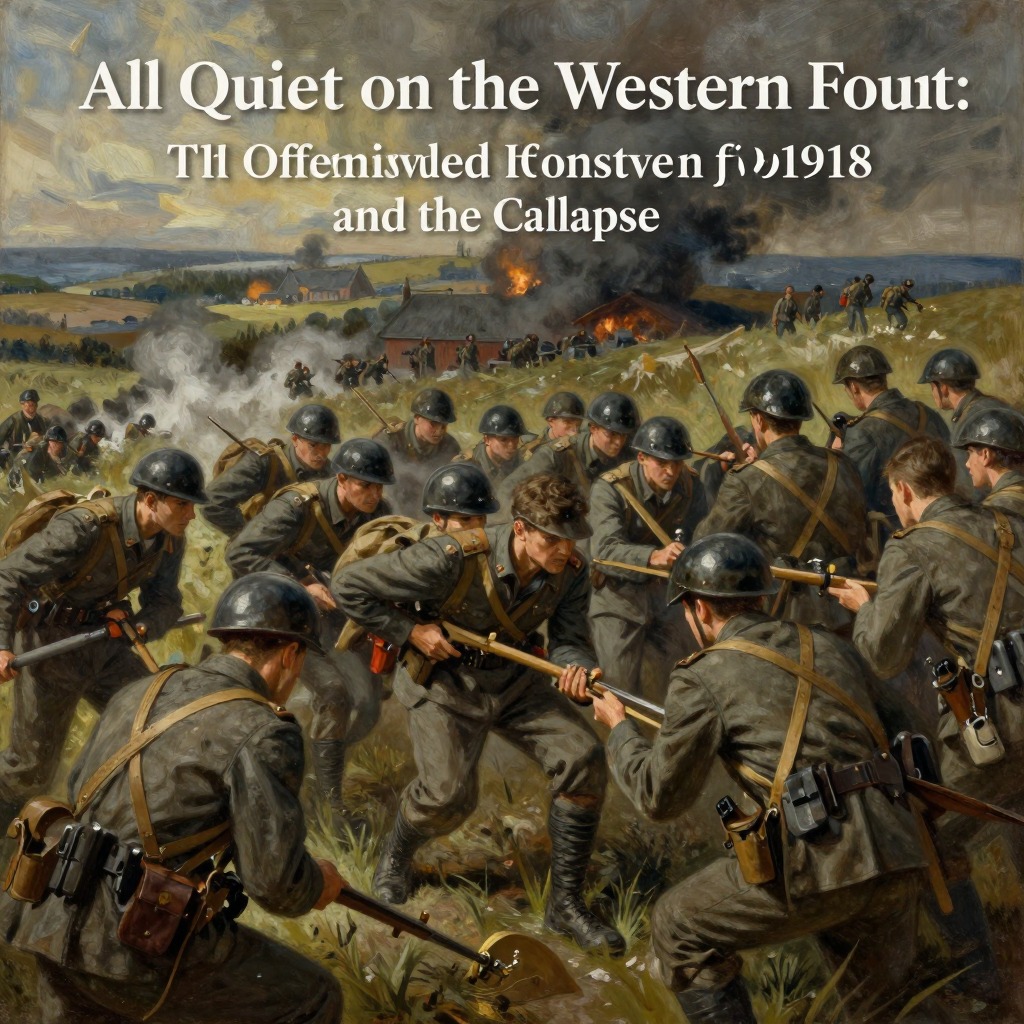
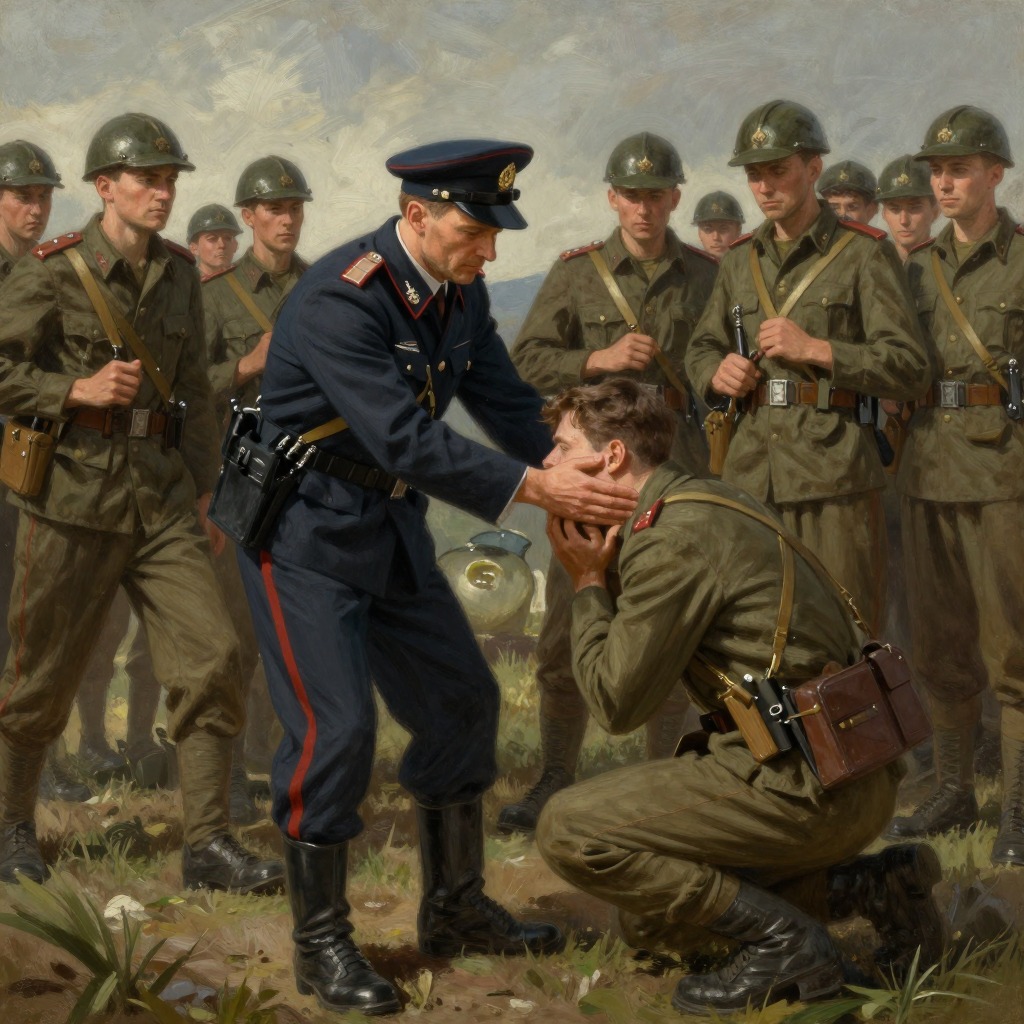
Paul's journey through the novel follows the arc of a soldier who becomes increasingly numbed and dehumanized by the war. Early in the narrative, he and his friends enjoy a rare windfall of double rations after heavy losses reduce the company from one hundred and fifty men to eighty, and they spend a carefree afternoon playing skat on a margarine-tub lid in a meadow, surrounded by red poppies and the distant rumble of the front. But this idyll is shattered by the death of their classmate Franz Kemmerich, whose leg is amputated and who dies slowly in the dressing station while Paul sits helplessly beside him. Paul's first leave home reveals a deeper rupture: he cannot connect with his parents or his former life. His father wants to hear war stories; his mother, ill with cancer, asks anxiously whether it was very bad out there. Paul lies to her, saying it was not so bad, but he feels a terrible foreignness in his own room, where the books and butterflies of his youth no longer speak to him. "I cannot find my way back," he realizes. "I am shut out." The climax of Paul's personal ordeal comes during a patrol when he kills a French printer, Gérard Duval, with his knife in a shell-hole. Forced to lie beside the dying man for hours, Paul experiences an overwhelming crisis of conscience, promising to write to Duval's wife and to fight against the war that has struck them both down. Yet by the next morning, with Kat and Albert's reassurance, he hardens himself again: "After all, war is war." The final chapters see the steady attrition of his friends: Müller is shot in the stomach with a Verey light and dies in half an hour, bequeathing his boots to Paul; Katczinsky, the last and closest of his comrades, is killed by a stray splinter to the head while Paul is carrying him to the dressing station. Paul becomes the last of the seven from his class.
Key Actions and Objectives
Paul's actions throughout the novel are driven not by ambition or ideology but by the primal need to survive. He volunteers for patrol duty, steals a goose with Katczinsky, and participates in the brutal counter-attack on the French trench where the company captures tins of corned beef and cognac. He also acts to protect others: he calms a terrified recruit during a bombardment, sticks the boy's helmet on his behind as a jest and a precaution, and later helps bind the same recruit's wounds after he is hit. When Himmelstoss, the bullying former postman, cowers in a dug-out during an attack, Paul drags him out by the neck and shoves him into the fight. In the hospital after being wounded, Paul feigns a fever to stay with Albert Kropp, whose leg has been amputated, and participates in the scheme that allows the Polish soldier Lewandowski to have a private moment with his visiting wife. These actions reveal a character whose moral compass, though battered, still operates within the narrow sphere of loyalty to his immediate comrades.
Relationships and Conflict
Paul's most significant relationship is with Stanislaus Katczinsky, the forty-year-old cobbler who possesses a "sixth sense" for finding food and shelter. Kat is the group's leader, and Paul feels a love for him that he describes as more complete than the communion of lovers: "We are two men, two minute sparks of life; outside is the night and the circle of death." When Kat dies, Paul's anguish is absolute: "When Kat is taken away I will not have one friend left." His friendship with Albert Kropp is nearly as close; they are wounded together, share a hospital room, and Paul tricks the medical staff into keeping them together. With Müller, the relationship is more pragmatic—Müller covets Kemmerich's boots even before Kemmerich dies—but Paul understands that Müller is not callous, merely clear-sighted about the facts of survival. The conflict with Himmelstoss represents Paul's resistance to the arbitrary authority of the army system. Paul participates in the thrashing of Himmelstoss before leaving for the front, and later, when Himmelstoss cowers in a dug-out, Paul physically forces him to join the attack. The encounter with Gérard Duval is the most profound conflict of all, forcing Paul to confront the humanity of the enemy and the moral weight of killing at close quarters.
Change and Ending
Paul changes from a boy who still carried school textbooks and dreamed of examinations into a soldier who knows that "a bright button is weightier than four volumes of Schopenhauer." The first bombardment, he says, "showed us our mistake, and under it the world as they had taught it to us broke in pieces." By the end of the novel, he is utterly exhausted, physically and spiritually. He has swallowed a bit of gas and spends his rest days sitting in a garden, thinking of the armistice that everyone talks about. But he has no aims: "Had we returned home in 1916, out of the suffering and the strength of our experiences we might have unleashed a storm. Now if we go back we will be weary, broken, burnt out, rootless, and without hope." The novel's final paragraph reports his death in October 1918, on a day so quiet that the army report confined itself to the single sentence: "All quiet on the Western Front." He fell forward and lay on the earth as though sleeping; his face had an expression of calm, as though almost glad the end had come.
Narrative Role and Evaluation
Paul Bäumer serves as the novel's sole first-person narrator, and his voice—alternately lyrical, bitter, numb, and reflective—gives the reader direct access to the inner experience of the common soldier. His perspective is that of an ordinary young man, not a hero or a coward, and his observations carry the authority of lived experience. Through Paul, Remarque critiques the patriotic rhetoric of schoolmasters like Kantorek, the petty tyranny of non-commissioned officers like Himmelstoss, and the indifference of a home front that cannot understand what the soldiers have endured. Paul's gradual loss of feeling, his inability to reconnect with his former life, and his final quiet death all reinforce the novel's central thesis: that a generation of men was destroyed by the war, even those who escaped the shells. Paul is not a unique individual but a representative figure, and his story is the story of millions.