Hugo Hamilton
Hugo Hamilton is a figure who never sets foot on Indian Island, yet his presence pervades the novel as the emotional and moral catalyst for Vera Claythorne's past crime and as the unwitting source of the final name on Lawrence John Wargrave's death list. He is the young man Vera loved, the uncle of the child she drowned, and the person whose silent accusation and subsequent disappearance condemned her to a lifetime of guilt. His role is defined entirely through memory, confession, and absence, making him a ghostly yet decisive force in the story's architecture.
Identity and Background
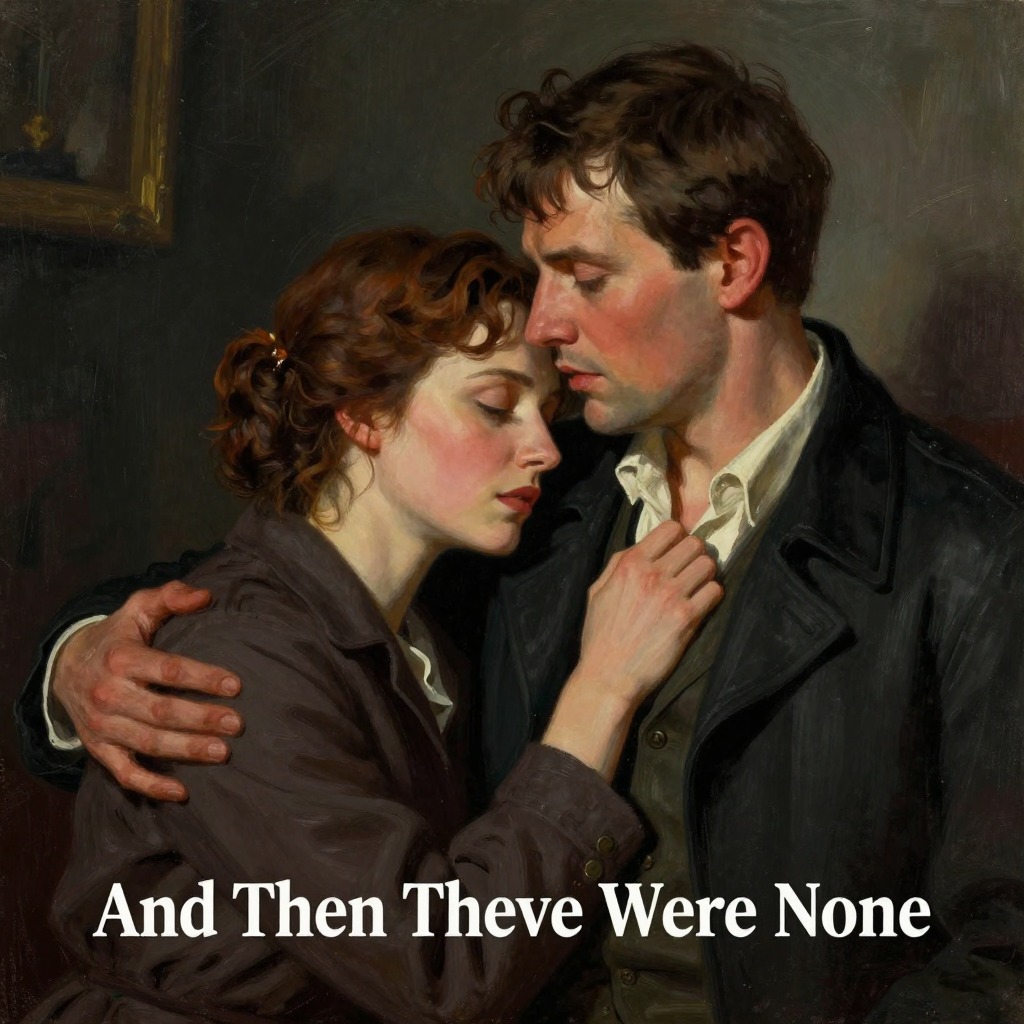
Hugo Hamilton is the uncle of Cyril Ogilvie Hamilton, the young boy whom Vera Claythorne was hired to care for as a nursery governess. He was, at the time of the events in Cornwall, a man without personal wealth; he had once been in line to inherit a fortune, but that prospect vanished when Cyril was born three months after the death of Hugo's brother Maurice. As Hugo himself admitted to Vera, "If he'd been a girl," he would have inherited everything. Despite this disappointment, Hugo was genuinely fond of Cyril, always ready to play games or amuse his small nephew, and Vera noted that there was "no rancour in Hugo's nature." He fell in love with Vera during the summer in Cornwall, and she with him, but he could not ask her to marry him because he had "not got a penny." Their relationship was conducted in decorous evening strolls on the beach, in moonlight and the soft Atlantic air, and in the unspoken understanding that Cyril's existence stood between them and a future together.
The Crime and Its Aftermath
Vera Claythorne's murder of Cyril was, in her own mind, committed for Hugo. She reasoned that if Cyril were dead, Hugo would inherit the family fortune and could marry her. She orchestrated the drowning by encouraging Cyril to swim out to a rock, then swimming after him but deliberately arriving too late. At the inquest, the coroner exonerated her, praising her presence of mind and courage. Mrs. Hamilton, Cyril's mother, was kindness itself. But Hugo, when he returned from Newquay, looked at Vera in a way she never forgot. She knew, in that moment, that he understood what she had done. "He just went away right away—out of my life," she later recalled. He did not answer the one letter she wrote to him. His silent judgment, more than any legal consequence, became the permanent wound in her psyche. Throughout the ordeal on Indian Island, Vera is haunted by the thought of Hugo. She feels him "so near" to her on the night of the first deaths, and when she finally returns to her bedroom after shooting Philip Lombard, she is overcome by the conviction that Hugo is upstairs waiting for her. The rope with a noose that she finds hanging from the hook in her ceiling is, in her mind, what Hugo wants. She climbs onto the chair, adjusts the noose around her neck, and kicks the chair away, believing that Hugo is there to see that she does what she must do.
The Confession to Wargrave
Hugo Hamilton's most consequential action in the story occurs offstage, months before the events on Indian Island. Lawrence John Wargrave, crossing the Atlantic, found himself alone in the smoking room late one night with a good-looking young man who had taken a considerable quantity of drink. That man was Hugo Hamilton, and he was in a maudlin, confidential state. Without much hope of any result, Wargrave automatically started his routine conversational gambit—a line of talk designed to elicit stories of unpunished crimes. The response was startling. Hugo leaned forward, thrusting his face into Wargrave's, and said: "You're right. Murder isn't what most people think—giving some one a dollop of arsenic—pushing them over a cliff—that sort of stuff." He then confessed that he had known a murderess, that he had been crazy about her, and that she had done it "more or less for me." He described how a girl—"a nice straight jolly girl"—had taken a kid out to sea and let it drown. When Wargrave asked if he was sure she had done it, Hugo replied: "I'm quite sure. Nobody else ever thought of it. But I knew the moment I looked at her—when I got back—after . . . And she knew I knew." He added, with devastating clarity: "What she didn't realize was that I loved that kid." This drunken confession gave Wargrave the final name he needed for his list of ten victims. It was easy for him, he later wrote, to trace back the story and reconstruct it. Hugo Hamilton, in his grief and alcohol-fueled candor, had unknowingly delivered Vera Claythorne to her death.
Thematic Significance
Hugo Hamilton embodies the novel's central theme of guilt that cannot be hidden and justice that operates outside the law. He is the only character who knows the truth about Vera's crime without having been a party to it, and his response—silent withdrawal rather than public accusation—represents a form of moral judgment that is both more personal and more devastating than any courtroom verdict. His love for Cyril, expressed in the confession to Wargrave, underscores the human cost of Vera's calculation: she had assumed that Hugo's love for her would outweigh his attachment to the child, but she was wrong. Hugo's absence from the island is itself a kind of presence; his memory drives Vera to madness and suicide, and his words, relayed through Wargrave, ensure that her crime is finally punished. In the novel's moral economy, Hugo is the innocent witness whose testimony, though never given in a court of law, proves decisive.