Mrs. Hamilton
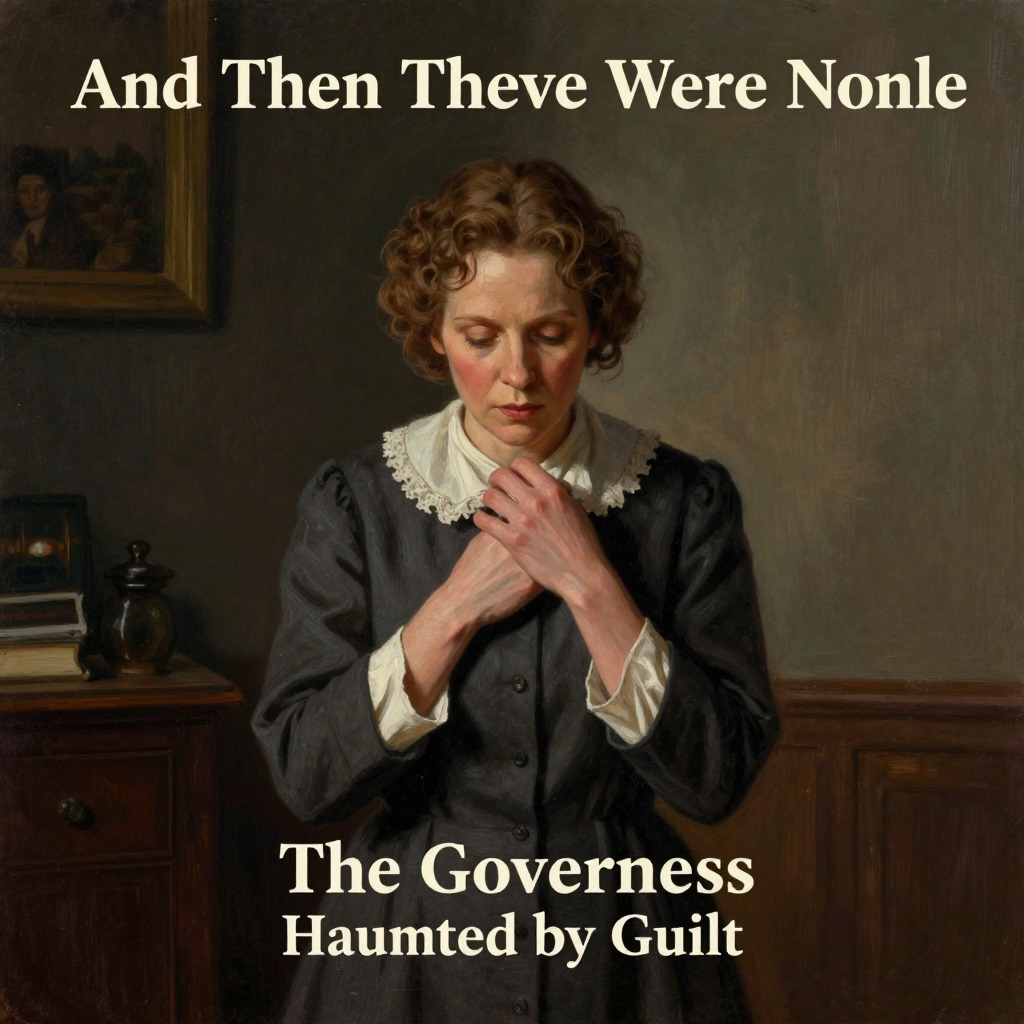
Mrs. Hamilton is the mother of Cyril Ogilvie Hamilton and the sister-in-law of Hugo Hamilton. She is a stout, good-humored woman who appears in Vera Claythorne's memories of Cornwall, where Vera worked as a nursery governess for Cyril. Mrs. Hamilton's kindness to Vera after Cyril's drowning—she was "kindness itself" to her, according to Vera's recollection—stands in stark contrast to the guilt and suspicion that Vera herself feels and that Hugo later comes to harbor.
Identity and Background
Mrs. Hamilton is a woman of means; her son Cyril was born three months after the death of Maurice Hamilton, which meant that Hugo Hamilton, who had expected to inherit the family fortune, was disappointed when Cyril, a male heir, was born instead. Hugo later admitted to Vera that he had "had the chance of being a rich man to look forward to" for three months before Cyril's birth, and that if the child had been a girl, Hugo would have come into everything. Mrs. Hamilton's household thus represents the wealth that Hugo lost and that Cyril, as a sickly child, stood between Hugo and.
Role in the Plot
Mrs. Hamilton is not a character who appears directly in the action on Indian Island; she exists entirely within Vera Claythorne's memories and the backstory of the accusation against Vera. Vera recalls that at the inquest into Cyril's death, the coroner exonerated her of all blame and even complimented her on her presence of mind and courage. Mrs. Hamilton was "kindness itself" to Vera afterward, a fact that Vera clings to as proof of her innocence. Yet the memory is poisoned by Vera's knowledge that she deliberately encouraged Cyril to swim out to the rock, intending to arrive too late to save him, so that Hugo would inherit the fortune. Mrs. Hamilton's trust in Vera thus becomes the measure of Vera's betrayal.
Relationship with Hugo Hamilton
Mrs. Hamilton is the mother of Cyril and the aunt of Hugo. Hugo is fond of Cyril—he is "awfully fond of him," he tells Vera, and is always ready to play games with his small nephew—but he also resents the child's existence because it blocks his inheritance. Mrs. Hamilton's household is the setting where Hugo and Vera meet and fall in love, and where Vera's plan to drown Cyril takes shape. After Cyril's death, Hugo's suspicion of Vera destroys their relationship, and he leaves without answering her letters. Mrs. Hamilton's continued kindness to Vera only deepens the irony: she is the one person who never suspects the truth.
Thematic Significance
Mrs. Hamilton embodies the theme of the innocent who suffers unknowingly. She is the victim of a crime that the law cannot touch—the murder of her son by a trusted governess—and her trust in Vera is the very thing that makes Vera's crime possible. In the confession of Lawrence John Wargrave, he recounts how he learned of Vera's guilt from Hugo Hamilton, who told him that "she did it more or less for me" and that he was "quite sure" of her guilt. Mrs. Hamilton's role in the story is thus to represent the ordinary, trusting world that the murderers on Indian Island have betrayed, and to underscore the novel's central argument: that the most dangerous crimes are those that leave no legal evidence and are committed by people whom society trusts.