Gilbert Blythe
Gilbert Blythe enters Anne Shirley's life as the boy who calls her "Carrots" in front of the whole Avonlea school, igniting a feud that burns for years. But he is also the tall, curly-haired, hazel-eyed youth who rescues her from a sinking flat on the pond, who gives up the Avonlea school so she can stay with Marilla, and who finally walks her home through the twilight as a friend. His trajectory from antagonist to ally is one of the novel's central movements, charting Anne's own growth from impulsive pride to forgiveness and companionship.
Identity and Introduction
Gilbert Blythe is introduced as a boy of about Anne's age, though nearly fourteen when they first meet. He has curly brown hair, roguish hazel eyes, and a mouth twisted into a teasing smile. Diana Barry describes him as "aw'fly handsome" and warns Anne that he "teases the girls something terrible" and "just torments our lives out." He has been visiting his cousins in New Brunswick over the summer and returns to Avonlea school just as Anne is settling in. His father had been ill and took Gilbert to Alberta for three years, so Gilbert is only in the fourth book despite being nearly fourteen, a fact that makes him a natural rival for Anne, who is also in the fourth book and determined to be head of the class.
The Slate Incident and the Feud
The enmity between Anne and Gilbert begins in a single, explosive moment. During a quiet afternoon when Mr. Phillips is absorbed with Prissy Andrews, Gilbert reaches across the aisle, picks up the end of Anne's long red braid, and whispers "Carrots! Carrots!" Anne's reaction is instantaneous and violent: she springs to her feet, calls him a "mean, hateful boy," and brings her slate down on his head, cracking it clear across. Gilbert immediately admits fault—"It was my fault, Mr. Phillips. I teased her"—but Mr. Phillips punishes only Anne, making her stand on the platform with "Ann Shirley has a very bad temper" written above her head. After school, Gilbert tries to apologize: "I'm awfully sorry I made fun of your hair, Anne. Honest I am. Don't be mad for keeps, now." But Anne sweeps past him without a word, and the feud is sealed. She declares, "I shall never forgive Gilbert Blythe," and for years she keeps that vow, ignoring his attempts at reconciliation and refusing even to speak his name.
Rivalry and Academic Competition
Despite her refusal to acknowledge him socially, Anne cannot escape Gilbert in the classroom. The two become fierce academic rivals, and their competition is the engine of much of the novel's middle section. They vie for the top of the spelling class, for correct sums, for the head of the class in every subject. "Now Gilbert was head of the spelling class; now Anne, with a toss of her long red braids, spelled him down." When they tie and their names are written up together on the blackboard, Anne's mortification is as evident as Gilbert's satisfaction. In the monthly written examinations, Gilbert comes out three marks ahead the first month; Anne beats him by five the second, but her triumph is marred when Gilbert congratulates her heartily before the whole school. She wishes he had felt the sting of defeat. This rivalry continues through their Queen's class, where both take up the First Class teacher's license course, and it culminates in the Entrance examinations, where they tie for first place on the pass list. Anne's name appears first, but the tie is a testament to their equal determination and ability.
The Rescue on the Pond
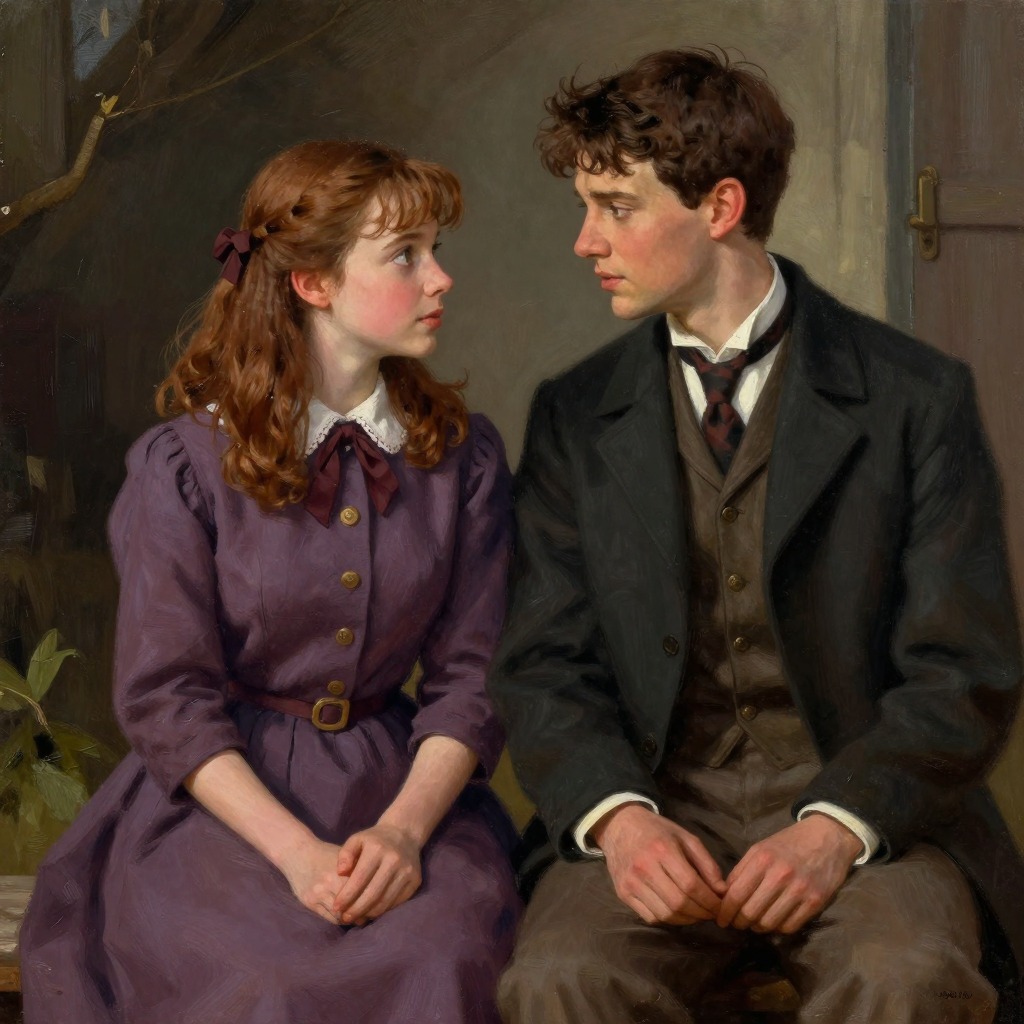
The turning point in their relationship comes during the Elaine incident. Anne, playing the lily maid, drifts down the pond in a leaking flat and is forced to climb onto a bridge pile to avoid drowning. Gilbert, rowing by in Harmon Andrews's dory, sees her and extends his hand. Anne, "drabbled and furious," has no choice but to accept his help. After he rows her to shore, Gilbert makes a direct plea: "Can't we be good friends? I'm awfully sorry I made fun of your hair that time. I didn't mean to vex you and I only meant it for a joke. Besides, it's so long ago. I think your hair is awfully pretty now—honest I do. Let's be friends." For a moment Anne hesitates, feeling "an odd, newly awakened consciousness" and a "quick, queer little beat" in her heart. But the old grievance stiffens her resolve, and she refuses coldly: "I shall never be friends with you, Gilbert Blythe; and I don't want to be!" Gilbert's response is swift and angry: "All right! I'll never ask you to be friends again, Anne Shirley. And I don't care either!" He rows away with "swift defiant strokes," and Anne is left with an odd feeling of regret, almost wishing she had answered differently.
The Reconciliation
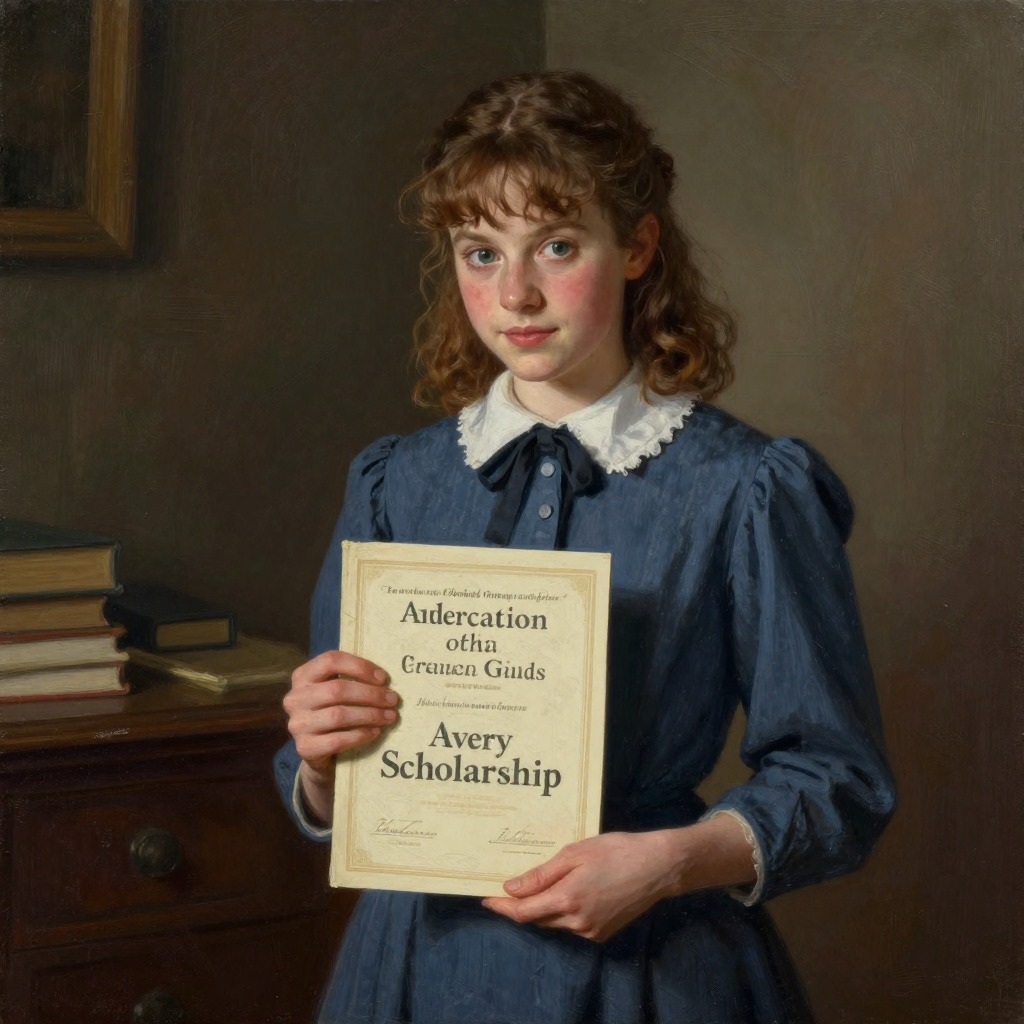
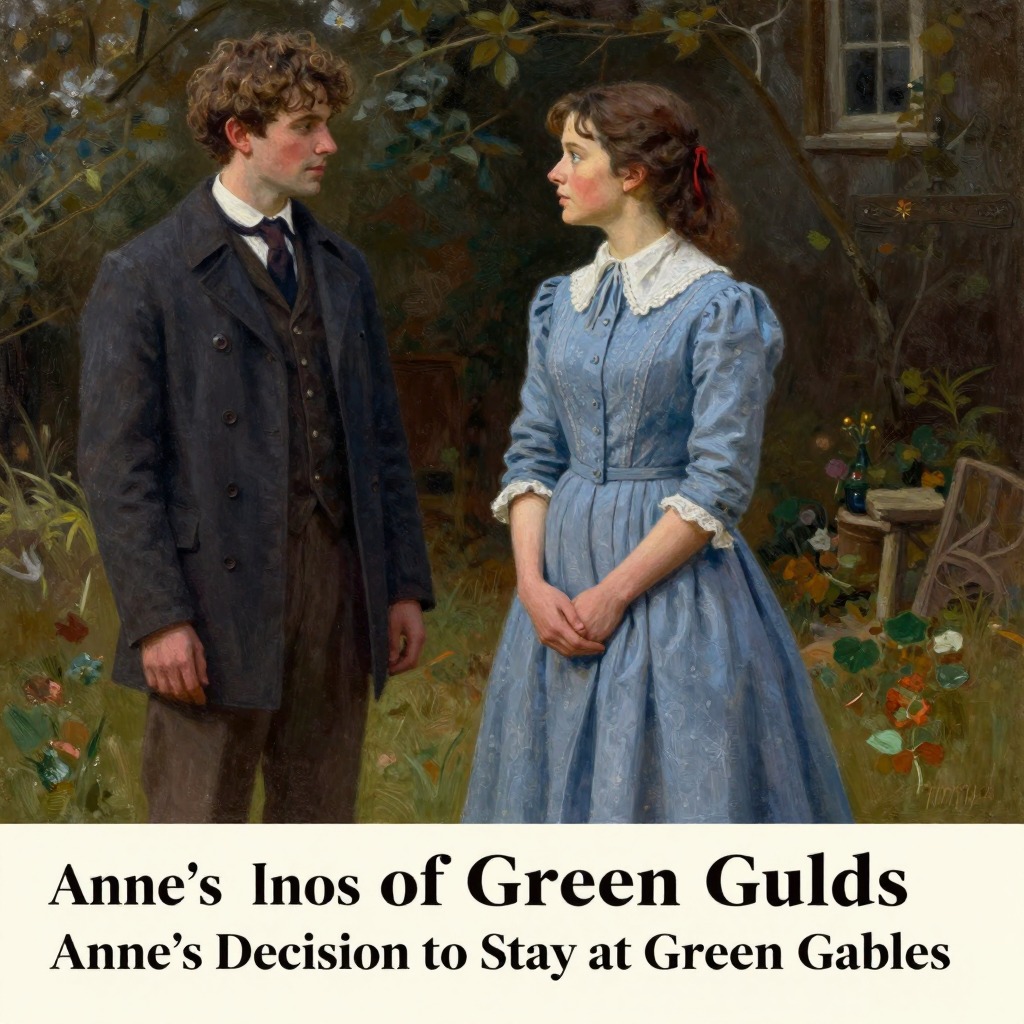
The final reconciliation comes after Anne has decided to give up the Avery scholarship and stay at Green Gables to care for Marilla. She learns that Gilbert, who had been promised the Avonlea school, has withdrawn his application and taken a position at White Sands instead, knowing that Anne needed to stay home. One evening she meets him on the hill and stops him, with "scarlet cheeks," to thank him. Gilbert takes her offered hand eagerly and asks, "Are we going to be friends after this? Have you really forgiven me my old fault?" Anne admits that she forgave him "that day by the pond landing, although I didn't know it" and confesses she has been sorry ever since. Gilbert declares, "We are going to be the best of friends. We were born to be good friends, Anne. You've thwarted destiny enough." He walks her home, and they stand at the gate for half an hour, catching up on "five years' lost conversations." Marilla, watching from the kitchen, notes the change with a dry smile.
Character and Significance
Gilbert Blythe is a foil to Anne in nearly every way: he is calm where she is volatile, patient where she is impulsive, and socially at ease where she is awkward. Yet he shares her ambition, her intelligence, and her capacity for growth. His willingness to apologize sincerely after the slate incident, his quiet persistence in the face of her scorn, and his final self-sacrificing gesture in giving up the Avonlea school all mark him as a character of genuine moral substance. He is not merely a romantic interest in waiting but a fully realized young man whose own journey—from teasing boy to responsible young teacher—parallels Anne's. Their rivalry, rescue, and reconciliation form the emotional spine of the novel's second half, and the final image of them walking home together, with Anne's horizons narrowed but her heart full, suggests that the bend in the road holds the promise of a shared future.