Biff Loman
Biff Loman, the elder son of Willy and Linda Loman, is a thirty-four-year-old man whose life has been shaped and crippled by his father's version of the American Dream. Once a high school football star with scholarships to three universities, Biff has spent more than a decade drifting through the West, working as a farmhand and shipping clerk, unable to settle into the success his father demands. His return home triggers the play's central crisis, forcing a confrontation not only with Willy's illusions but with his own complicity in them, and he emerges as the only Loman who finally sees clearly enough to break free.
Identity and Background
Biff is two years older than his brother Happy, well built, but in the present day bears a worn air and seems less self-assured than he once was. He has succeeded less than Happy, and his dreams are stronger and less acceptable. In high school he was a celebrated athlete, captain of the football team, and so personally attractive that crowds of girls followed him between classes and the coach gave him a regulation ball to practice his passing. He printed "University of Virginia" on his sneakers, a boast that seemed plausible because three universities were offering him scholarships. Bernard, the earnest neighbor boy, warned that Biff would flunk math if he did not study, but Willy dismissed the concern, insisting that a man who creates personal interest will always get ahead. Biff absorbed that lesson: he borrowed the football from the locker room, and Willy laughed at the theft, congratulating his initiative.
Life and Plot Trajectory
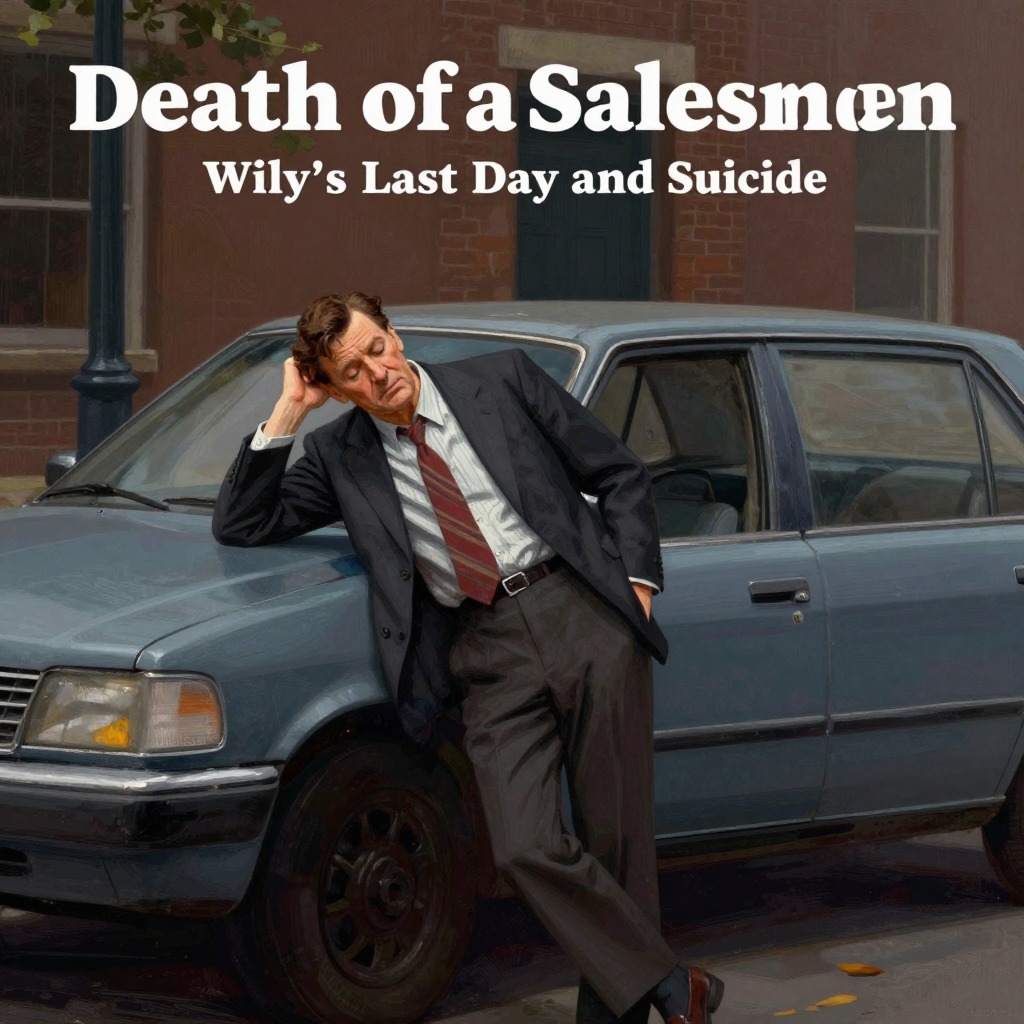
After high school, Biff's life collapsed. He flunked math and, instead of attending summer school, traveled to Boston to find his father. There he discovered Willy in a hotel room with The Woman, a buyer who laughed and called Willy a kidder, and who had been given boxes of silk stockings—the same kind of stockings Linda was mending at home. Biff called his father a liar and a fake, and from that moment nothing good ever happened to him. He spent the next six or seven years working as a shipping clerk, salesman, and in various businesses, but always the pattern repeated: he stole himself out of every good job. He served time in a Kansas City jail for stealing a suit. He drifted through Nebraska, the Dakotas, Arizona, and Texas, herding cattle and working on farms for twenty-eight dollars a week. Every spring, when the new colts were born, he felt the same pang: he was not getting anywhere, he was thirty-four years old and ought to be making his future. That feeling drove him home.
Key Actions and Objectives
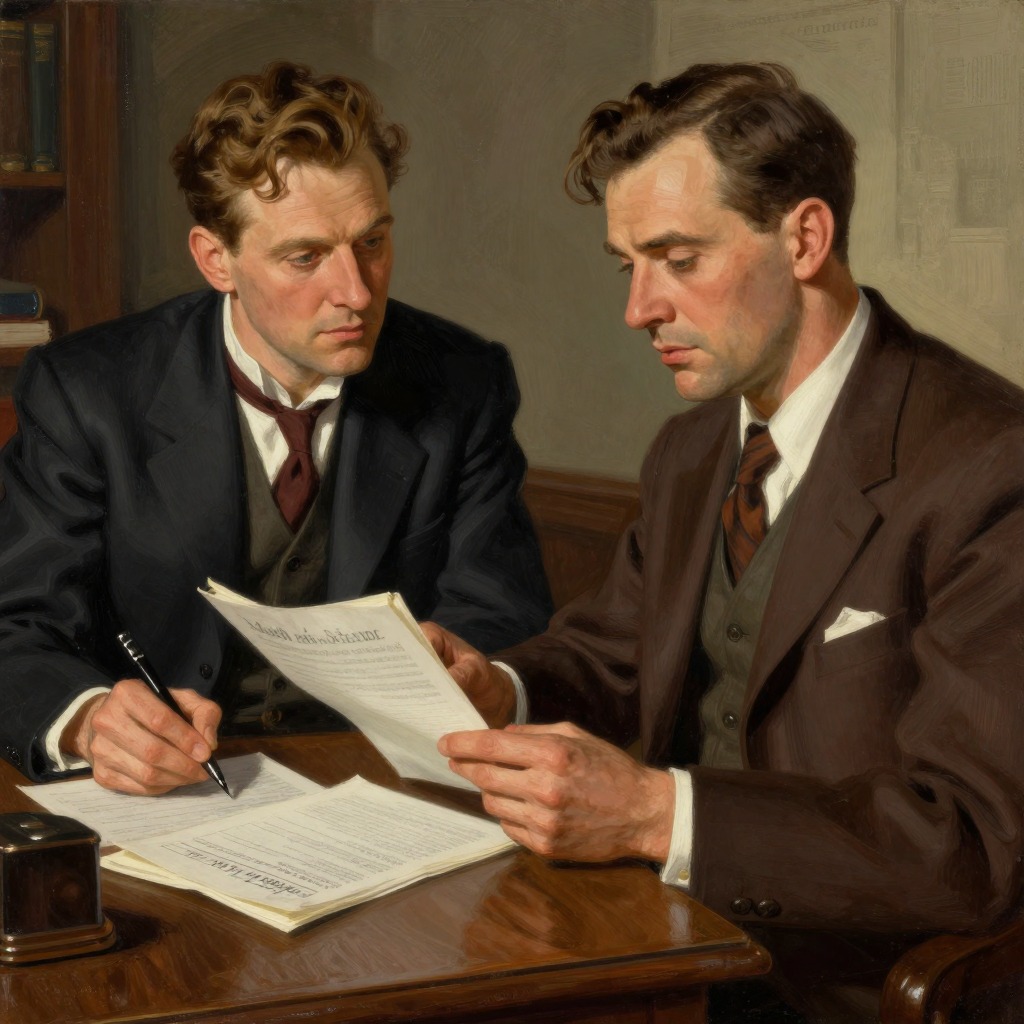
Biff's stated objective on returning is to ask Bill Oliver, a former employer, for a loan of ten thousand dollars to buy a ranch in the West. Oliver had once put his arm on Biff's shoulder and said, "Biff, if you ever need anything, come to me." But Biff had quit that job under a cloud, having stolen a carton of basketballs, and he was never sure whether Oliver knew. He waits six hours to see Oliver, and when Oliver finally appears he does not remember who Biff is. In a moment of confused desperation, Biff takes Oliver's fountain pen from the desk and runs down eleven flights of stairs. He later tells Happy that he realized what a ridiculous lie his whole life had been—he had never been a salesman for Oliver, only a shipping clerk. The theft of the pen clinches his understanding that he cannot go back and pretend.
Relationships and Conflict
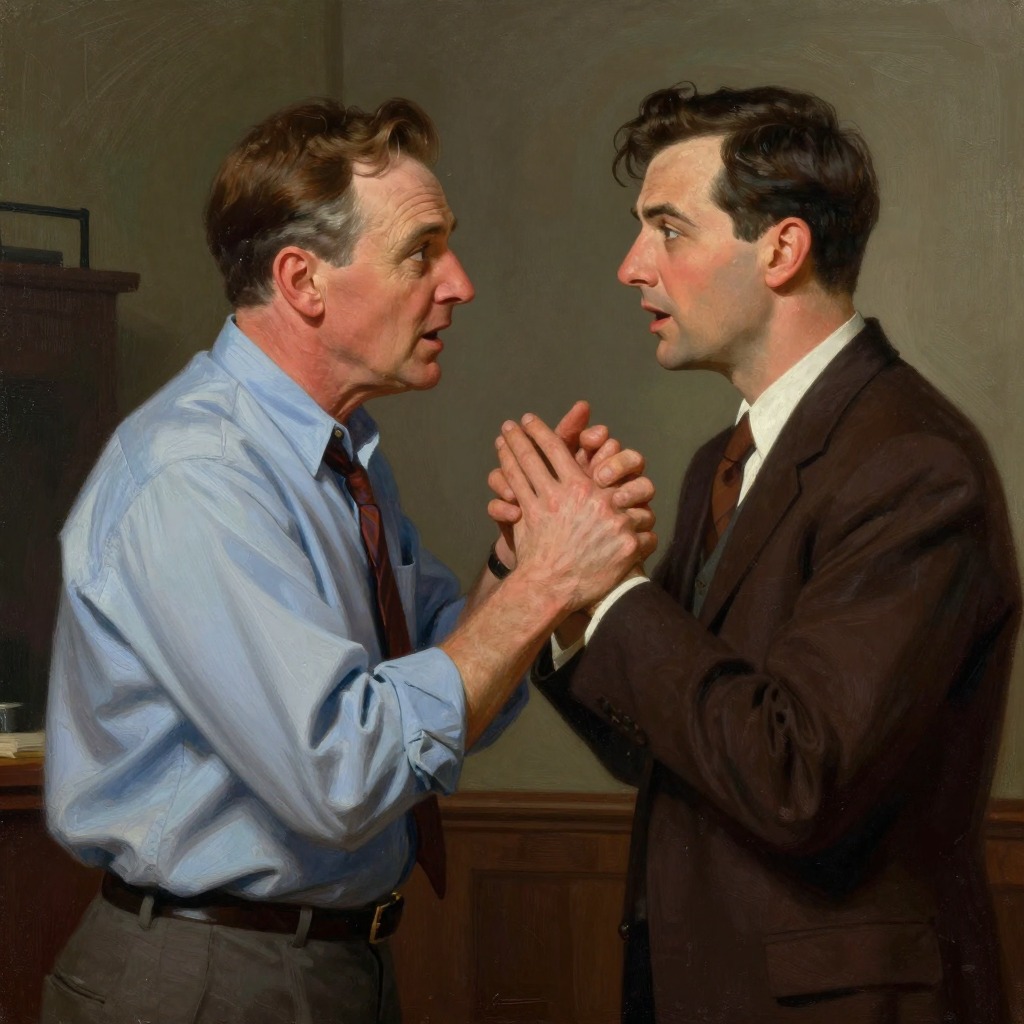
The central relationship of Biff's life is with his father, and it is a war for survival. Willy needs Biff to succeed in order to validate his own life; Biff needs to cut the link between himself and Willy in order to become his own man. Linda tells Biff that Willy's life is in his hands, that he has been trying to kill himself by smashing the car and by attaching a rubber hose to the gas pipe. Biff is horrified, but when he tries to tell Willy the truth—that he is not a leader of men, that he is a dime a dozen, that he stole the pen—Willy refuses to hear it. The climax comes in the kitchen when Biff, weeping, grabs Willy and says, "Pop, I'm nothing! I'm nothing, Pop. Can't you understand that? There's no spite in it any more. I'm just what I am, that's all." Willy, astonished, realizes that Biff loves him, and this revelation sends Willy into a final, fatal resolve.
Change and Ending
Biff's arc is one of painful self-knowledge. He begins the play still half-believing in the dream his father sold him, still hoping that Oliver will provide the magic stake. By the end he has stripped away every illusion: he admits he stole the pen, he admits he was in jail, he admits he is not going to be a big success. He tells Willy, "I know who I am, kid," and he means it. At the funeral, he says of his father, "He had the wrong dreams. All, all, wrong. He never knew who he was." Biff chooses to return to the West, to work with his hands, to live a life that is honest even if it is small. He invites Happy to come with him, but Happy refuses, vowing to stay in the city and win the racket for Willy. Biff leaves with Linda, carrying her away from the grave, the only Loman who has finally understood that a man is not a piece of fruit to be eaten and thrown away.
Narrative Role and Evaluation
Biff functions as the play's moral center and its agent of truth. He is the character who forces the confrontation that Willy has spent his life avoiding, and he is the one who articulates the play's central critique: that the American Dream, as Willy pursued it, was a phony dream that destroyed the man who believed in it. Biff's journey from golden boy to disillusioned drifter to clear-eyed survivor gives the play its tragic shape, because his clarity comes too late to save his father. Yet his survival is not triumphant; it is hard-won and modest. He will never be magnificent, but he will know who he is.