Linda Loman
Linda Loman is the wife of Willy Loman and the mother of Biff and Happy Loman in Arthur Miller's Death of a Salesman. She is the family's emotional and practical anchor, a woman of fierce loyalty and quiet endurance who sustains Willy through his psychological decline while struggling to hold her sons accountable. Her famous plea, "Attention, attention must be finally paid to such a person," crystallizes the play's demand that a small, exhausted man be recognized as a human being worthy of dignity.
Identity and Introduction
Linda is introduced as a woman "most often jovial" who has "developed an iron repression of her exceptions to Willy's behavior." She "more than loves him, she admires him," as though his mercurial nature, his temper, his massive dreams and little cruelties, served her only as sharp reminders of the turbulent longings within him—longings which she shares but lacks the temperament to utter and follow to their end. This description establishes her as a figure of profound, almost sacrificial devotion, one who channels her own desires into supporting her husband's fragile sense of self. She is the first character to speak in the play, calling out with trepidation as Willy returns home unexpectedly, and she immediately begins the work of managing his anxieties: she takes off his shoes, offers aspirin, suggests he rest, and tries to steer him toward practical solutions like asking his boss for a New York job.
Life and Plot Trajectory
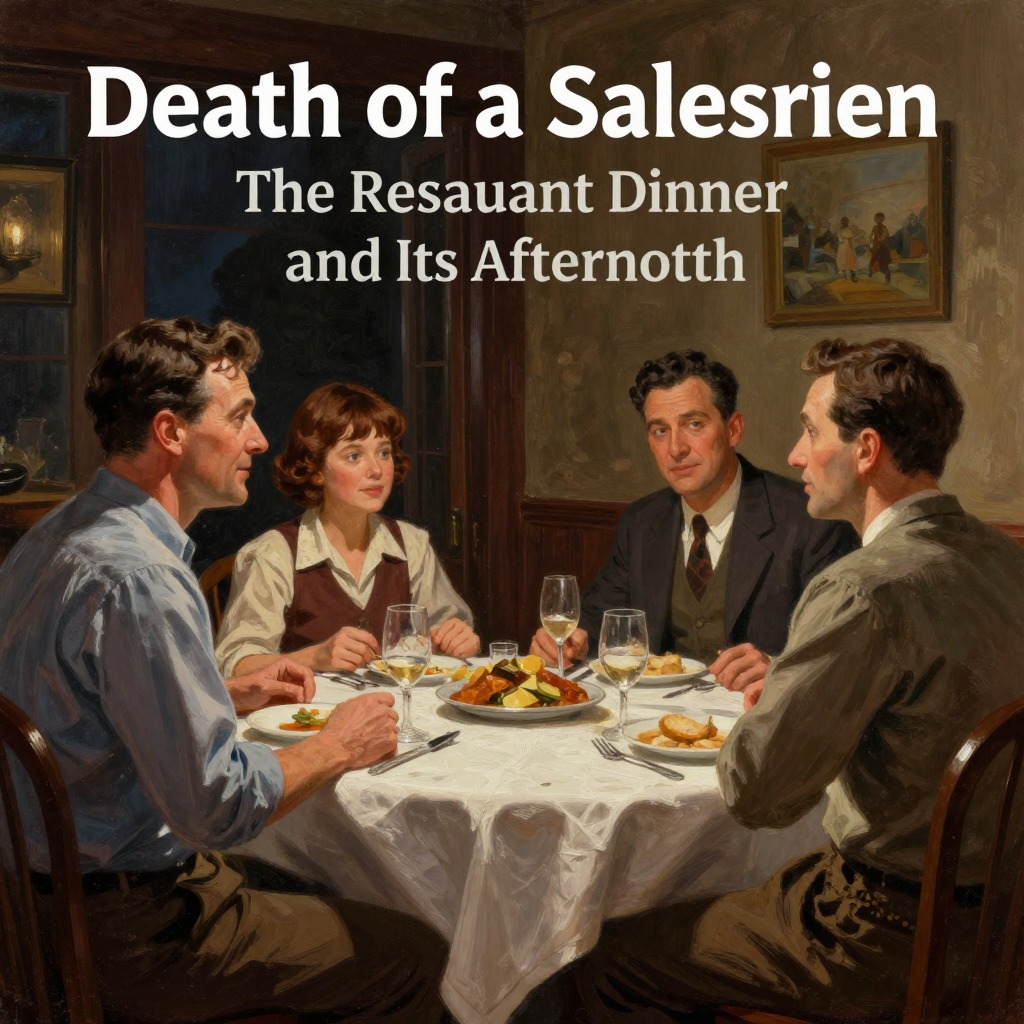
Linda's trajectory is one of sustained crisis management. She lives with the daily knowledge that Willy is suicidal, having discovered a rubber pipe attached to the gas heater in the cellar. Every day she goes down and removes the pipe, but when he comes home she puts it back, unable to "insult him that way." She tells her sons, "I live from day to day," and reveals that the insurance inspector has concluded that Willy's recent car accidents were deliberate. When Biff returns home, Linda becomes the intermediary between father and son, trying to broker peace while also demanding that Biff respect his father. She is the one who informs the boys that Willy has been taken off salary and put on straight commission after thirty-six years with the Wagner Company, and that he has been borrowing fifty dollars a week from Charley and pretending it is his pay. After the disastrous dinner at Frank's Chop House, where Willy is humiliated and abandoned by his sons, Linda confronts Biff and Happy with a fury that strips away her usual patience, calling them "a pair of animals" and ordering them out of the house. In the Requiem, she is left at the grave, unable to cry, repeating the words "We're free" as she realizes that the mortgage is finally paid but there is no one left to live in the house.
Key Actions and Objectives
Linda's primary objective is to protect Willy from the full weight of his failures and to preserve his dignity. She mends her own stockings rather than buy new ones, a detail that triggers Willy's guilt because he has given silk stockings to The Woman. She sews the lining of his jacket, prepares his meals, and reminds him of appointments. She also acts as the family's financial manager, keeping a running tally of debts—sixteen dollars on the refrigerator, nine-sixty for the washing machine, three and a half for the vacuum cleaner, twenty-one dollars remaining on the roof. When Willy is fired by Howard Wagner, Linda is the one who urges him to ask for an advance to pay the insurance premium. She also takes decisive action in the play's emotional climax: after the restaurant disaster, she knocks the flowers Happy brought to the floor and forces Biff to pick them up, declaring, "Pick up this stuff, I'm not your maid any more." Her most powerful act is her speech to Biff and Happy, in which she insists that "attention must be finally paid to such a person," a line that elevates Willy's suffering from a private tragedy to a public indictment.
Relationships and Conflict
Linda's relationship with Willy is the central axis of her life. She is his "foundation and support," as he tells her, and she responds with unwavering loyalty even when he is irritable, contradictory, or cruel. She endures his outbursts—when he yells at her for buying American cheese instead of Swiss, or for mending stockings—with "infinite patience." Yet she is not a passive doormat; she is described by Miller as "tough" and "a fighter." She confronts Willy's self-destructive impulses head-on, even if she cannot stop them. Her relationship with Biff is more conflicted. She loves him deeply but holds him accountable for the pain he causes Willy, telling him, "If you don't have any feeling for him, then you can't have any feeling for me." She is the one who reveals to Biff that Willy is trying to kill himself, and she implores him, "His life is in your hands!" With Happy, she is more dismissive, recognizing his superficiality; she calls him a "philandering bum" and later a "lousy rotten whore" for his womanizing. Her relationship with Charley is one of neighborly respect; he is the one who offers practical help, and she accepts his presence at the funeral.
Change and Ending
Linda undergoes a subtle but significant change over the course of the play. She begins as a caretaker who manages Willy's moods and conceals the extent of his decline, but by Act Two she is forced to confront the reality of his suicidal intentions and the failure of her sons to support him. Her final appearance in the Requiem shows her transformed by grief: she is unable to cry, and she speaks to Willy as if he were still alive, saying, "I keep expecting you." She has made the last payment on the house, achieving the financial freedom she and Willy had worked for, but the triumph is hollow. "We're free and clear," she says, sobbing, as Biff lifts her to her feet. The ending underscores her isolation: she is left with a paid-off mortgage and an empty house, the physical embodiment of the American dream stripped of its human content.
Thematic Significance
Linda embodies the play's critique of a society that measures worth by material success and leaves those who fail to meet its standards without support or recognition. Her plea for attention to be paid to Willy is a demand that the human cost of the American dream be acknowledged. She is also a figure of the sustaining but ultimately powerless love that cannot save a man from his own illusions. Miller has said that Linda "bore the cross of reality" for the family, and her character demonstrates the toll that Willy's desperate egotism takes on those who love him. She is not a mere victim but a woman of strength and moral clarity, yet her strength is insufficient to halt Willy's march toward death. In the end, she is left to mourn not only her husband but the life they might have had.