Miss Forsythe
Miss Forsythe is a minor character in Arthur Miller's Death of a Salesman, appearing only in the restaurant scene of Act Two as a young woman whom Happy Loman picks up to impress his brother Biff. She serves as a symbol of the empty, commodified relationships that the Loman men pursue as substitutes for genuine connection, and her brief presence underscores the family's emotional disintegration during the play's climactic dinner.
Identity and Introduction
Miss Forsythe is introduced when Happy, seated at a table in Frank's Chop House, spots her entering the restaurant. She is described as a "furred, lavishly dressed girl" who sits at the next table, immediately catching Happy's attention. Happy boasts to the waiter Stanley about his ability to detect attractive women, claiming he has "radar or something." He sends her a glass of champagne, telling Stanley it is "all company money." When Miss Forsythe asks what he sells, Happy replies, "Selling is selling, y'know." She reveals that she has been a magazine cover girl, a detail that aligns with Happy's superficial values of appearance and status. Happy introduces himself as "Happy," claiming it is short for Harold and that he attended West Point, a lie that impresses her.
Role in the Restaurant Scene
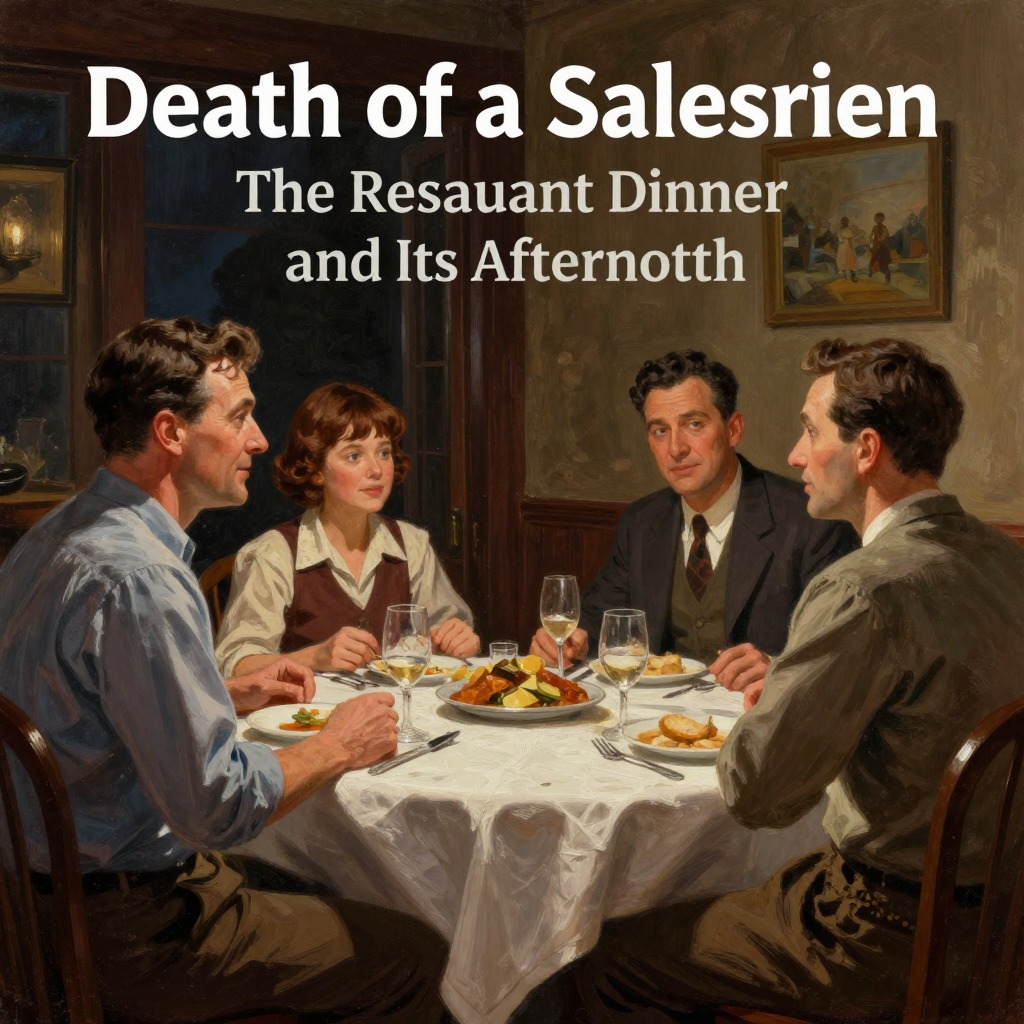
Miss Forsythe's primary function is to be part of Happy's scheme to create a celebratory atmosphere for Biff, who has just failed to secure a loan from Bill Oliver. Happy tells her that Biff is a quarterback for the New York Giants, another lie. When Biff arrives, he is preoccupied with his failure and the need to confess the truth to his father, but Happy insists on maintaining the facade. Miss Forsythe is sent to find a friend, Letta, to join them. When Willy Loman arrives, he is agitated and confused, and the dinner quickly deteriorates into a confrontation between father and son. Miss Forsythe and Letta become bewildered onlookers as Willy storms off and Biff breaks down. After Biff leaves, Happy denies that Willy is his father, telling the women, "He's just a guy," and leads them out to continue the evening.
Thematic Significance
Miss Forsythe embodies the hollow pursuit of pleasure and status that characterizes Happy's life and, by extension, the Loman family's distorted values. She is a commodity to be acquired and displayed, a symbol of success that Happy uses to prop up his own fragile ego. Her presence in the restaurant scene highlights the contrast between the Loman men's desperate need for validation and the superficiality of the means they use to obtain it. When Biff, in a moment of clarity, calls Happy out for his lack of genuine concern for their father, Happy's response is to double down on his pursuit of women and good times. Miss Forsythe, as an object of that pursuit, represents the dead end of the American Dream as the Loman family has internalized it: a life of empty gestures, lies, and the relentless pursuit of being "well liked" without any substance behind it. Her brief appearance, and the ease with which she is manipulated and then discarded, underscores the play's critique of a society that reduces human relationships to transactions.