Martin Hopps
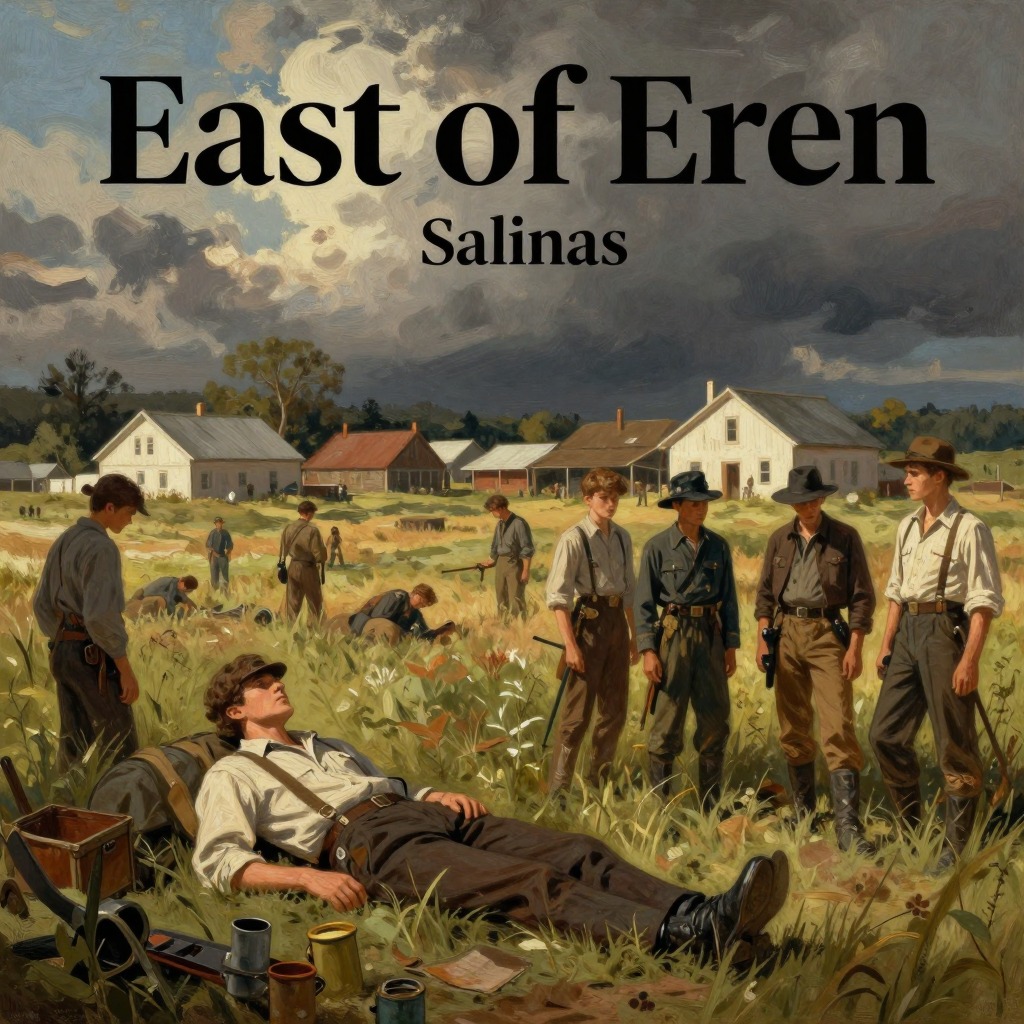
Martin Hopps lived around the corner from the Steinbeck family on Central Avenue in Salinas. He was wide, short, and red-haired, with a wide mouth and red eyes. He was almost the shyest boy in town—to say good morning to him was to make him itch with self-consciousness. He belonged to Troop C of the local militia cavalry, not out of martial ambition but because the armory had a basketball court. His presence in the community was unremarkable, a quiet neighbor whose ordinariness made what followed all the more devastating.
Death and Its Aftermath
When the Germans killed Martin Hopps, the event did not remain a private sorrow. For Olive Hamilton, Martin's death was a personal affront that ignited a ferocious, almost mythic response. The novel states plainly: "If the Germans had known Olive and had been sensible they would have gone out of their way not to anger her. But they didn't know or they were stupid. When they killed Martin Hopps they lost the war because that made my mother mad and she took out after them." She had liked Martin Hopps—he had never hurt anyone. His death transformed her from a woman who had never sold anything beyond an occasional angel cake for the Altar Guild into a relentless warrior for the war effort.
Olive's War: Liberty Bonds as Weapon
Olive cast about for a weapon. Knitting helmets and socks was not deadly enough for her. For a time she put on a Red Cross uniform and met other ladies similarly dressed in the armory, where bandages were rolled and reputations unrolled. But this was not driving at the heart of the Kaiser. Olive wanted blood for the life of Martin Hopps. She found her weapon in Liberty bonds. She brought ferocity to her work, making people afraid not to buy them. When they did buy from Olive, she gave them a sense of actual combat, of putting a bayonet in the stomach of Germany. Her sales skyrocketed, and the Treasury Department began to notice. First came mimeographed letters of commendation, then real letters signed by the Secretary of the Treasury. Prizes arrived: a German helmet, a bayonet, a jagged piece of shrapnel set on an ebony base. She quadrupled her already fabulous record and was awarded the fairest prize of all—a ride in an army airplane.
The Airplane Ride: Courage and Absurdity
Olive's airplane ride, a direct consequence of her bond-selling triumph, became a comic and poignant episode that reveals the depth of her character. She did not believe in airplanes—the fact that she had seen them did not make her believe in them one bit more. Yet she could not refuse the prize without letting her family down. She made her will, burned her husband's love letters, bought all new underwear (horrified at being found dead with mended or unmended underclothes), and prepared for death. At the Salinas Race Track, she was hoisted into the cockpit, growing rounder with each layer of flight clothing until she looked like a goggled ball. When the pilot, meaning no harm, shouted "Stunt?" Olive heard "stuck." Convinced she was about to die, she decided to encourage the frightened young soldier so he would not be too afraid before they hit the earth. She smiled and nodded at the end of each loop and barrel roll. Afterward, the pilot said over and over, "She's the goddamest woman I ever saw. I tore up the rule book and she wanted more." It took four men to get her out of the cockpit; she was so rigid they could not bend her. She went to bed for two days.
Narrative Role and Significance
Martin Hopps himself appears only as a memory and a catalyst. His death is the trigger that transforms Olive from a conventional mother into a figure of almost absurdist heroism. The episode serves multiple functions in the novel: it illustrates how the distant war in Europe reached into the intimate lives of Salinas families; it provides a darkly comic counterpoint to the novel's more tragic losses; and it demonstrates the novel's recurring theme that personal grief, when channeled into action, can produce both noble and ridiculous results. Martin Hopps is the unseen face behind a transformation, the ordinary boy whose death made a mother declare war on an empire.