Colonel Hyrum Graff
Colonel Hyrum Graff is the director of primary training at the Battle School, the man who recruits Ender Wiggin and then systematically dismantles his childhood to build the commander humanity needs to defeat the buggers. He is the novel's central authority figure, a manipulative, weary, and ultimately tragic figure whose methods are as cruel as they are effective. Graff's philosophy, stated bluntly to Ender, is that "individual human beings are all tools, that the others use to help us all survive," and he acts on this belief without flinching, even as he acknowledges the cost to the children he molds.
Recruitment and the Philosophy of Isolation
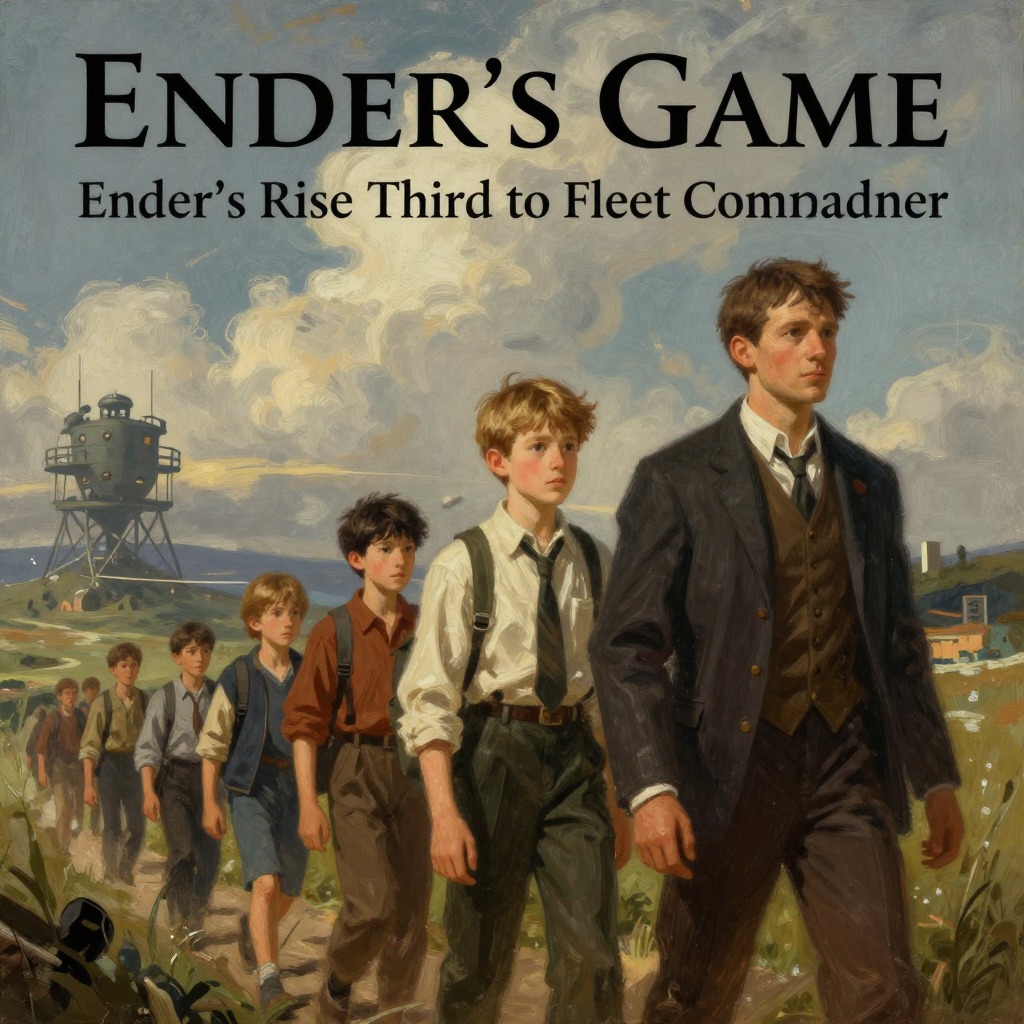
Graff first appears at the Wiggin home, posing as an officer investigating Ender's fight with Stilson, only to reveal that the entire confrontation was a final test. He tells Ender, "The final step in your testing was to see what would happen if the monitor comes off," and that the fight proved Ender's motivation was not cruelty but self-preservation. Graff's recruitment speech is a masterclass in manipulation: he admits the truth about the hardships of Battle School—no vacations, no visitors, a training that lasts until age sixteen—while simultaneously appealing to Ender's sense of duty, telling him that "if there's a chance that because you're with the fleet, mankind might survive," then he must come. He even uses Ender's family history, revealing that his parents were born into noncompliant families and that Ender's very existence is a source of tension, to sever Ender's emotional ties to home. Graff's goal is not just to recruit Ender but to isolate him, telling his colleague, "I'll have him completely separated from the rest of the boys by the time we get to the School." This isolation is deliberate: "Isolate him enough that he remains creative—otherwise he'll adopt the system here and we'll lose him." Graff understands that Ender's genius requires loneliness to flourish, and he is willing to make Ender miserable to achieve it.
The Architect of Ender's Trials
From the shuttle launch onward, Graff orchestrates Ender's suffering. He publicly praises Ender as "the best in this launch," knowing it will make the other boys hate him, and when Ender breaks Bernard's arm in self-defense, Graff commends him for it, calling it "a master stroke," even though Ender insists it was an accident. Graff's response is chilling: "My job isn't to be friends. My job is to produce the best soldiers in the world." He deliberately pits Ender against his peers, forcing him to prove his superiority through constant struggle. When Ender is promoted to commander of Dragon Army, Graff gives him an untrained, underage army and forbids trades, then schedules battles at an impossible pace—seven in seven days, then two in one day—to push Ender to his limits. Graff tells Major Anderson, "We want to bring him along," and "We're doing what must be done," even as Anderson protests that the game is being wrecked. Graff's response reveals his single-mindedness: "If Ender isn't the one, if his peak of military brilliance does not coincide with the arrival of our fleets at the bugger homeworlds, then it doesn't really matter what our training method is or isn't." He is willing to sacrifice the integrity of the Battle School, and Ender's well-being, for the sake of the war.
The Hidden Compassion and the Final Deception
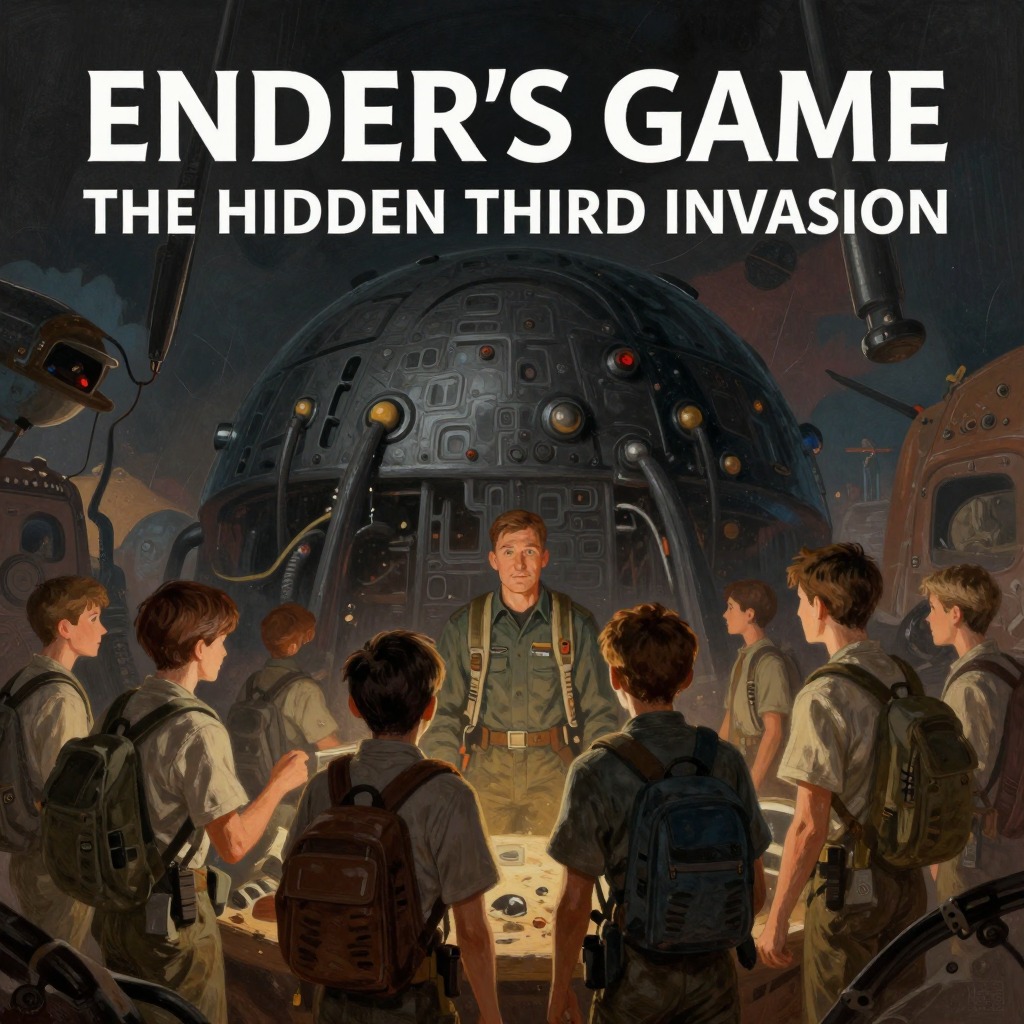
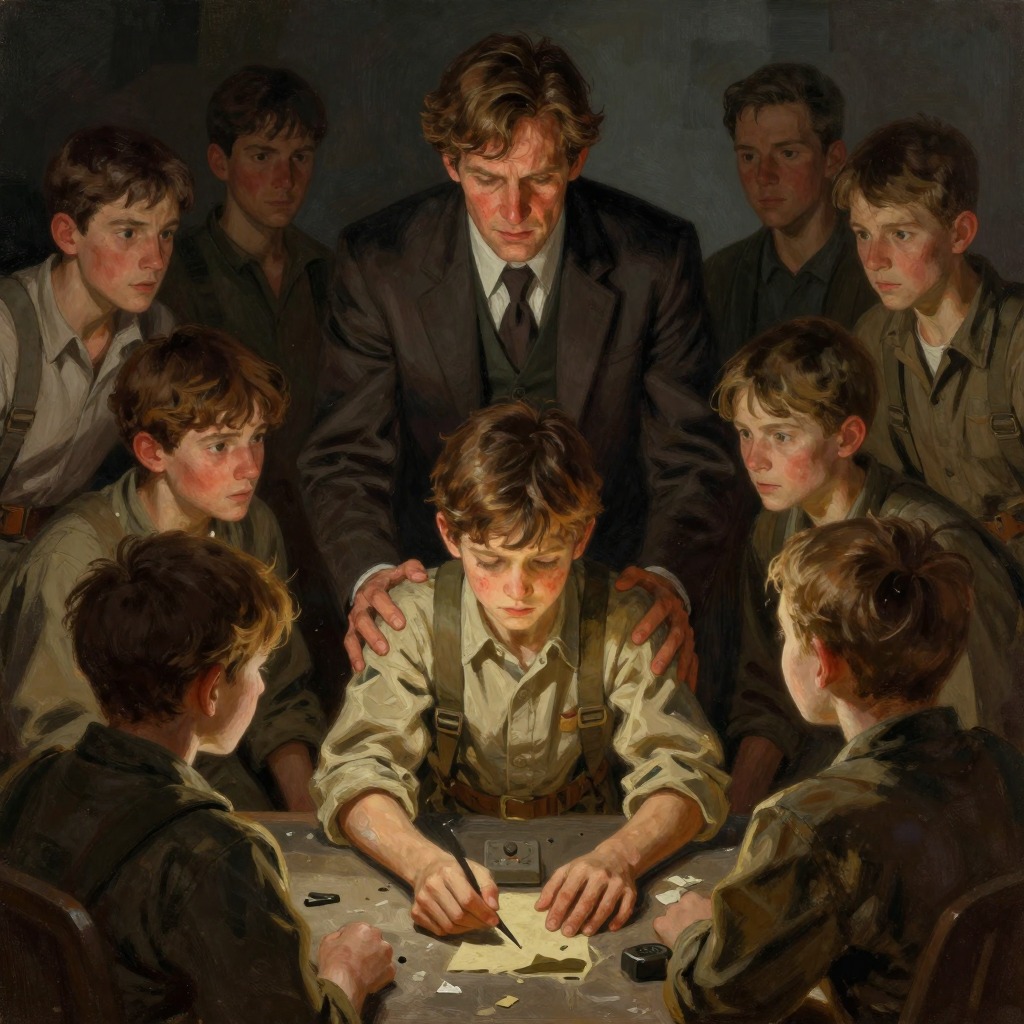
Despite his cold exterior, Graff is not without feeling. After the shuttle incident, he tells Anderson, "The kid's wrong. I am his friend," and "He's clean. Right to the heart, he's good." He also expresses doubt about his own methods, asking, "Anderson, think what we're going to do to him," and admitting, "I know I'm wrecking the game." When Ender becomes despondent at the End of the World in the mind game, Graff brings Valentine to write a letter, using her love as a tool to re-engage Ender, but he also shows genuine concern, telling her, "Your brother is a very unhappy little boy." Graff's ultimate act is the final deception: he accompanies Ender to Command School, where Ender believes he is playing simulations, but in reality, he is commanding the real Third Invasion fleet. Graff is present at the final battle, and when Ender destroys the bugger homeworld, Graff embraces him, tears streaming down his face, whispering, "Thank you, thank you Ender. Thank God for you, Ender." But the triumph is hollow, as Ender realizes he has killed billions without knowing it. Graff later explains the necessity: "It had to be a trick or you couldn't have done it. We had to have a commander with so much empathy that he would think like the buggers... But somebody with that much compassion could never be the killer we needed." He takes responsibility, saying, "We aimed you. We're responsible."
Aftermath and Legacy
After the war, Graff faces a court martial for his treatment of Ender, but he is acquitted, arguing that his actions were "necessary for the preservation of the human race." He is reassigned as the Minister of Colonization, overseeing the settlement of the empty bugger worlds. In his final conversation with Anderson, Graff reveals that he has ensured Ender will never return to Earth, deeding him the lake house but knowing the politicians will never let him come back. He also reveals that he knows the identities of Locke and Demosthenes, and that he helped persuade Demosthenes to argue for Ender's exile, to protect him from being used by Peter. Graff's legacy is ambiguous: he created the savior of humanity, but at the cost of Ender's innocence and happiness. He is a man who did terrible things for the right reasons, and the novel leaves him as a figure of both admiration and condemnation, a testament to the moral compromises of war.