King of Brobdingnag
The King of Brobdingnag is the sovereign of the giant kingdom of Brobdingnag, a prince of profound learning, austere countenance, and unwavering moral integrity. He is the most intellectually formidable figure Gulliver encounters in his travels, and his conversations with the diminutive visitor form the satirical core of the second voyage. The king is not merely a giant in stature but in wisdom, and his judgments on European civilization—delivered with calm authority—expose the pettiness, corruption, and violence that Gulliver, in his patriotic fervor, tries to defend.
Identity and Character
The King of Brobdingnag is described as a prince of much gravity and austere countenance, educated in philosophy and particularly mathematics. When Gulliver is first presented to him, the king initially mistakes him for a splacnuck, a small animal, and then suspects he might be a piece of intricate clockwork, a testament to the advanced mechanical arts of the kingdom. Only after hearing Gulliver speak rationally does he begin to take him seriously. The king is a patron of learning, though his kingdom's scholarship is confined to morality, history, poetry, and practical mathematics—subjects applied to agriculture and mechanical arts. He has no tolerance for abstract metaphysics or political intrigue. His laws are models of clarity: no law may exceed the number of letters in the alphabet (twenty-two), and to write a commentary on any law is a capital crime. He governs with common sense, reason, justice, and lenity, and he regards the European science of politics with contempt, stating that whoever could make two ears of corn grow where only one grew before would deserve better of mankind than the whole race of politicians put together.
The King's Interrogation of European Civilization
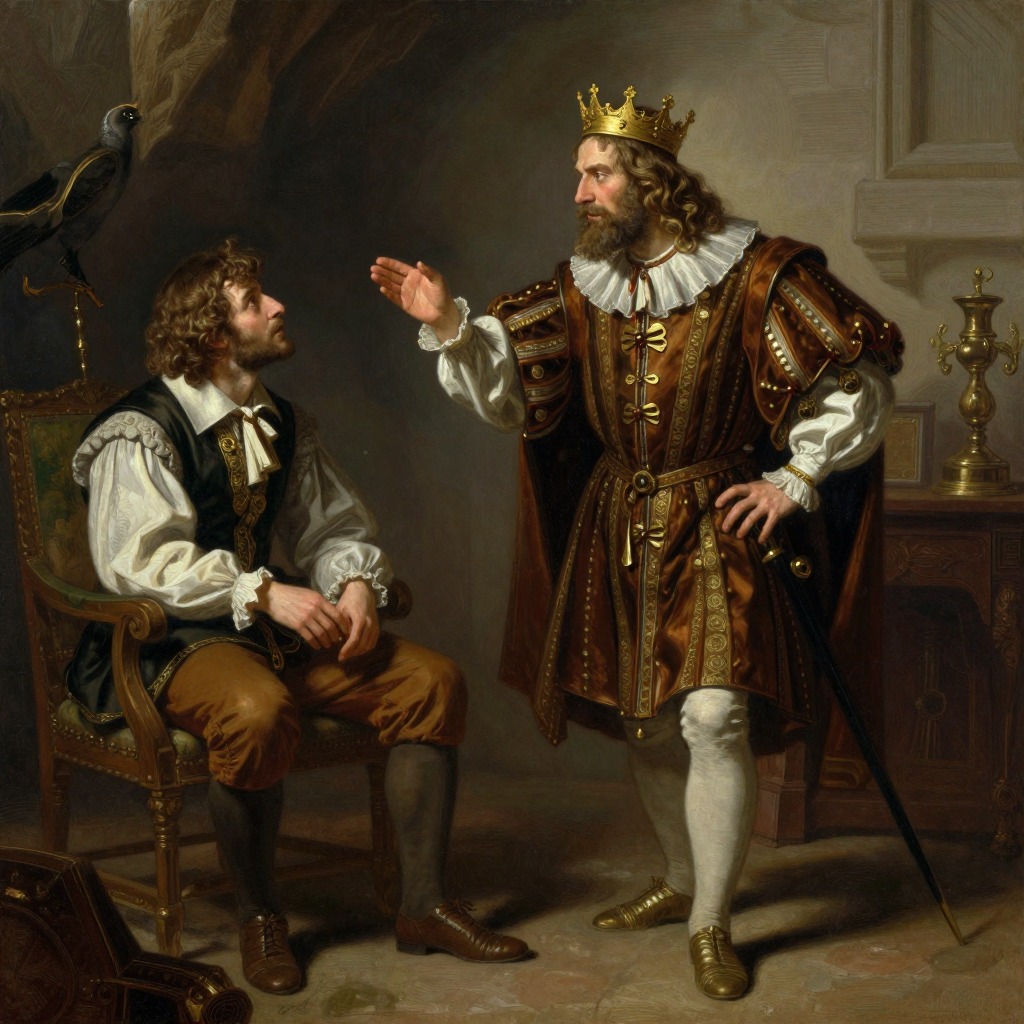
The king's most significant role is as a relentless interrogator of Gulliver's accounts of England. Over five audiences, each lasting several hours, Gulliver delivers a panegyric on his native country, covering its parliament, courts, treasury, military, religion, and recent history. The king listens attentively, takes notes, and then, in a sixth audience, subjects every claim to devastating scrutiny. He questions the qualifications of the nobility, the integrity of judges, the motives of commoners seeking election, the expense and corruption of the legal system, the burden of national debt, the necessity of a standing army in peacetime, and the morality of wars of conquest. He finds Gulliver's historical account to be nothing but a heap of conspiracies, rebellions, murders, massacres, revolutions, and banishments—the worst effects of avarice, faction, hypocrisy, perfidiousness, cruelty, rage, madness, hatred, envy, lust, malice, and ambition. His final verdict, delivered with the king holding Gulliver in his hand and stroking him gently, is that the bulk of Gulliver's countrymen are "the most pernicious race of little odious vermin that nature ever suffered to crawl upon the surface of the earth."
The Rejection of Gunpowder
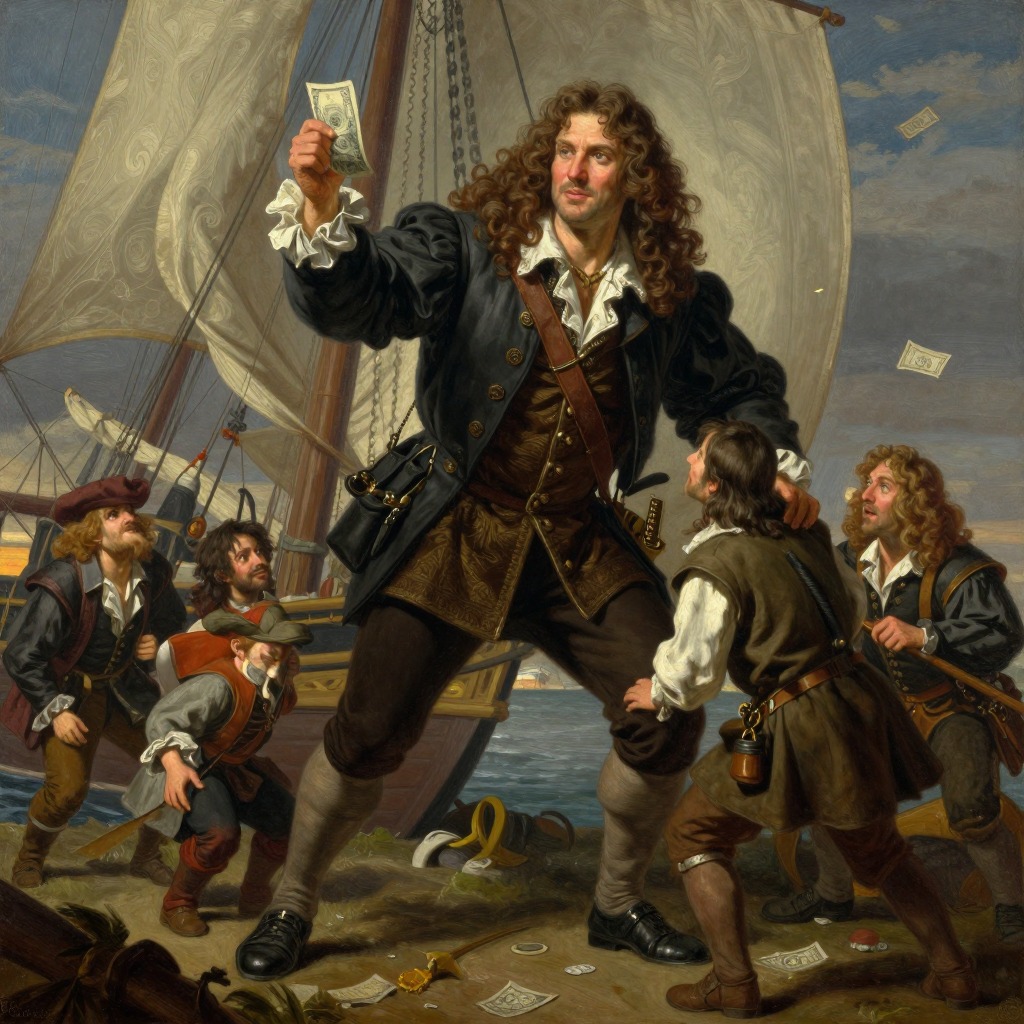
The most dramatic demonstration of the king's moral philosophy comes when Gulliver, hoping to ingratiate himself further, offers to reveal the secret of gunpowder. He describes cannons, bombs, and the devastation they can wreak—destroying armies, battering walls, sinking ships—and proposes to teach the king's workmen how to manufacture them. The king is struck with horror. He is amazed that so impotent and grovelling an insect could entertain such inhuman ideas. He protests that he would rather lose half his kingdom than be privy to such a secret, and commands Gulliver, on pain of death, never to mention it again. Gulliver, writing from the perspective of European "enlightenment," laments this as a strange effect of narrow principles, a missed opportunity for absolute power. But the king's rejection is the moral center of the book: it is a principled refusal to let technological power override human life, a stance that makes the European pursuit of political "science" look barbaric.
Relationship with Gulliver and the Court
Despite his harsh judgments, the king treats Gulliver with genuine kindness and curiosity. He takes pleasure in conversing with him, and Gulliver is placed at his left hand during the royal family's Wednesday dinners. The king is fond enough of Gulliver to order a special apartment for him and to ensure Glumdalclitch continues as his nurse. Yet the relationship is fundamentally unequal: the king sees Gulliver as a curiosity, a living miniature whose entire civilization is a contemptible imitation of grandeur. When Gulliver boasts of his country's achievements, the king laughs heartily and asks whether he is a Whig or a Tory, reducing European political divisions to absurdity. The king's laughter is not cruel but philosophical; it is the laughter of a truly wise man at the pretensions of a creature who mistakes his own smallness for greatness.
Thematic Significance
The King of Brobdingnag functions as Swift's ideal ruler—rational, just, peace-loving, and immune to the corruptions of power. He is the antithesis of the Lilliputian emperor, whose court is riven by faction and whose ambitions are imperial. The king's rejection of gunpowder and his condemnation of European history are not the ravings of a naive giant but the considered judgments of a philosopher-king. Through him, Swift articulates a devastating critique of eighteenth-century Europe: its wars, its legal sophistry, its economic mismanagement, and its moral hypocrisy. The king's final words to Gulliver—calling his people "the most pernicious race of little odious vermin"—are the most famous and bitter verdict in the entire book, a judgment that Gulliver himself, by the end of his travels, will come to share.