Dobby
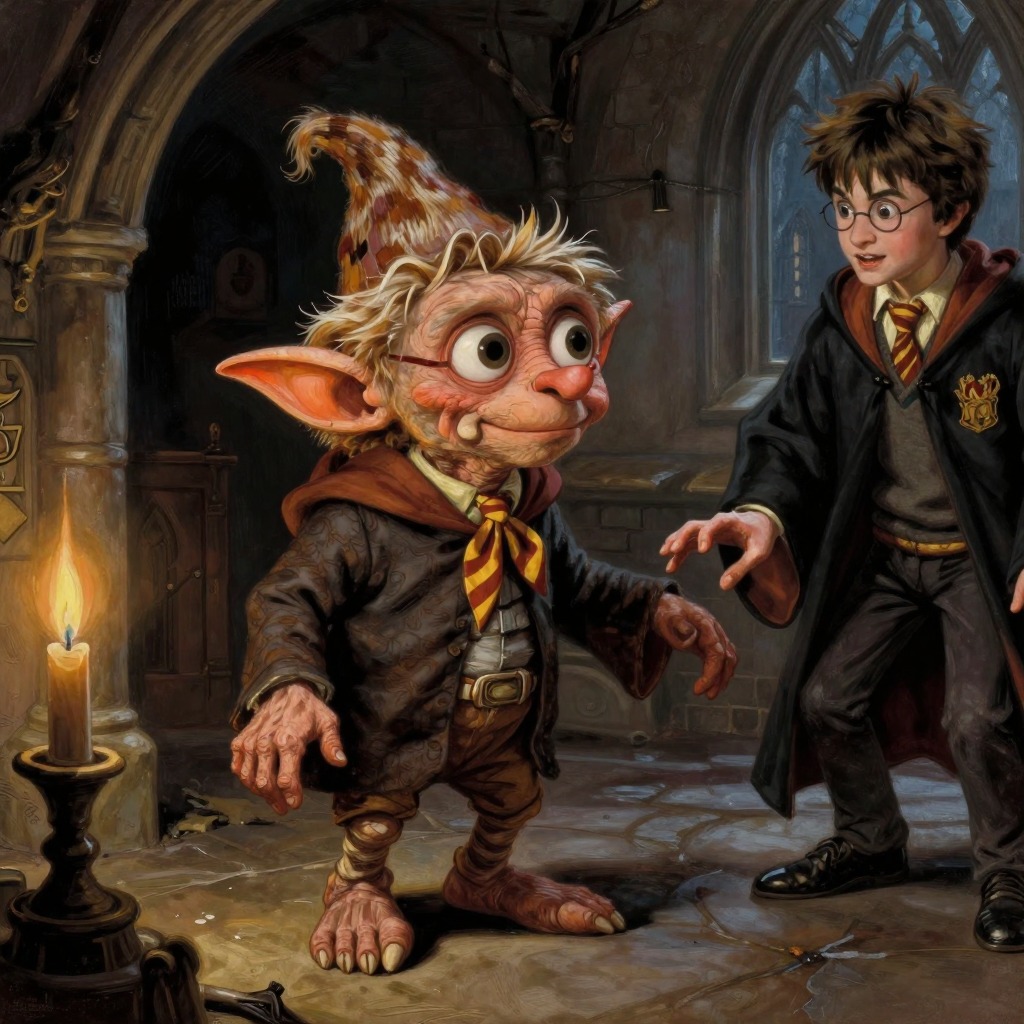
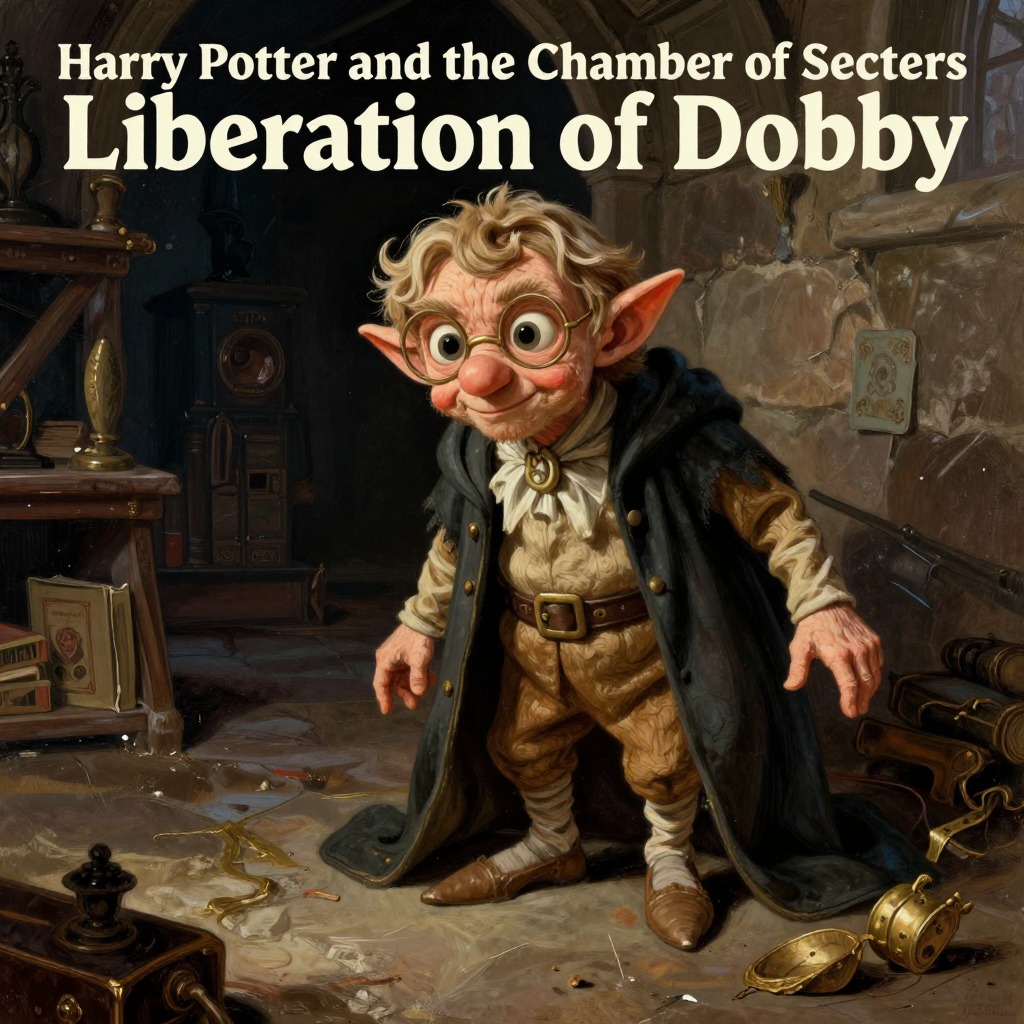
Dobby is a house-elf who serves the Malfoy family, and his unexpected appearance in Harry Potter's bedroom at number four, Privet Drive, marks the beginning of a year-long campaign to keep Harry away from Hogwarts School of Witchcraft and Wizardry. With his large, bat-like ears, bulging green eyes the size of tennis balls, and a wardrobe consisting of an old pillowcase with rips for arm and leg holes, Dobby is both a comic and tragic figure. He is bound to serve one house and one family forever, a servitude he describes as a life of constant self-punishment, and his devotion to Harry stems from the belief that Harry's survival of Lord Voldemort's attack made him a beacon of hope for all the lowly and enslaved of the magical world. Dobby's warning that a plot is afoot to make terrible things happen at Hogwarts sets the central mystery of the year in motion, and his actions, though well-intentioned, repeatedly put Harry in danger, creating a complex relationship defined by gratitude, frustration, and ultimately, liberation.
Identity and Introduction
Dobby first appears in Harry's bedroom on the night of Harry's twelfth birthday, having watched Harry from the garden hedge earlier that day. He introduces himself as "Dobby, sir. Just Dobby. Dobby the house-elf," and immediately displays his peculiar nature by bursting into noisy tears when Harry politely offers him a seat, explaining that he has never been asked to sit down by a wizard "like an equal." His appearance is marked by his constant self-punishment; he bangs his head against the window, the wall, and even beats himself with a desk lamp whenever he feels he has spoken ill of his family or revealed too much. Dobby explains that he is bound to serve the wizard family he belongs to forever, and that only his masters presenting him with clothes can set him free, a rule that keeps him trapped in servitude. His loyalty to Harry is immediately apparent, as he declares that Harry Potter is "too great, too good, to lose," and he has come to warn Harry that he must not return to Hogwarts because he will be in mortal danger.
Arc Through the Plot
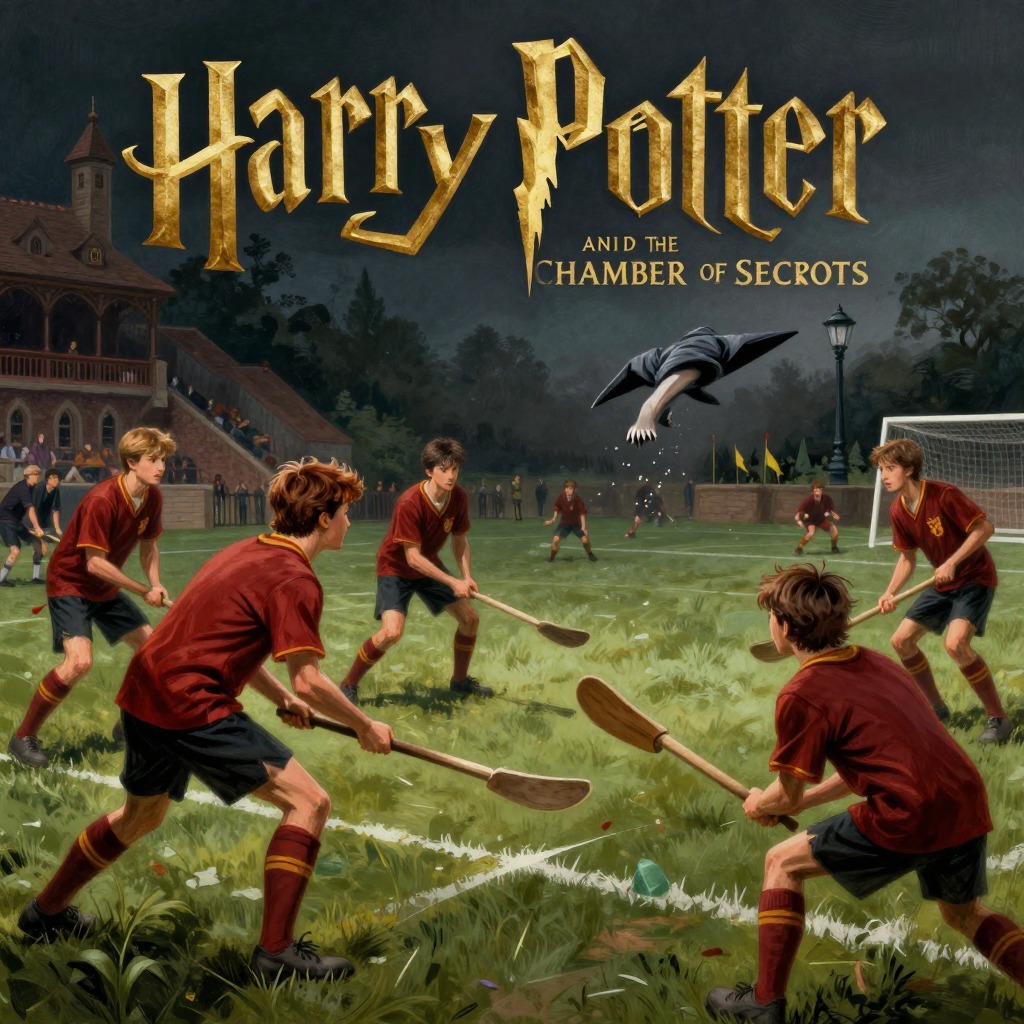
Dobby's interference spans the entire school year, each act designed to protect Harry but often causing more harm than good. His first major act is sealing the gateway at King's Cross Station, preventing Harry and Ron Weasley from passing through to Platform 9¾, which forces them to fly the enchanted Ford Anglia to Hogwarts and crash into the Whomping Willow. Dobby later reveals this to Harry in the hospital wing, admitting that he had to iron his own hands afterward as punishment, but that he did not care because he thought Harry was safe. His most dangerous intervention comes during the Gryffindor versus Slytherin Quidditch match, where he enchants a Bludger to attack Harry relentlessly, hoping that a grievous injury would be enough to send Harry home. The Bludger breaks Harry's arm, but Harry still manages to catch the Golden Snitch, and Dobby's plan fails. Throughout these events, Dobby's motives remain pure; he is trying to save Harry from the dangers of the Chamber of Secrets, which he knows is open once more, but his methods are misguided and nearly fatal.
Relationships and Conflict
Dobby's primary relationship is with his master, Lucius Malfoy, a man who treats him with cruelty and contempt. Dobby is terrified of Lucius, and his fear is evident when he cowers behind Lucius's legs, heavily wrapped in bandages, during the confrontation in Dumbledore's office. Dobby's loyalty to Harry is in direct conflict with his duty to his master, and he is caught between his desire to protect Harry and his fear of Lucius's wrath. His relationship with Harry is one of reverence and devotion, but it is also marked by Harry's frustration and anger. Harry is furious when he learns that Dobby stopped his letters from Ron and Hermione, and even more so when he discovers that Dobby enchanted the Bludger. Despite this, Harry feels sympathy for Dobby's plight, recognizing that his life of servitude is far worse than Harry's own summer with the Dursleys. Dobby's interactions with Harry are characterized by his constant self-flagellation, his tearful declarations of Harry's greatness, and his desperate pleas for Harry to go home, creating a dynamic that is both touching and exasperating.
Change and Ending
Dobby's arc culminates in his liberation, a moment that is both triumphant and symbolic. After Harry destroys Tom Riddle's diary and saves Ginny Weasley, Lucius Malfoy arrives at Hogwarts, furious that Dumbledore has returned. Harry, realizing that Dobby is a house-elf who can be freed if his master gives him clothes, tricks Lucius into handing Dobby a sock. Harry stuffs the diary into his own filthy sock and forces it into Lucius's hand; Lucius, disgusted, throws the sock aside, and Dobby catches it, declaring, "Master has given a sock... Dobby is free." Lucius is enraged and lunges at Harry, but Dobby, now free, uses his magic to throw Lucius backward down the stairs, shouting, "You shall not harm Harry Potter!" Dobby's freedom is a direct result of Harry's cleverness and compassion, and it represents a significant victory over the cruelty of the Malfoy family. Dobby's final act is to hug Harry and sob, "Harry Potter is greater by far than Dobby knew! Farewell, Harry Potter!" before disappearing with a loud crack, leaving Harry to reflect on the strange and powerful bond they have formed.
Thematic Significance
Dobby's story is central to the novel's exploration of freedom, choice, and the nature of servitude. His enslavement to the Malfoy family is a stark contrast to the freedom that Harry and his friends enjoy, and his liberation is a powerful symbol of the triumph of good over evil. Dobby's belief that Harry is a beacon of hope for the enslaved and the lowly highlights the idea that Harry's actions have consequences far beyond his own life, and that his courage inspires others. The manner of Dobby's freedom—through a gift of clothing, a seemingly trivial object—underscores the arbitrary and cruel nature of the rules that govern house-elf servitude, and the fact that Lucius Malfoy is tricked into freeing him is a fitting comeuppance for a man who has used his power to oppress others. Dobby's unwavering loyalty to Harry, despite the punishments he endures, also speaks to the novel's broader theme of loyalty as a defining characteristic of true heroism, and his story serves as a reminder that even the most powerless individuals can find the strength to defy their oppressors.