Fenrir Greyback
Fenrir Greyback is the most feared and savage werewolf of his era, a figure who has abandoned any pretense of controlling his condition and instead embraces it as a weapon. Unlike most werewolves, who transform only under the full moon, Greyback has cultivated a taste for human flesh that drives him to attack even when not transformed, making him a uniquely terrifying agent of Lord Voldemort's terror campaign. His presence at the Battle of the Astronomy Tower and his brutal assault on Bill Weasley mark him as a key enforcer of Voldemort's will, a monster who operates on the boundary between human and beast.
Identity and Background
Greyback is defined by his mission to bite and contaminate as many people as possible, aiming to create enough werewolves to overwhelm the wizarding world. He specializes in attacking children, believing that biting them young and raising them away from their parents will foster a generation that hates normal wizards. Remus Lupin, himself a werewolf, reveals that Greyback bit him as a child, an act of deliberate vengeance against Lupin's father. Greyback does not lose control during the full moon; he positions himself close to victims, planning his attacks to ensure he can strike. He is described as having a rasping bark of a voice, matted grey hair and whiskers, filthy hands with long yellowish nails, and pointed teeth. He smells powerfully of dirt, sweat, and blood, and blood trickles down his chin as he licks his lips slowly and obscenely.
Role in Voldemort's Forces
Greyback is the figure Voldemort uses to marshal the werewolf population. Lupin, who has been living among werewolves as a spy for Dumbledore, reports that nearly all werewolves are on Voldemort's side, believing that under his rule they will have a better life. Greyback's argument that werewolves deserve blood and should revenge themselves on normal people is far more persuasive than Lupin's reasoned appeals. Voldemort has promised Greyback prey in return for his services, and Greyback is used as a threat to coerce cooperation: Draco Malfoy threatens Mr. Borgin by invoking Greyback as a "family friend" who will "drop in from time to time" to ensure Borgin gives the problem his full attention. Hermione Granger later confirms that the werewolf who attacked and killed a five-year-old boy, the brother of the Montgomery sisters, was rumored to be Fenrir Greyback.
The Battle of the Astronomy Tower
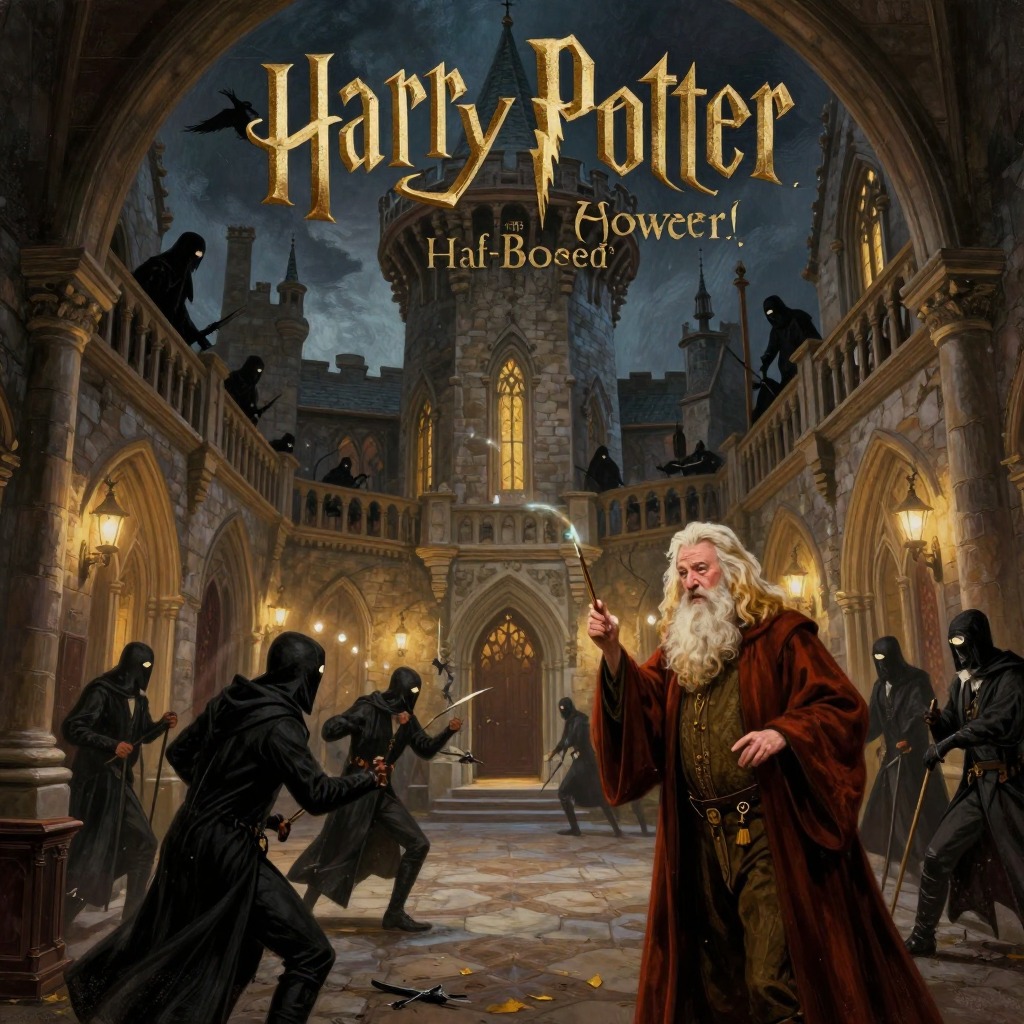
On the night of Dumbledore's death, Greyback is one of the Death Eaters who bursts onto the Astronomy Tower. He is eager to attack Dumbledore, snarling, "I wouldn't want to miss a trip to Hogwarts... Not when there are throats to be ripped out... delicious, delicious..." and offers to do Dumbledore "for afters." However, the brutal-faced Death Eater Thorfinn Rowle orders him to stand aside, insisting that Draco Malfoy must be the one to kill Dumbledore. Greyback is blasted out of the way by Rowle when he tries to move forward. Later, during the flight from the castle, Greyback attacks Harry Potter in a corridor, pinning him down with "filthy matted hair in his face, the stench of sweat and blood filling his nose and mouth, hot greedy breath at his throat," but Harry Petrifies him.
Attack on Bill Weasley and Aftermath
Greyback's most consequential act is his attack on Bill Weasley. Although Greyback had not transformed into his wolf form at the time, the bite inflicts cursed wounds that Madam Pomfrey cannot heal with any charm. Remus Lupin explains that while Bill will not become a true werewolf, there will be "some contamination" and he might have "some wolfish characteristics from now on." The attack leaves Bill's face "so badly slashed and ripped that he looked grotesque." Despite this, Fleur Delacour insists she will still marry him, declaring, "It would take more zan a werewolf to stop Bill loving me!" Tonks, witnessing this, confronts Lupin, arguing that if Fleur can accept Bill's condition, then Lupin should stop using his own werewolf nature as a reason to reject her. Greyback's attack thus becomes a catalyst for resolving the romantic tension between Lupin and Tonks, as it forces the characters to confront the question of whether love can survive the contamination of lycanthropy.