Lily Potter
Lily Potter (née Evans) was a Muggle-born witch who attended Hogwarts School of Witchcraft and Wizardry, where she was sorted into Gryffindor House. She was the sister of Petunia Dursley and the wife of James Potter, and together they became the parents of Harry Potter. Lily's life was cut short when Lord Voldemort murdered her and James in their home on the night of October 31, 1981, an event that left Harry orphaned and marked him with his lightning-bolt scar. Her death is the foundational trauma of the series, and her memory exerts a powerful influence over Harry's emotional life and his struggle against the Dark Lord.
Identity and Background
Lily was a Muggle-born witch, meaning she was born to non-magical parents. Her sister Petunia, who later married Vernon Dursley, resented Lily's magical abilities and the attention they brought, a jealousy that festered into the hostility the Dursleys would later show Harry. At Hogwarts, Lily was a talented student, particularly in Potions, and was known for her kindness and intelligence. She became friends with Severus Snape during their childhood, but their friendship ended when Snape's association with Dark Magic and his use of the slur "Mudblood" against her drove them apart. She eventually married James Potter, a fellow Gryffindor and a member of the Marauders, and the couple became key members of the Order of the Phoenix during the First Wizarding War.
Death and the Protective Sacrifice
When Lord Voldemort targeted the Potter family, they went into hiding under the protection of the Fidelius Charm, with their friend Peter Pettigrew appointed as Secret-Keeper. Pettigrew betrayed them, revealing their location to Voldemort. On the night of the attack, Voldemort entered their home and murdered James, who had tried to hold him off. He then confronted Lily, who, without a wand, placed herself between Voldemort and her infant son, begging him to take her life instead. Voldemort killed her, but her willing sacrifice—an act of pure, selfless love—triggered an ancient magical protection. When Voldemort's killing curse struck Harry, it rebounded, destroying Voldemort's body and leaving only the scar on Harry's forehead. This protective enchantment, rooted in Lily's blood, would later prove crucial in Harry's survival against Voldemort's attempts to return.
Lily's Voice and Harry's Trauma
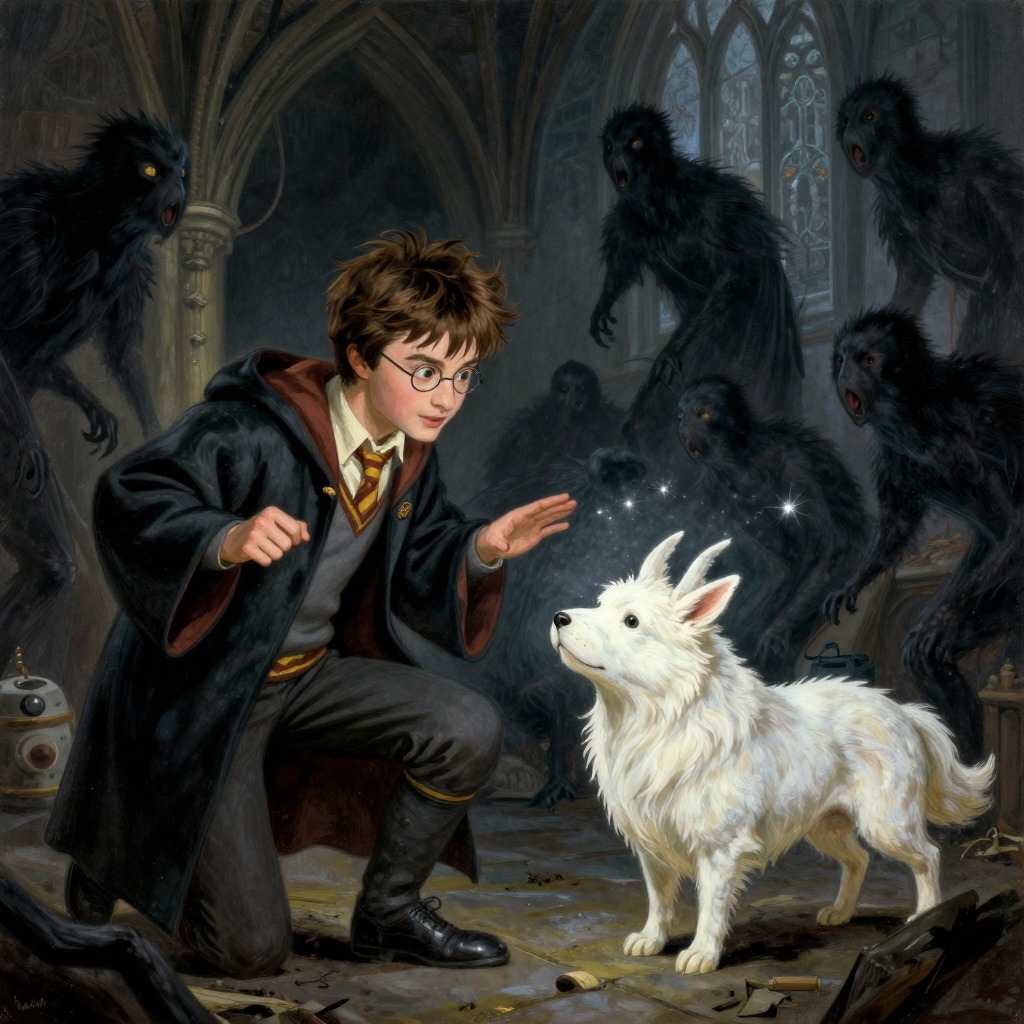
Lily's presence in the story is most powerfully felt through the auditory flashbacks Harry experiences when confronted by Dementors. These soul-sucking creatures force their victims to relive their worst memories, and for Harry, this means hearing his mother's final moments. The screams and pleas—"Not Harry, not Harry, please not Harry!" and "Take me, kill me instead"—echo in his mind, causing him to collapse during a Quidditch match and struggle during his Patronus lessons. This recurring trauma underscores the depth of her sacrifice and the lasting psychological wound of her loss. Harry's desperate desire to hear her voice again, even in such a painful context, reveals his longing for a connection to a mother he never knew.
Relationships and Legacy
Lily's relationships with other characters continue to shape the narrative. Her friendship with Severus Snape, though broken, left a profound mark on him; his lifelong love for her and his guilt over his role in her death (through his report of the prophecy to Voldemort) motivate his complex protection of Harry. Sirius Black, James's best friend and Harry's godfather, was devastated by her death and spent twelve years in Azkaban for a crime he did not commit, partly driven by his loyalty to her memory. Harry himself is often told that he has his mother's eyes, a detail that connects him to her and that Snape, in his final moments, asks Harry to look at him one last time. Lily's legacy is also one of moral choice: Harry's decision to spare Peter Pettigrew's life, despite Pettigrew's betrayal, is framed by Dumbledore as an act that mirrors the mercy Lily and James might have shown, and it creates a debt that may prove significant in the future.
Thematic Significance
Lily Potter embodies the novel's central theme of the power of love as a force stronger than any dark magic. Her sacrifice is not merely a plot device but a philosophical statement: Voldemort's inability to understand love is his ultimate weakness. Her memory also serves as a moral compass for Harry, guiding him toward compassion and away from vengeance. The revelation that Harry himself conjured the stag Patronus that saved him from the Dementors—a Patronus that took the form of his father's Animagus shape—reinforces the idea that his parents live on within him, not as ghosts, but as the best parts of his own character. Lily's love, preserved in Harry's blood and in his heart, becomes a weapon against despair and a source of hope.