Helen Burns
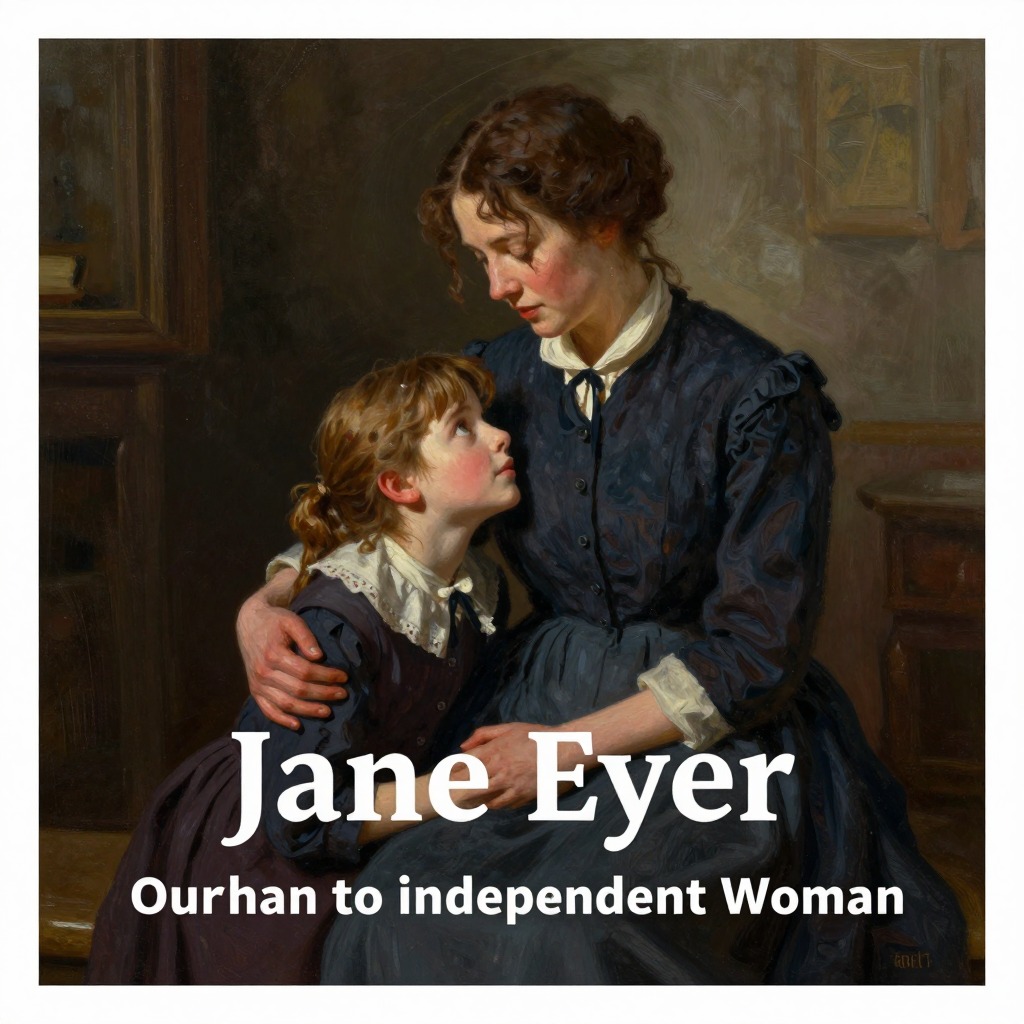
Helen Burns is the most significant friend of Jane Eyre's childhood and the first person to offer her disinterested affection and intellectual kinship. A pupil at Lowood Institution, Helen embodies a form of Christian resignation and forgiveness that stands in stark contrast to Jane's own passionate, rebellious nature. Her brief life and early death from consumption become a defining moral education for Jane, shaping her understanding of suffering, injustice, and the hope of a world beyond this one.
Identity and Background
Helen Burns is introduced as a girl of about thirteen or fourteen, older than Jane, who comes from a place "farther north, quite on the borders of Scotland." She is described as having a pensive face, a thin figure, and a grave, composed manner that sets her apart from the other pupils. Her surname, Burns, is used by the teachers in the school's custom of addressing girls by their last names. Helen is deeply intelligent and well-read, having been taught Latin by her father, and she is capable of reciting Virgil and discussing complex historical and theological ideas. She is also, by her own admission, "slatternly" and careless about order, a trait that repeatedly brings her into conflict with the harsh teacher Miss Scatcherd.
Life at Lowood and Relationship with Jane
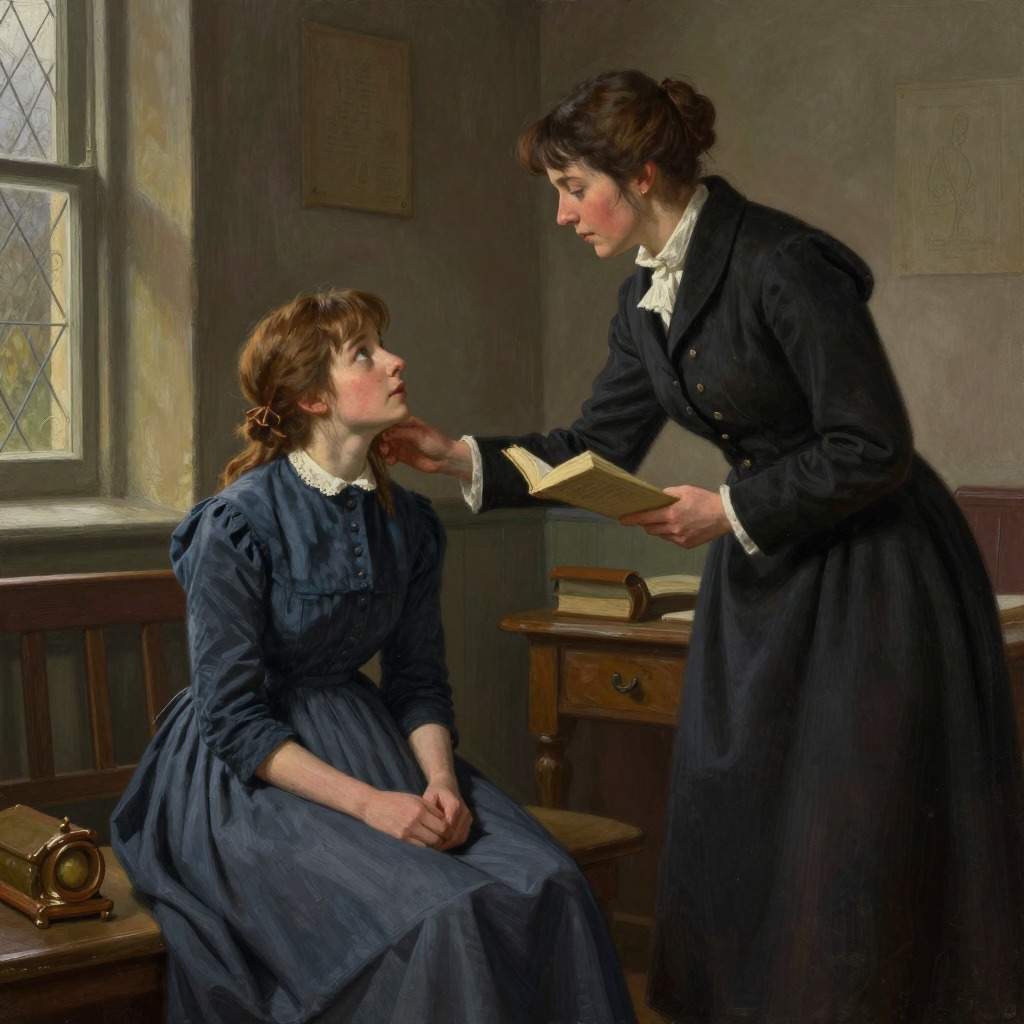
From the moment Jane arrives at Lowood, Helen becomes her guide and confidante. On Jane's first day, Helen explains the nature of the institution—a charity school for orphans—and describes the teachers, including the kind and clever superintendent Miss Temple and the severe Miss Scatcherd. Helen is frequently punished by Miss Scatcherd for her untidiness and inattention, yet she endures these humiliations with a quiet, uncomplaining dignity that astonishes Jane. When Miss Scatcherd flogs Helen with a bundle of twigs, Helen does not cry; only later does a single tear glisten on her cheek. Jane, outraged, declares she would resist such treatment, but Helen replies with a doctrine of patient endurance: "It is far better to endure patiently a smart which nobody feels but yourself, than to commit a hasty action whose evil consequences will extend to all connected with you." This fundamental difference in worldview—Jane's instinct for justice and retaliation versus Helen's Christian forbearance—becomes the central tension of their friendship.
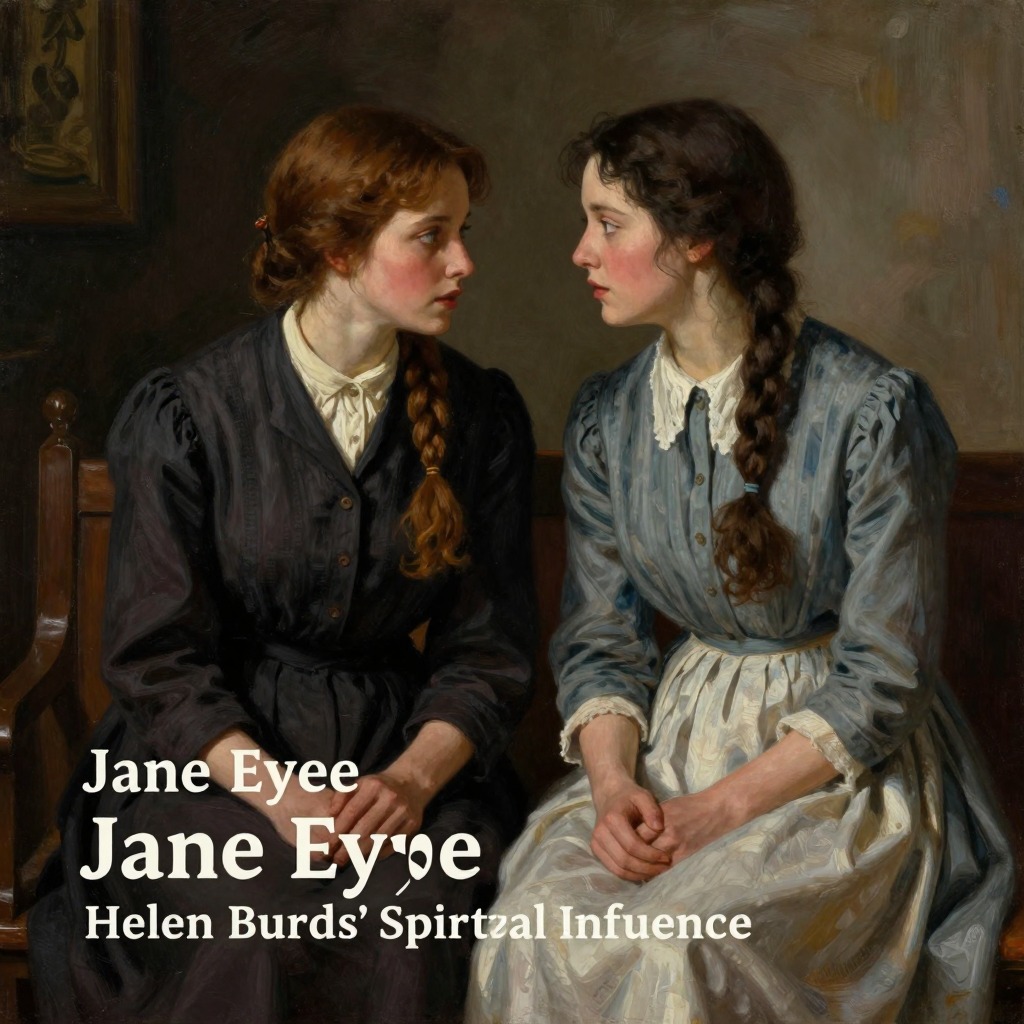
Helen's influence on Jane is profound. When Mr. Brocklehurst publicly denounces Jane as a liar, it is Helen who seeks her out in the empty schoolroom, brings her coffee and bread, and offers comfort. Helen tells Jane that Mr. Brocklehurst is "not a god" and that the other pupils pity her rather than despise her. She articulates a vision of an invisible world and a kingdom of spirits that watch over the innocent, a belief that sustains Jane in her darkest moment. Later, in Miss Temple's room, Helen reveals the full range of her intellect and spirit, conversing with Miss Temple about books, history, and languages, and reading a page of Virgil. Jane watches with wonder as Helen's pale face becomes animated, and she feels the power of a mind far more developed than her own.
Illness and Death
Helen's health, already fragile, deteriorates during the typhus epidemic that ravages Lowood. She is not a victim of typhus, however, but of consumption, a disease that Jane, in her ignorance, believes to be mild. Helen is removed to Miss Temple's room, and Jane is kept from her. On the night of Helen's death, Jane, unable to sleep, creeps through the dark house to find her. She discovers Helen in a little crib beside Miss Temple's bed, pale and wasted but calm. Helen speaks of her impending death with serene faith, telling Jane that she is "going to God" and that Jane must not grieve. She says her father is lately married and will not miss her, and that by dying young she will escape great sufferings. Jane climbs into the crib, and the two girls fall asleep in each other's arms. When Jane awakens, she is being carried back to the dormitory; Helen is dead.
Legacy and Thematic Significance
Helen Burns' grave in Brocklebridge churchyard is marked, fifteen years after her death, by a grey marble tablet inscribed with her name and the word "Resurgam"—"I shall rise again." This epitaph encapsulates the Christian hope that Helen herself embodied. Her influence on Jane is lasting: Helen's doctrine of forgiveness and her belief in a future state where souls are equal before God become a touchstone for Jane's own moral struggles. When Jane later faces the temptation to become Mr. Rochester's mistress, she recalls Helen's teaching and chooses to leave Thornfield rather than violate her principles. When she is tempted to marry St. John Rivers without love, she again draws on the inner strength that Helen's example first awakened. Helen Burns is not merely a childhood friend; she is the moral conscience of Jane's early life, the voice that teaches her that life is too short for nursing animosity and that the soul's integrity is worth any earthly sacrifice.