Mary Ingram
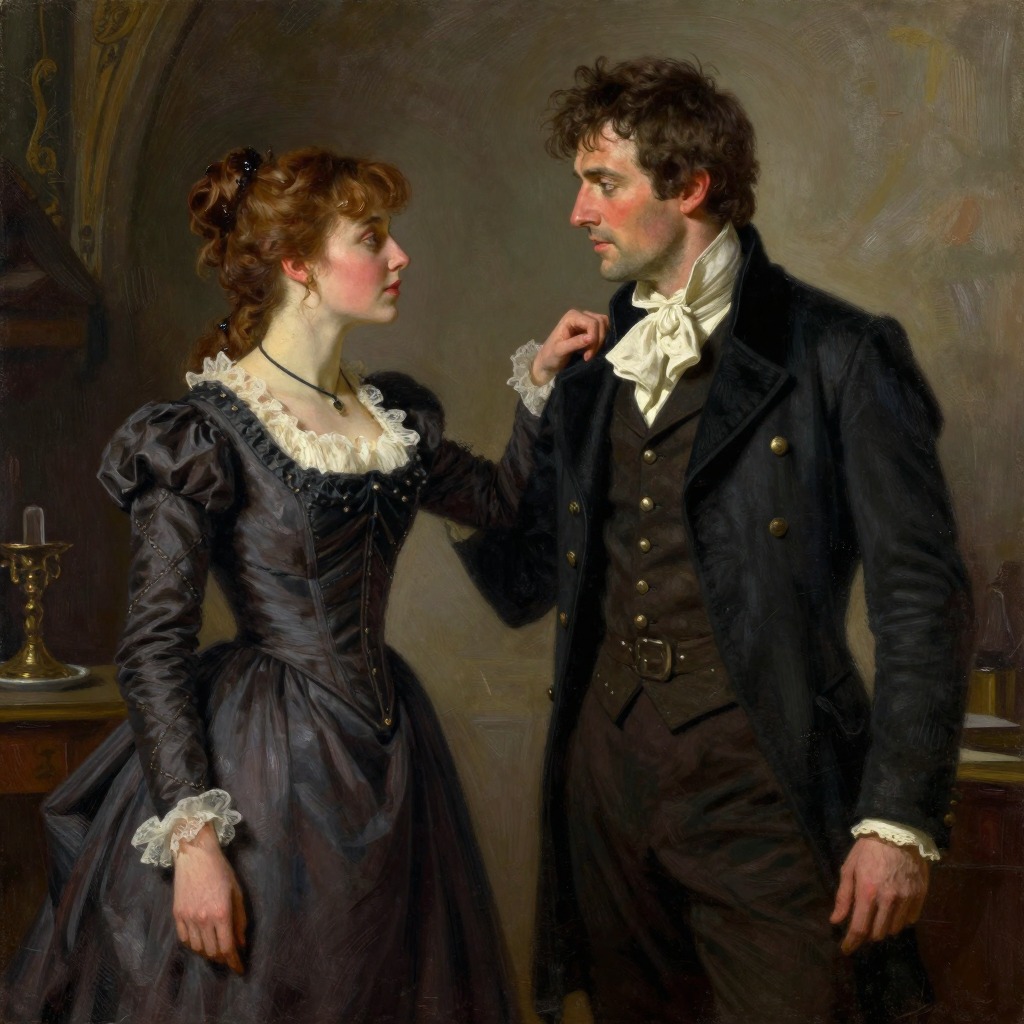
Mary Ingram is a minor figure in the Thornfield Hall house party, yet her presence contributes to the novel's critique of aristocratic society. As the younger sister of the dazzling Blanche Ingram, Mary is defined by what she lacks: the energy, ambition, and performative brilliance that make Blanche the center of attention. Her character serves as a quiet counterpoint, revealing the hollowness beneath the surface of high society and the narrow futures awaiting even its most privileged daughters.
Identity and Appearance
Mary Ingram is the daughter of the Dowager Lady Ingram and the sister of Blanche Ingram and Lord Ingram. She is described as being of equal stature to her sister—"straight and tall as poplars"—but too slim for her height, lacking Blanche's more robust, Dian-like figure. Her face is "milder and more open" than Blanche's, with "softer features" and a skin "some shades fairer" than her sister's dark, Spanish complexion. Yet this comparative softness comes at a cost: Mary is "deficient in life," her face "lacked expression, her eye lustre." She has "nothing to say," and once seated, she remains "fixed like a statue in its niche." This physical and behavioral portrait establishes her as a passive, almost ornamental presence, a stark contrast to the forceful personalities around her.
Role During the Thornfield House Party
During the extended visit of the fashionable party to Thornfield, Mary Ingram remains largely in the background. While Blanche actively courts Mr. Rochester, sings, plays the piano, and dominates conversation with her wit and sarcasm, Mary is described as listening "languidly to the gallant speeches" of one of the Lynn brothers. She is one of the young ladies who, along with Amy and Louisa Eshton, initially dares not visit the fortune-teller alone, and eventually goes in a group. Her reactions are muted: she does not participate in the lively charades or the musical performances that define the party's entertainment. Her presence is noted primarily through her absence of action, reinforcing the novel's implicit argument that aristocratic breeding often produces passivity rather than genuine character.
Relationship with Blanche Ingram
The dynamic between the two Ingram sisters is one of stark contrast. Blanche is all fire, pride, and calculated performance; Mary is all stillness and vacancy. When the gipsy (Mr. Rochester in disguise) is consulted, Mary and the other young ladies are described as having their fortunes told in a body, and they return "hysterical" and "half-scared out of their wits," claiming the gipsy knew everything about them. Mary's reaction is part of this collective hysteria, not an individual response. She is never shown initiating a conversation, expressing a strong opinion, or taking any independent action. Her function is to be the quiet, less remarkable sister, a role that underscores the competitive, hierarchical nature of the marriage market in which both sisters are participants.
Fate and Thematic Significance
Mary Ingram's ultimate fate is revealed in the novel's conclusion: she marries a clergyman, a college friend of St. John Rivers, described as "worthy of the connection." This is a conventional, respectable match, entirely in keeping with her passive character. Unlike her sister Blanche, who is left unmarried after Mr. Rochester's supposed fortune proves insufficient, Mary secures a quiet, unremarkable future. Her story, such as it is, reinforces the novel's broader critique of a society where women's worth is measured by their beauty, accomplishments, and ability to secure a husband. Mary, lacking even the energy to compete aggressively, simply waits to be chosen. Her character, though barely sketched, serves as a reminder that the marriage plot is not a romantic adventure for all women, but a constrained economic and social transaction, and that those without the will or the means to assert themselves are destined for a life of quiet, passive acceptance.