Richard Mason
Richard Mason is a minor but pivotal character in Jane Eyre, a West Indian planter and the brother of Bertha Antoinetta Mason, the madwoman secretly confined at Thornfield Hall. His arrival at the estate during the house party in Chapter XVIII sets in motion the catastrophic revelation of Rochester's prior marriage, an event that destroys Jane's hopes and forces her flight. Mason is defined by his physical weakness, his emotional dependence on Rochester, and his role as the bearer of a truth that unravels the novel's central romance.
Identity and Background
Mason is introduced as a stranger who arrives at Thornfield in a post-chaise during a rainy afternoon, presenting himself as an old friend of Rochester's. He is described as a fine-looking man at first sight, with regular features, but on closer examination his face reveals something that displeases: a tame, vacant life in his large, well-cut eyes, and an unsettled yet inanimate quality. His complexion is singularly sallow, and he shrinks near the fire as if cold, wearing a surtout indoors. The conversation of the other guests soon indicates that he comes from a hot country; the words "Jamaica, Kingston, Spanish Town" confirm the West Indies as his residence. It is there, he explains, that he first met and became acquainted with Rochester. Mason is the brother of Bertha Antoinetta Mason, whom Rochester married in Spanish Town, Jamaica, fifteen years before the novel's main events. The marriage was arranged by Rochester's father and brother for a fortune of thirty thousand pounds, and the Masons concealed the family history of madness and intemperance.
Arrival at Thornfield and the Gipsy Scene
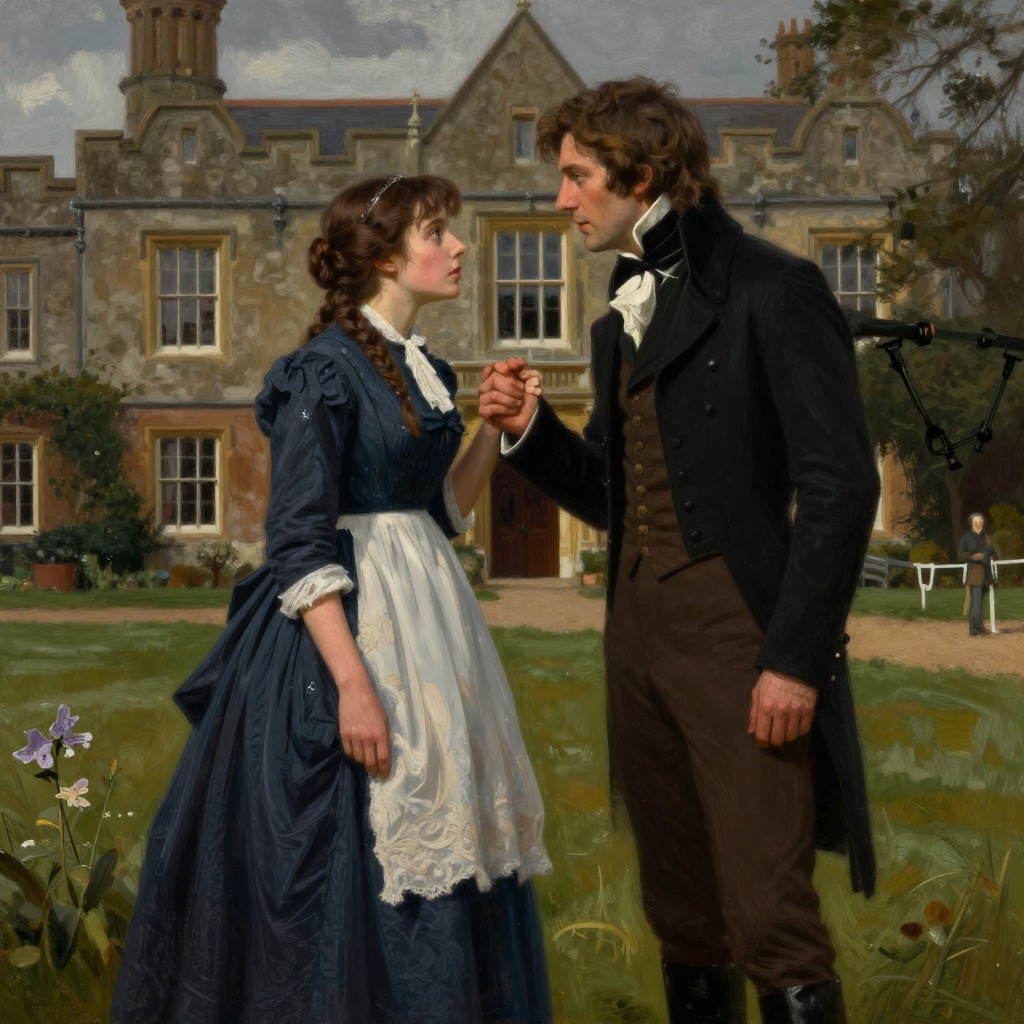
Mason's arrival coincides with the evening of the gipsy fortune-telling, a scene in which Rochester himself, disguised as an old crone, interrogates Jane about her feelings. When Jane informs Rochester of Mason's presence and his origin, Rochester reacts with a convulsive grip on her wrist, a frozen smile, and a spasm that catches his breath. He repeats the name "Mason!—the West Indies!" three times, growing whiter than ashes, and staggers, telling Jane, "I've got a blow; I've got a blow, Jane!" This visceral reaction reveals the profound threat Mason represents: he is the living link to Rochester's hidden wife and the legal impediment to any new marriage. Despite this, Mason appears at supper laughing and merry, seemingly unaware of the turmoil his presence has caused.
The Attack and Its Aftermath
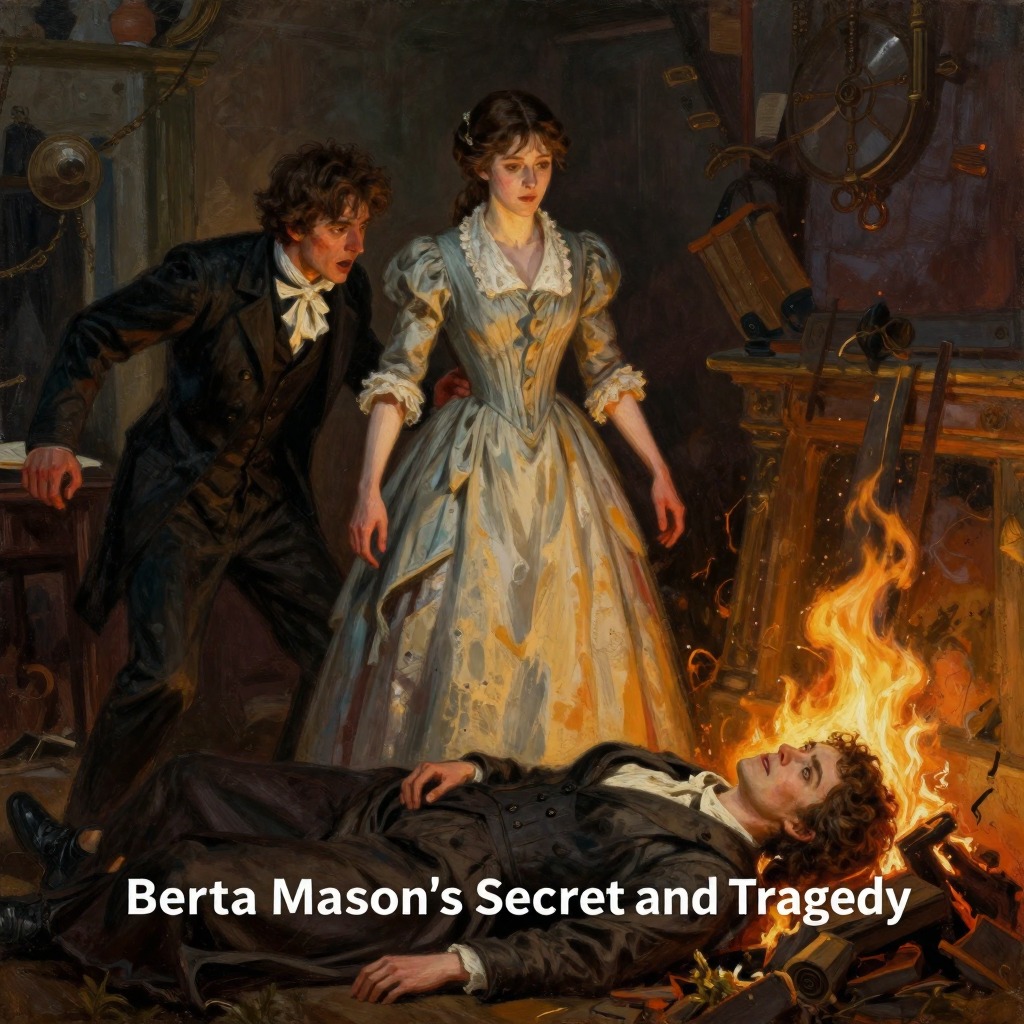
Later that night, a savage, sharp shriek tears through Thornfield Hall, followed by a struggle and a half-smothered voice crying "Help! help! help!" and "Rochester! Rochester! for God's sake, come!" Jane, roused by the noise, finds Rochester descending from the upper storey. He calms the alarmed guests by claiming a servant has had a nightmare, but then summons Jane to the third-storey corridor. There, in a room behind a concealed door, she finds Mason sitting in an easy-chair, pale and seemingly lifeless, his linen and one arm soaked in blood. Rochester instructs Jane to sponge the blood and administer salts, forbidding her to speak to Mason on any pretext. The surgeon, Carter, later reveals that the wound was not made with a knife: "There have been teeth here!" Mason murmurs, "She bit me. She worried me like a tigress, when Rochester got the knife from her." The attacker is Bertha, Rochester's mad wife, who has escaped her keeper, Grace Poole. Mason is hastily dressed, given a cordial, and smuggled out of the house before sunrise in a post-chaise, accompanied by Carter. As he departs, he breaks into tears and begs Rochester, "Let her be taken care of; let her be treated as tenderly as may be."
Role in the Interrupted Wedding
Mason's most decisive intervention occurs at the climax of the novel, during Jane and Rochester's wedding ceremony in the church at Thornfield. As the clergyman, Mr. Wood, is about to ask the question "Wilt thou have this woman for thy wedded wife?", a distinct voice declares, "The marriage cannot go on: I declare the existence of an impediment." The speaker is a solicitor, Mr. Briggs, who produces a document signed by Richard Mason. The document affirms that on a date fifteen years earlier, Edward Fairfax Rochester was married to Bertha Antoinetta Mason, daughter of Jonas Mason, at a church in Spanish Town, Jamaica. Mason himself then steps forward, pale and trembling, and confirms that his sister is still living at Thornfield Hall, having seen her there the previous April. Rochester, in a fury, leads the party to the third-storey chamber and reveals Bertha, a "clothed hyena" who springs at him and grapples his throat. Mason's testimony, backed by the legal document, is the insuperable obstacle that breaks the marriage and forces Jane to flee.
Relationship with Rochester and Narrative Significance
Mason is consistently portrayed as a passive, submissive figure, utterly dominated by Rochester's will. Rochester describes him as having a "feeble mind" with a "dog-like attachment" and notes that he has only to say "Do that" and the thing is done. Yet Mason's very existence is a threat: a single careless word from him could, Rochester tells Jane, "deprive me, if not of life, yet for ever of happiness." Mason is the instrument of fate, the living proof of a past that cannot be erased. His physical frailty—his quivering limbs, white lips, and tendency to weep—contrasts sharply with Rochester's fierce energy, yet it is Mason's quiet, legalistic revelation that brings the Byronic hero to his knees. After the wedding is broken off, Mason and Briggs depart immediately, leaving Rochester to confront the wreckage of his plans. Mason's role is that of the truth-bearer, the character whose arrival and testimony force the hidden crime into the open, transforming the Gothic secret of Thornfield into a public scandal and driving the narrative toward its second, redemptive half.