Cyrus Hardman
Cyrus Hardman, a private operative for the McNeil Detective Agency in New York, presents himself on the Orient Express as a traveling salesman of typewriter ribbons but is in fact a central figure in the elaborate plot to assassinate Samuel Edward Ratchett, the man responsible for the kidnapping and murder of little Daisy Armstrong. His role in the conspiracy is twofold: he provides a false narrative of an external threat to misdirect the investigation, and his presence at the end of the Stamboul-Calais coach ensures that no outsider could be blamed for the crime. Hardman's personal motive is rooted in his love for Susanne, the French nursemaid of the Armstrong household, who threw herself from a window after being hounded by police who believed she had aided the kidnappers.
Identity and Background
Hardman travels under a false passport, claiming to be Cyrus Bethman Hardman, a salesman for typewriter ribbons. In reality, he is an operative of the McNeil Detective Agency, a well-known private investigation firm in New York. He admits to Poirot that the passport is "a bit of bluff" and produces an official card identifying his true profession. He is a large, flamboyant man with a coarse-featured, good-humored face, dressed in a loud check suit, pink shirt, and flashy tie-pin, and he chews gum throughout the investigation. His cover story is that he was trailing a pair of crooks in Europe and was hired by Ratchett at the Tokatlian Hotel in Constantinople to protect him from a small, dark man with a womanish voice who had threatened his life. Poirot later deduces that this entire account is a fabrication, designed to create the impression of an outside assassin.
Role in the Conspiracy
Hardman's compartment, No. 16, is at the extreme end of the Stamboul-Calais coach, giving him a strategic view of the corridor. He claims to have kept watch all night and to have seen no one pass, thereby eliminating any possibility that the murderer came from outside the coach. This testimony is crucial to the conspirators' plan: it confines suspicion to the passengers within the coach while simultaneously providing a false trail. Poirot notes that Hardman's story is "neither more nor less than absurd" as a genuine protective measure, since the only effective way to guard Ratchett would have been to stay in his compartment or directly watch his door. The description of the "small dark man with a womanish voice" is a deliberate invention, designed to be vague enough to fit no one on the train and to be easily dismissed as a phantom. Hardman also confirms that he saw the conductor leave his seat and that he heard Mrs. Hubbard's bell, details that help establish the timeline of the crime.
Personal Motive and Emotional Depth
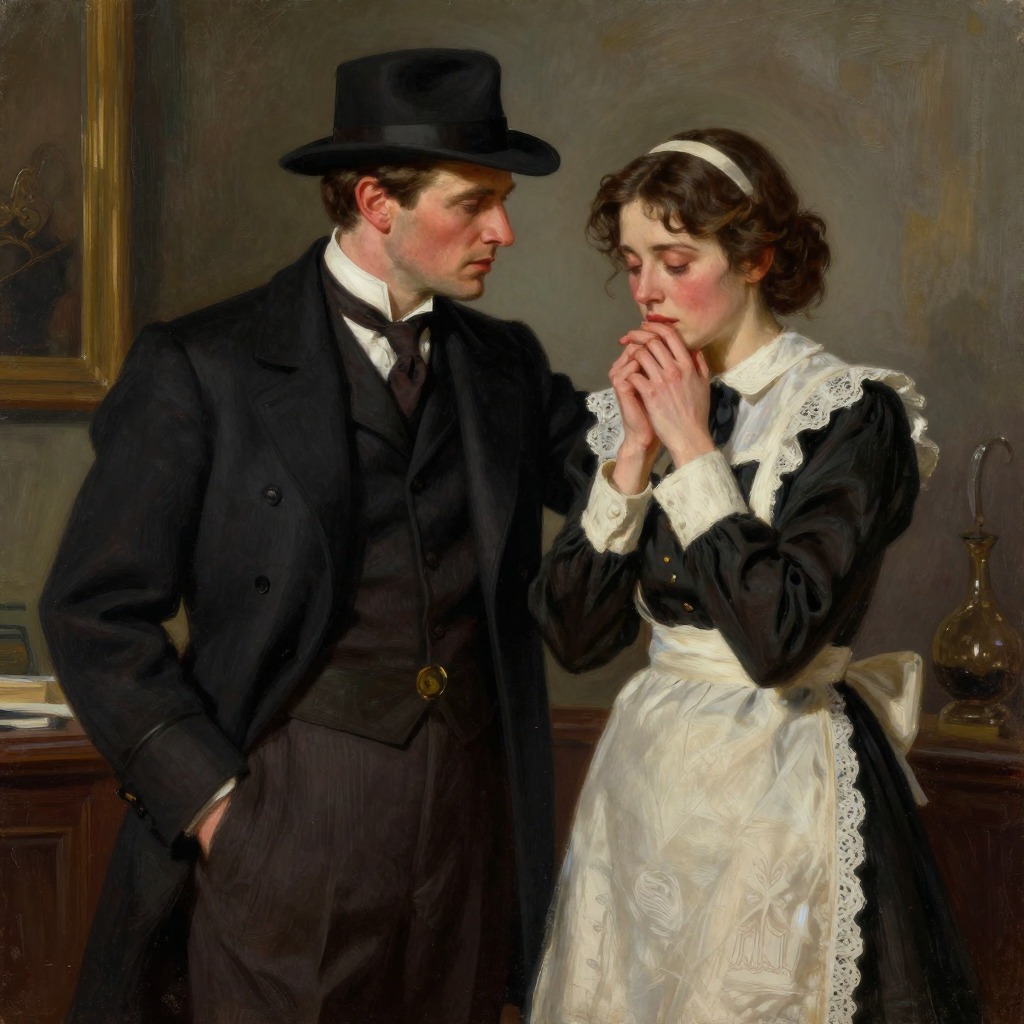
Hardman's involvement is not professional but deeply personal. When Poirot questions him about the Armstrong case, Hardman initially claims to have been "away out West" at the time and not to have recognized Ratchett as Cassetti. However, Poirot later observes that Hardman's eyes fill with tears when he speaks of "foreign women," and he turns away to peer at the snow, pretending the glare is dazzling. Poirot interprets this as a sign of grief for Susanne, the French nursemaid who died by suicide after being wrongly accused of complicity in the kidnapping. Hardman admits to having loved her, and this love drives his participation in the revenge plot. Linda Arden, in her final confession, confirms that Hardman was the one who tracked Ratchett down, a task that required months of effort. His role in the conspiracy is thus that of the hunter, the one who located the prey and made the entire plan possible.
Revelation and Aftermath
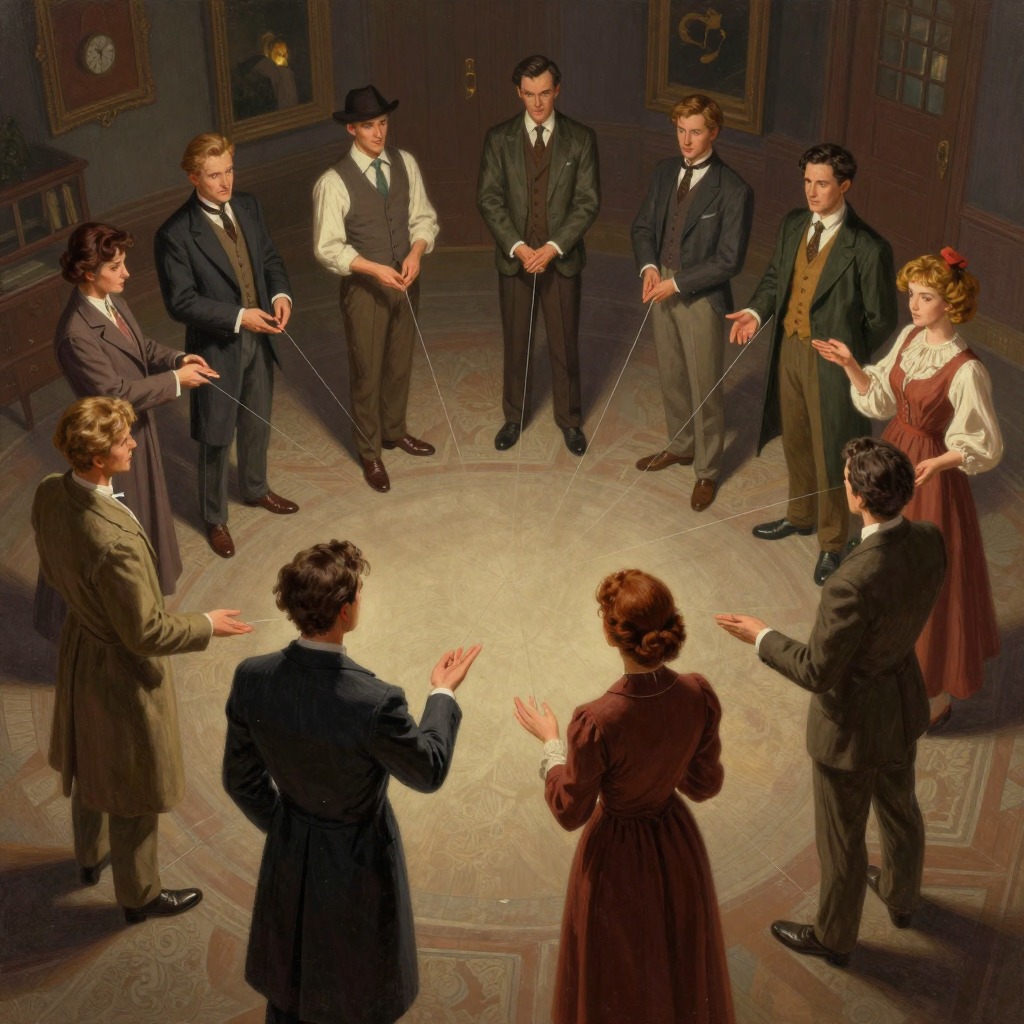
When Poirot presents his second solution—that all twelve passengers are guilty—Hardman is present in the dining car. He does not deny his part but listens in silence as Linda Arden recounts the conspiracy. He is one of the twelve who each stabbed Ratchett once, ensuring that no single person could be identified as the killer. After Poirot's explanation, Hardman expresses admiration for the detective's deductive skill, calling him "a pretty slick guesser." He does not attempt to justify or excuse his actions, accepting the outcome of the investigation with a kind of weary resignation. His character thus embodies the tension between professional detachment and personal vengeance, a man who uses his skills as a detective not to uphold the law but to carry out a private execution.