Flatfish
Flatfish is a middle-aged antique dealer and a trusted henchman of Yozo's father who becomes Yozo's reluctant guardian after the Kamakura suicide attempt, embodying the petty, self-important, and evasive side of the society that Yozo finds incomprehensible. His cautious, indirect manner of communication and his theatrical airs of importance directly contribute to Yozo's decision to run away, setting in motion a chain of events that deepens Yozo's alienation. Flatfish's transformation from a familiar, almost servile figure in Yozo's childhood to a stern, contemptuous jailer in adulthood illustrates the theme of human beings' capacity for sudden, inexplicable change, and his final appearance, escorting Yozo to a mental hospital, marks the completion of Yozo's social death.
Identity and Background
Flatfish is a short-set man of about forty, a bachelor, and a long-time henchman of Yozo's father. His face, particularly around the eyes, resembles a flatfish so strongly that Yozo's father always calls him by that name, and Yozo adopts the same nickname. He runs a shop called the Garden of the Green Dragon, which deals in art and antiques, but the dusty interior contains mostly useless junk; his real income comes from performing services such as transferring possession of secret property between clients to avoid taxes. He almost never waits in the shop, setting out early each morning with a scowl, leaving a seventeen-year-old boy—rumored to be his illegitimate son—to mind the store. The boy's eyes have a strangely fish-like quality, and the two live together in a remarkably cheerless existence, eating noodles late at night in silence without ever addressing each other as father and son.
Role as Guardian and the Transformation of Power
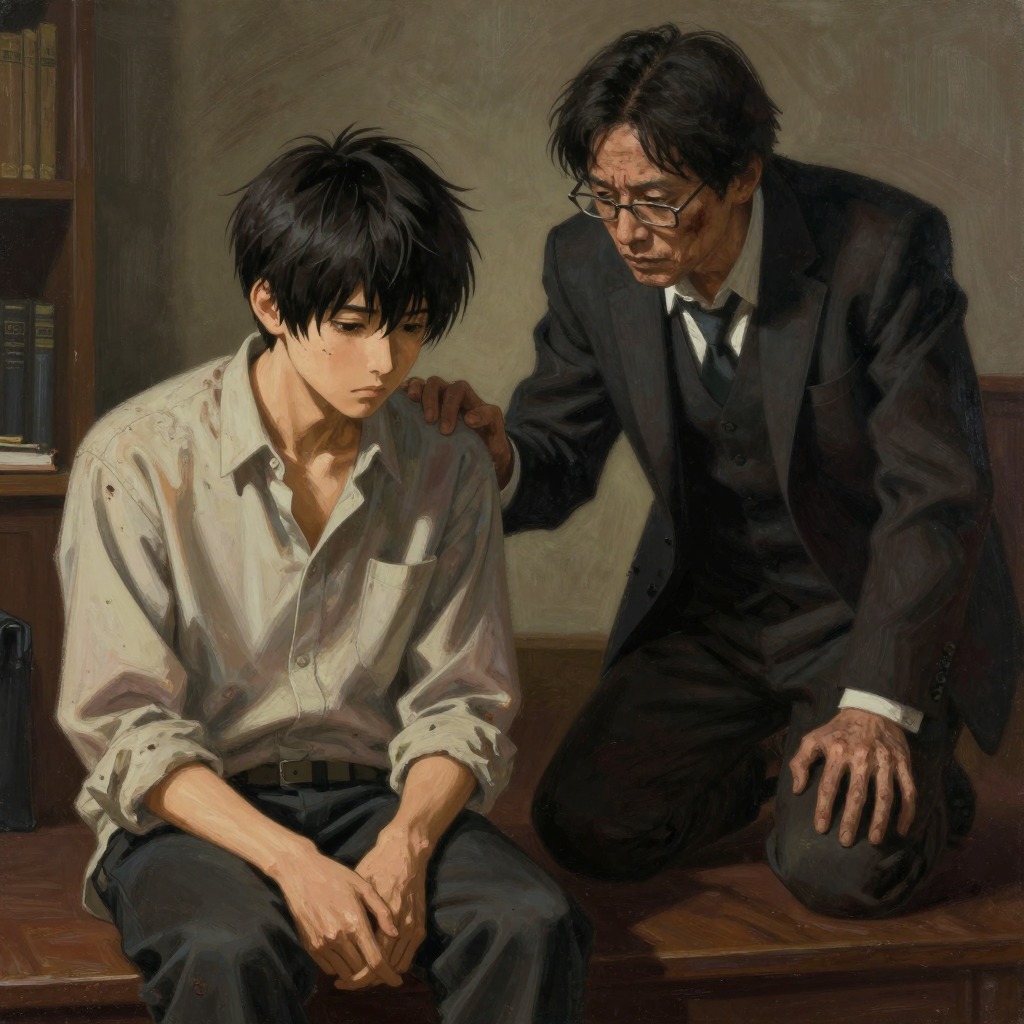
After the Kamakura suicide attempt, Yozo is expelled from college and sent to live in a tiny room on the second floor of Flatfish's house. Flatfish's manner undergoes an extraordinary change: whereas before he had been a familiar, almost servile figure, he now treats Yozo with a constant bad humor, never returning Yozo's smiles. He forbids Yozo to leave the house, apparently fearing another suicide attempt, and Yozo spends his days trapped in his cubicle with nothing but old magazines to read, losing even the energy to think of suicide. The boy who works in the shop considers Yozo a simpleton or outright lunatic and lectures him in the manner of an older and wiser head. Flatfish and the boy eat their meals in a dank little room under the stairs, hurriedly, while Yozo's food is brought to him on a separate tray. The change in Flatfish is so complete that Yozo reflects on how contemptible—or rather, how comic—human beings are who can metamorphize themselves as simply and effortlessly as they turn over their hands.
The Fatal Conversation and Yozo's Escape
The crucial turning point in Yozo's relationship with Flatfish comes one evening toward the end of March, when Flatfish—perhaps after some financial success—invites Yozo downstairs for a dinner with sake. During the meal, Flatfish asks Yozo about his plans for the future, but his manner of speech is so cautious, circumlocutions, and full of unnecessary precautions that Yozo cannot understand what he is driving at. Flatfish speaks in a way that Yozo finds characteristic of everybody in the world: "intricately presented with overtones of vagueness," full of "precautions so strict as to be useless" and "intensely irritating little maneuvers." Yozo later learns that Flatfish could have simply said, "I'd like you to enter a school beginning in the April term. Your family has decided to send you a more adequate allowance once you have entered school." But Flatfish's evasiveness leaves Yozo in a fog. When Yozo finally says he wants to be a painter, Flatfish laughs at him with an indescribably crafty shadow passing over his face—a laugh that Yozo can never forget, one that reveals "the very nadir of adult life." That night, Yozo runs away from Flatfish's house, leaving a note that says he is going to discuss his plans with a friend. Flatfish later sends a telegram to Masao Horiki, which reveals Yozo's whereabouts and leads to the intervention of Shizuko.
Later Appearances and the Final Betrayal
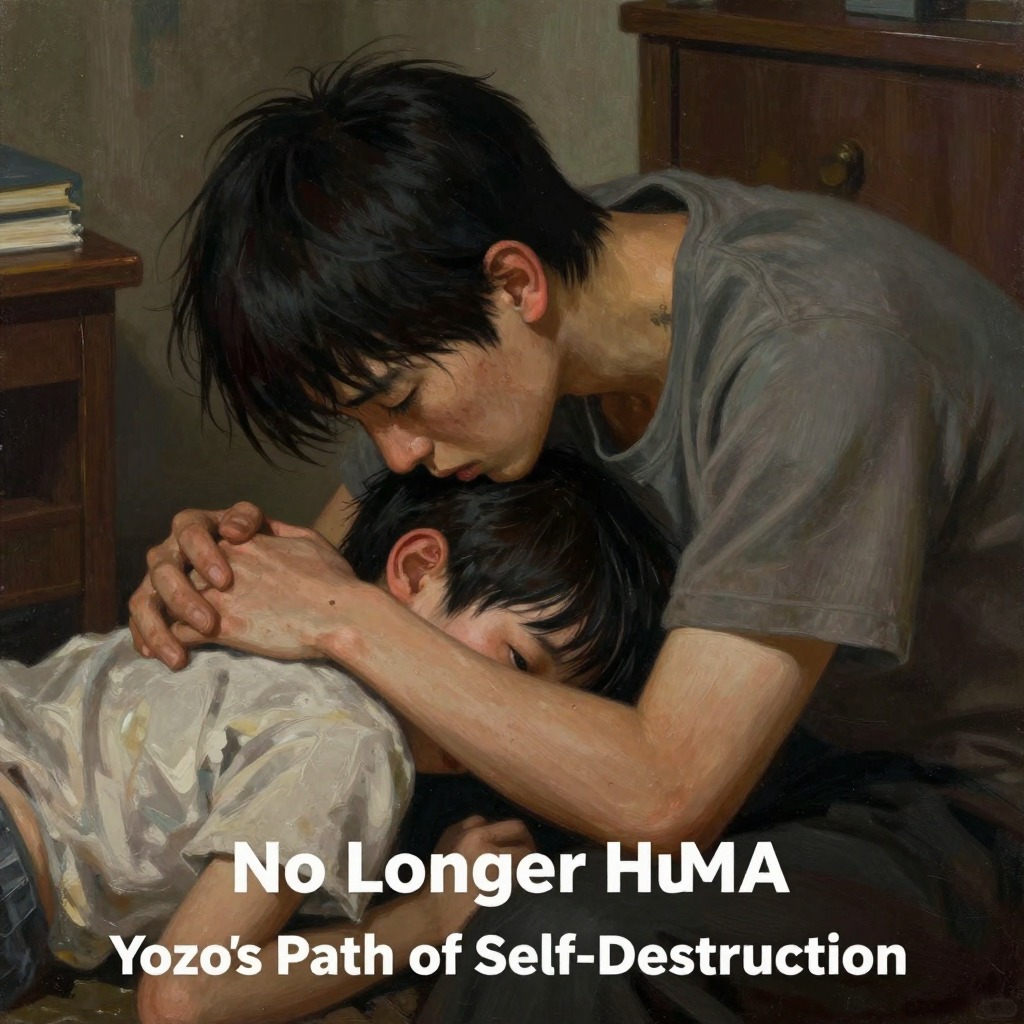
Flatfish reappears at critical moments in Yozo's decline. After Yozo's second suicide attempt with Dial sleeping pills, Flatfish sits at Yozo's bedside with a most unpleasant expression on his face, complaining that Yozo always chooses the end of the year to attempt suicide, when everybody is frantically busy. He leaves some money, pretending it is a gift from himself, though Yozo realizes it actually comes from his brothers. When Yozo has become a morphine addict and is planning to give himself ten shots and throw himself into the river, Flatfish appears with Horiki, having seemingly sniffed out Yozo's plan with "diabolical intuition." Flatfish informs Yozo in a quiet, almost compassionate tone that he must go to a hospital, and Yozo, weeping helplessly, obeys like a man bereft of all will. Flatfish and Horiki bundle Yozo into an automobile and deliver him to a mental hospital. Three months later, after Yozo's father has died, Flatfish accompanies Yozo's eldest brother to the hospital to take Yozo out. Flatfish is entrusted with taking care of Yozo's various commitments in Tokyo, and Yozo is sent to live in a thatch-covered house at a hot spring on the coast, looked after by an ugly old servant named Tetsu.
Thematic Significance
Flatfish functions as a representative of the "society" that Yozo finds so terrifying and incomprehensible. His transformation from a familiar family retainer to a contemptuous jailer illustrates the theme of human beings' capacity for sudden, inexplicable change. His evasive, circumlocutions manner of speech—full of unnecessary precautions and theatrical airs of importance—embodies the kind of communication that Yozo can never master, the kind that leaves him feeling baffled and defeated. Flatfish's laugh when Yozo says he wants to be a painter reveals the contempt that society holds for those who do not follow its prescribed paths. And his final role in delivering Yozo to the mental hospital completes the process by which Yozo is branded as a "reject" and "disqualified as a human being."