Oliver Twist
Oliver Twist is the orphan protagonist of Charles Dickens's novel of the same name, a figure whose journey from a parish workhouse through the criminal underworld of London to a final, loving home serves as the novel's central moral and emotional axis. His story, subtitled "The Parish Boy's Progress," functions as a sustained critique of the 1834 Poor Law and a testament to the idea that innate goodness can survive the most brutal circumstances. Oliver's physical slightness and emotional vulnerability are matched by an unyielding, almost preternatural, core of decency that sets him apart from nearly every character he encounters, making him both a passive victim of institutional cruelty and an active agent of his own salvation through his unwavering moral compass.
Identity and Background
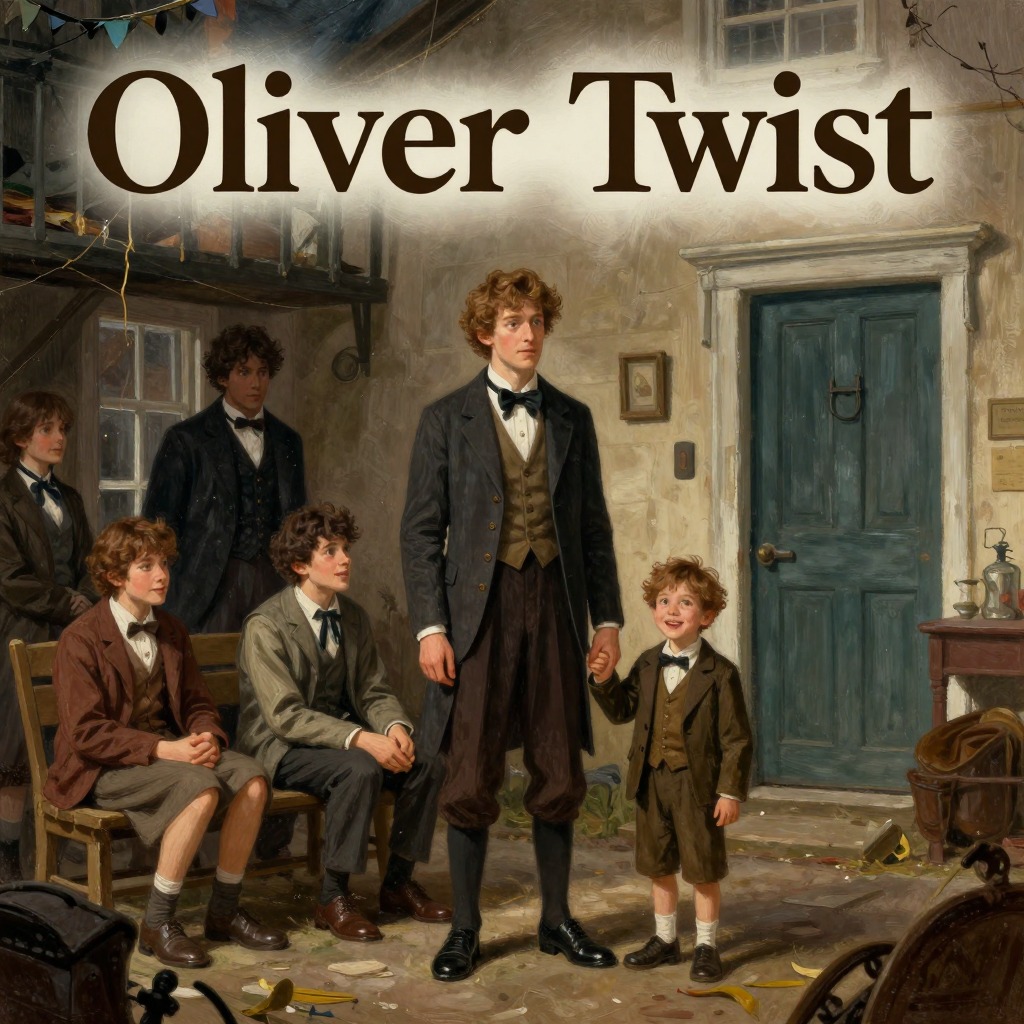
Oliver Twist is born in a workhouse, the son of a young woman who dies immediately after his birth. The parish surgeon notes that she had no wedding ring, marking Oliver as illegitimate from his first breath. He is immediately "badged and ticketed" as a parish child, an orphan condemned to be "cuffed and buffeted through the world—despised by all, and pitied by none." His name is invented by the beadle, Mr. Bumble, who follows an alphabetical system for naming foundlings; Oliver is a "T" because the previous child was a "S—Swubble." For the first nine years of his life, Oliver is "farmed" at a branch workhouse run by Mrs. Mann, who appropriates most of the meager weekly stipend for herself, leaving the children half-starved. Despite this systematic neglect, nature has implanted "a good sturdy spirit" in Oliver's breast, and he survives to his ninth birthday, a pale, thin, and diminutive child.
Life and Plot Trajectory
Oliver's life is a series of forced relocations and narrow escapes. After famously asking for more gruel, he is offered as an apprentice to the chimney sweep Mr. Gamfield, a brutal man who has already killed several boys. Oliver's terrified reaction before the magistrate prevents this fate, and he is instead apprenticed to Mr. Sowerberry, the parish undertaker. There, he is bullied by the older charity boy Noah Claypole, who insults Oliver's dead mother. In a rare burst of fury, Oliver attacks Noah and is beaten and locked up. That night, he runs away to London, walking seventy miles over seven days, surviving on a crust of bread and the charity of a turnpike-man and an old lady.
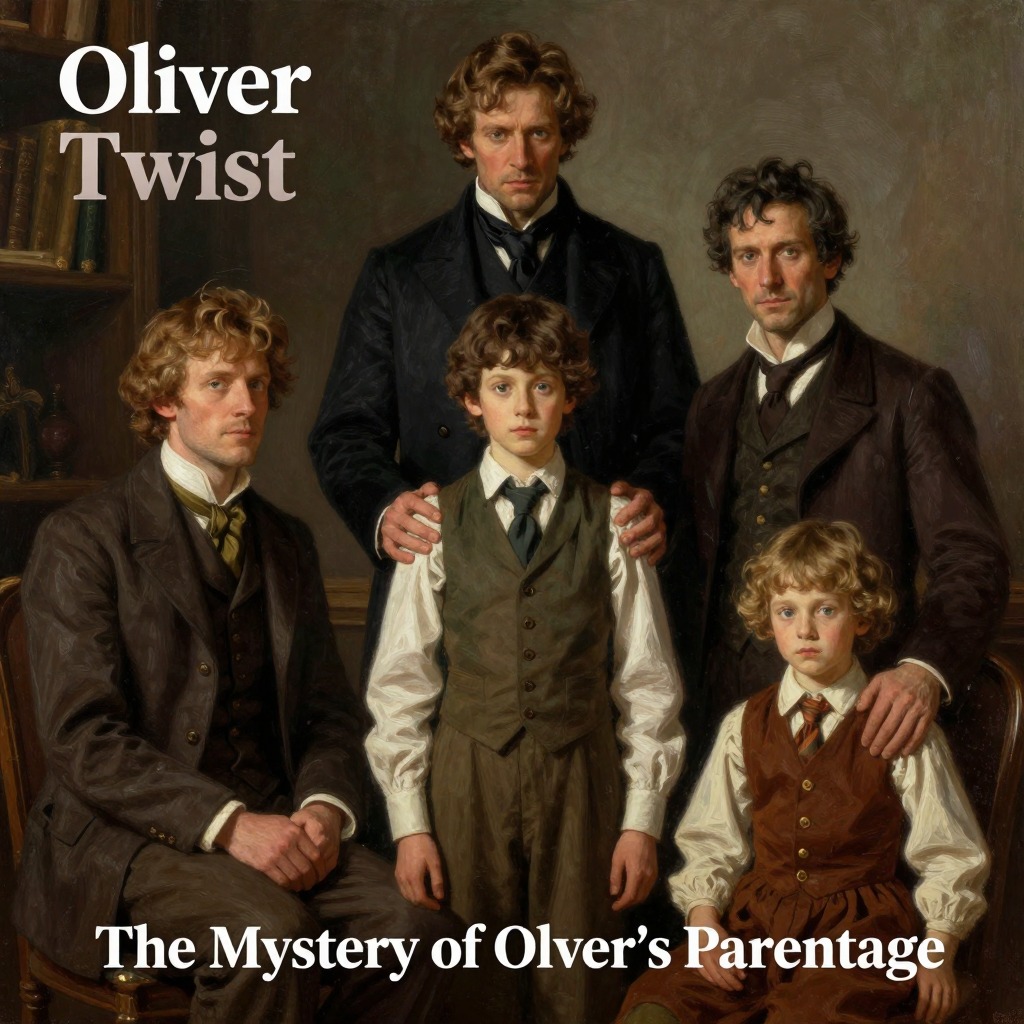
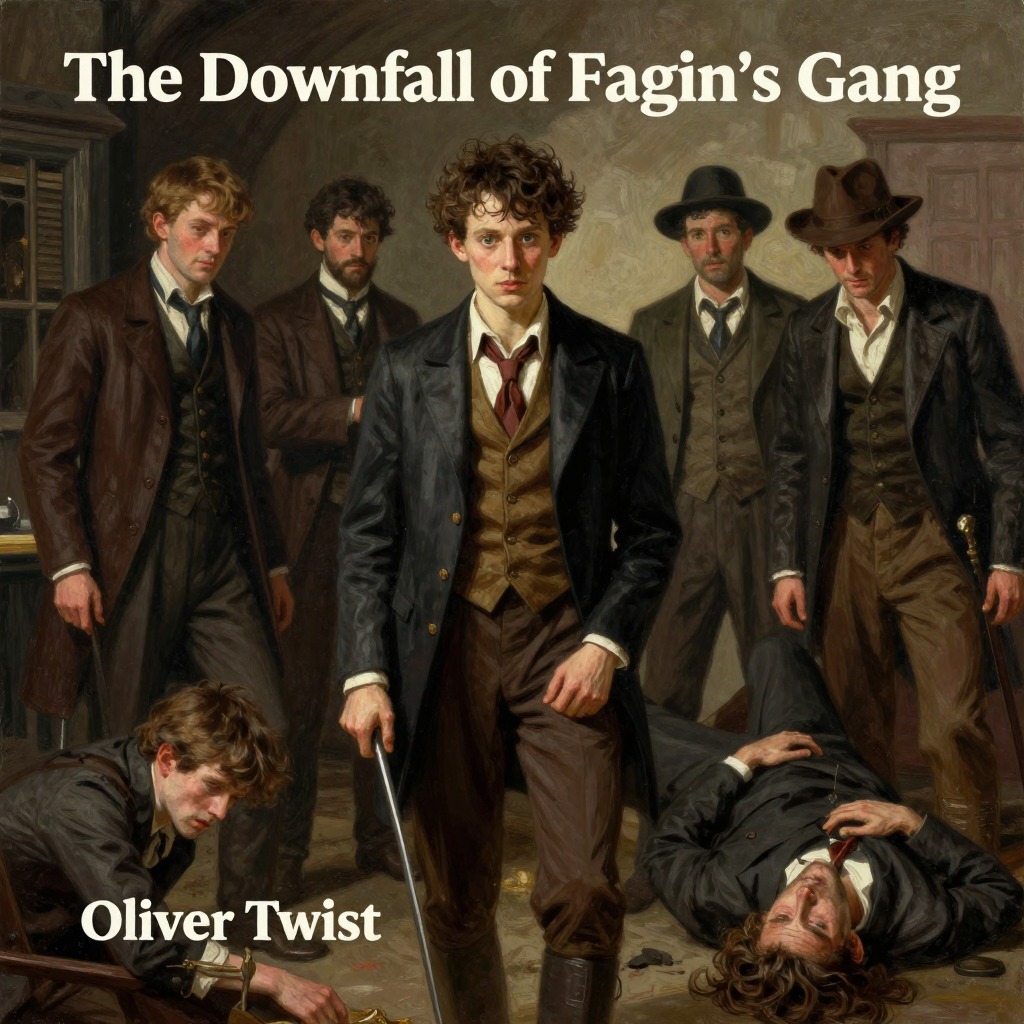
In London, Oliver is taken in by the Artful Dodger and brought to Fagin's den, where he is gradually introduced to a life of pickpocketing. He is arrested for a theft he did not commit but is rescued by the victim, Mr. Brownlow, who takes him into his home. Oliver experiences his first taste of kindness and care, but he is soon recaptured by Nancy and Bill Sikes and forced to participate in a burglary at the Maylie house in Chertsey. He is shot and left for dead, but the Maylies—Mrs. Maylie and her niece Rose—take him in and nurse him back to health. He lives happily with them in the countryside until Fagin and Monks reappear. The mystery of Oliver's parentage is finally resolved: he is the illegitimate son of Edwin Leeford and Agnes Fleming, and the half-brother of Monks. Mr. Brownlow adopts him, and he inherits a portion of his father's estate.
Key Actions and Objectives
Oliver's primary objective throughout the novel is simply to find safety, kindness, and a place where he is not abused. His most famous action—asking for more gruel—is a desperate, instinctive act of hunger that shocks the workhouse board and sets the entire plot in motion. His flight to London is a bid for freedom, and his refusal to become a thief, even under threat of death, is his most consistent and defining action. During the burglary at Chertsey, he resolves to alarm the family rather than participate in the crime, a decision that leads to him being shot. His persistent truthfulness, even when it seems to incriminate him, is a key action that ultimately wins him the trust of Mr. Brownlow and the Maylies.
Relationships and Conflict
Oliver's relationships are defined by a stark contrast between cruelty and kindness. He is the victim of systematic abuse from Mr. Bumble, Mrs. Mann, Noah Claypole, and the workhouse board. Fagin and Sikes seek to corrupt and exploit him, while Nancy, despite being part of the gang, protects him at great personal risk. His relationship with Mr. Brownlow is paternal and redemptive; Mr. Brownlow sees in Oliver's face a resemblance to his old friend Edwin Leeford and feels an inexplicable connection. With Rose Maylie, Oliver forms a deep, affectionate bond that is later revealed to be familial—she is his maternal aunt. The central conflict of Oliver's life is the struggle between the forces that seek to destroy or corrupt him and the few individuals who recognize and nurture his innate goodness.
Change and Ending
Oliver's physical and emotional transformation is profound. He begins as a starving, friendless orphan in a workhouse and ends as the adopted son of a wealthy gentleman, living in a happy, rural community. His journey is not one of moral development—he is good from the start—but of social ascent and the discovery of his true identity. The revelation that he is the son of Edwin Leeford and the nephew of Rose Maylie restores his family and his inheritance. The novel concludes with Oliver fully integrated into a loving family circle, his past sufferings redeemed by the happiness of his present life. The final image is of the white marble tablet in the village church bearing only the name "Agnes," a quiet memorial to the mother he never knew.
Narrative Role and Evaluation
Oliver Twist functions as a moral touchstone and a passive center around which the novel's action revolves. His unwavering innocence and goodness serve to highlight the depravity of the criminals and the hypocrisy of the parish authorities. He is a classic example of a "flat" character in E. M. Forster's terms, built around a single idea of incorruptible virtue, yet his journey is the engine of the plot. As a picaresque hero, his lowly birth and wanderings allow Dickens to expose the corruption of every social institution he encounters: the workhouse, the legal system, the criminal underworld, and even the church. Oliver's story is ultimately a bildungsroman, a tale of maturation and social integration, but one in which the hero's inner self remains unchanged, a fixed point of goodness in a world of moral chaos.