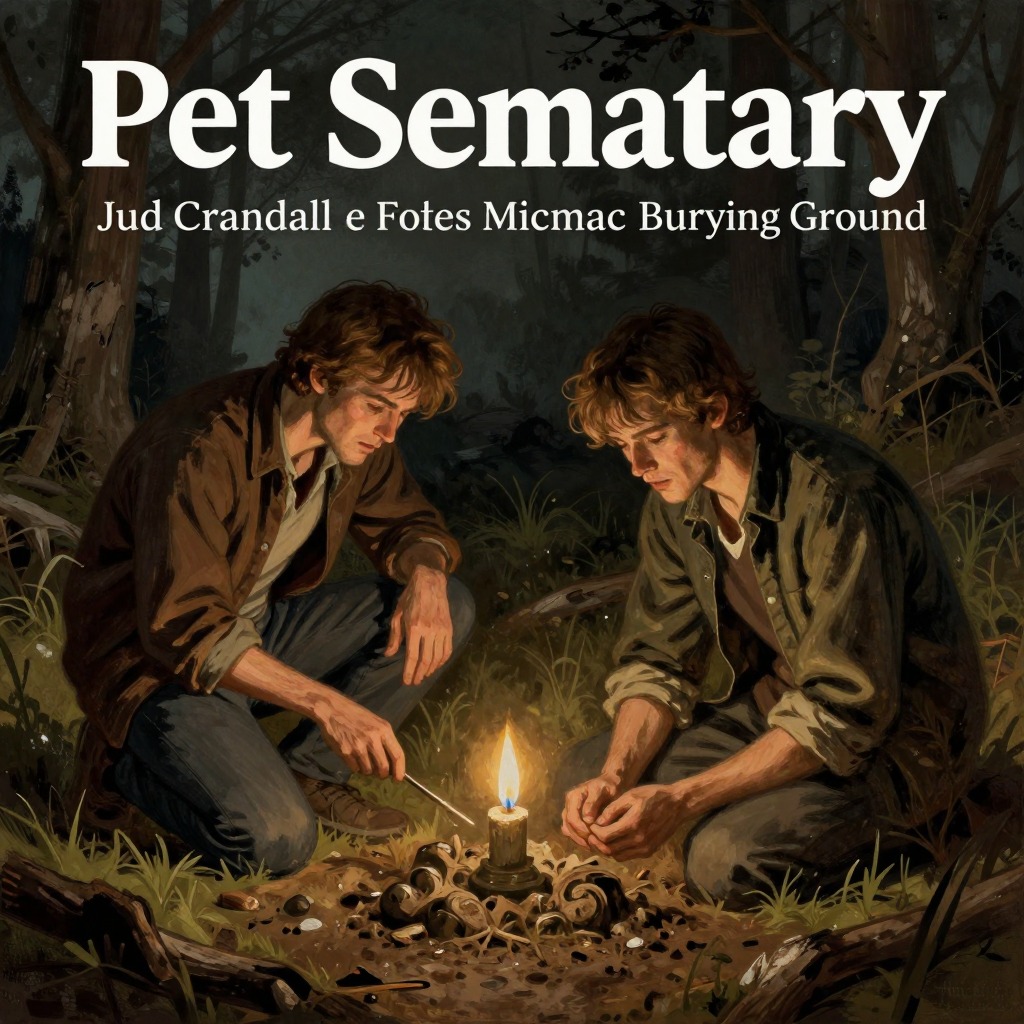
Timmy Baterman
Timmy Baterman was one of roughly twenty young men from Ludlow who went overseas to fight Hitler in World War II. He left in 1942 and returned in a flag-draped coffin in 1943, killed in Italy on July 15 of that year while charging a machine-gun nest, an act that earned him the Silver Star posthumously. His body was shipped home on what the railroad crew called a "mystery train" — a freight car carrying eighteen or twenty coffins, each destined for a different Maine town — and was buried in Pleasantview Cemetery with full military honors on or about July 22, 1943.
Resurrection and Return
Bill Baterman, Timmy's father, had known about the Micmac burying ground and decided what he wanted to do. Within days of the burial, Timmy was seen walking the roads of Ludlow. The mailwoman, Marjorie Washburn, saw him first: he was pale, dressed in old chino pants and a faded flannel shirt despite the ninety-degree heat, his hair sticking up in spikes, his eyes "like raisins stuck in bread dough." Other sightings followed. A woman named Mrs. Stratton saw him from her porch; he stood at the edge of the road, his hands dangling, his head pushed forward, and when he turned it was "like watching a drunk man try to do an about-face." He spoke to her, asking if she still had her jazz records because he wouldn't mind "cutting a rug" with her. She stayed inside for most of a week.
The Thing in the Burial Suit
Timmy walked back and forth along the Pedersen Road, a mile east of his father's house and a mile west, all day and presumably all night. His shirt was untucked, his fly sometimes unzipped, and there was something behind his eyes — not thinking, exactly, but something sly. Jud Crandall, who had been one of the railroad men who unloaded Timmy's coffin, described him as like a zombie in a movie but worse: "There was somethin goin on behind his eyes, Louis. I don't think that thinkin is what I want to call it." When a delegation of town leaders — Jud, postmaster George Anderson, selectman Hannibal Benson, and fire chief Alan Purinton — went to the Baterman place to confront Bill, Timmy walked over to them. He stank of the grave, a black smell of spoiled flesh, and red marks on his face showed where the German machine gun had caught him. He spoke in a low, gravelly voice and revealed secrets: he told Alan Purinton that his wife was sleeping with the man she worked with at the drugstore; he told George Anderson that his grandson was only waiting for him to die to get his money, calling him "Old wooden-leg" behind his back; he told Jud about his visits to a whorehouse in Bangor. "He told us only the bad," Jud recalled. "Only the bad."
Destruction and Aftermath
Two nights later, the Baterman house burned flat. Range oil had been splashed from one end to the other. Bill Baterman had shot Timmy twice in the chest with an old Colt .45, laid him on the bed, poured the oil, then sat down in his easy chair by the radio, flicked a match, and ate the barrel of the pistol. The county medical examiner said it looked to him like Timmy Baterman had been dead two or three weeks before the fire. Jud Crandall, who told this story to Louis Creed on the night before Gage's burial, called it an abomination. He said the Micmacs would have known what the thing was: something touched by the Wendigo. The story was Jud's final, desperate attempt to dissuade Louis from attempting the same resurrection with his son.