Victor Pascow
Victor Pascow is a University of Maine student whose violent death on the first day of the fall semester initiates a chain of supernatural events that will ultimately destroy the Creed family. Though he appears only briefly as a living person, his dying words and subsequent ghostly visitations establish him as a prophetic figure—a warning voice from beyond the grave that Louis Creed, in his grief and desperation, fatally ignores.
Death and Dying Words
Pascow is brought to the Student Medical Center around ten in the morning on Louis Creed's first real day as director. He has been struck by a car while jogging and driven head-first into a tree; half his skull is crushed, his neck is broken, and his brain is visible through a shattered section of skull. Louis, who has never seen an injury this severe, knows immediately that Pascow is dying. As Louis bends over him, Pascow—though barely conscious and apparently brain-damaged—speaks with startling clarity. He says, "In the Pet Sematary," and then, "It's not the real cemetery." Most disturbingly, he addresses Louis by name: "The soil of a man's heart is stonier, Louis. A man grows what he can and tends it." Louis is shaken not only by the content of the words but by the fact that Pascow, a stranger, knows his name. Pascow dies minutes later, at 10:09 A.M.
The Dream and the Warning
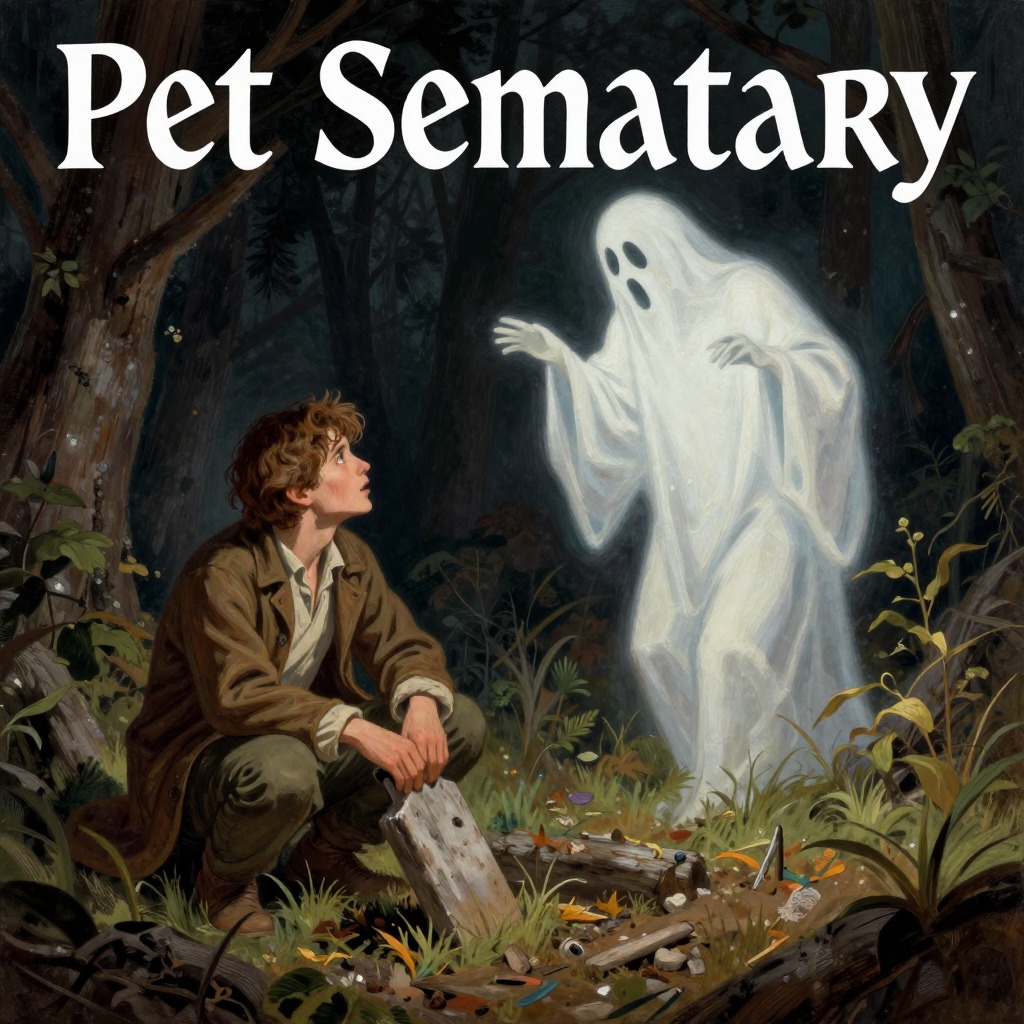
That night, Louis is awakened by a crash: Pascow stands in the bedroom doorway, his head still bashed in, dried blood on his face, his collarbone jutting whitely. He is wearing the same red gym shorts he died in. Though Louis recognizes this as a dream, the compulsion to follow Pascow is overwhelming. Pascow leads him out of the house, across the back field, and up the path to the Pet Sematary. There, he points to the deadfall—the pile of fallen trees that separates the pet cemetery from the deeper woods—and Louis sees it transformed into a writhing heap of bones. Pascow speaks again: "The door must not be opened. Don't go beyond, no matter how much you feel you need to, Doctor. The barrier was not made to be broken. Remember this: there is more power here than you know. It is old and always restless. Remember." He claims to come "as a friend," though the word seems inadequate for what he is. Louis wakes to find his feet filthy with dirt and pine needles, and a fresh scratch on his arm exactly where a dead branch had poked him in the dream—proof that the visitation was not merely a nightmare.
Narrative Role and Significance
Pascow's function in the story is that of a supernatural herald or warning figure. He appears at the threshold of Louis's encounter with the Micmac burying ground's power, delivering a clear prohibition that Louis will later violate. His dying words—"The soil of a man's heart is stonier"—echo throughout the novel, becoming a kind of mantra that Louis repeats to himself as he rationalizes his decisions. Pascow's warning is specific and urgent: the barrier must not be broken, the power of the place is ancient and dangerous. Yet Louis, driven by love and grief, will ultimately ignore every word. Pascow's ghost does not return after the night of the dream; his warning delivered, he fades from the narrative, leaving Louis to face the consequences alone. In this sense, Pascow is a tragic Cassandra figure—he sees the truth clearly, speaks it plainly, and is not believed until it is far too late.