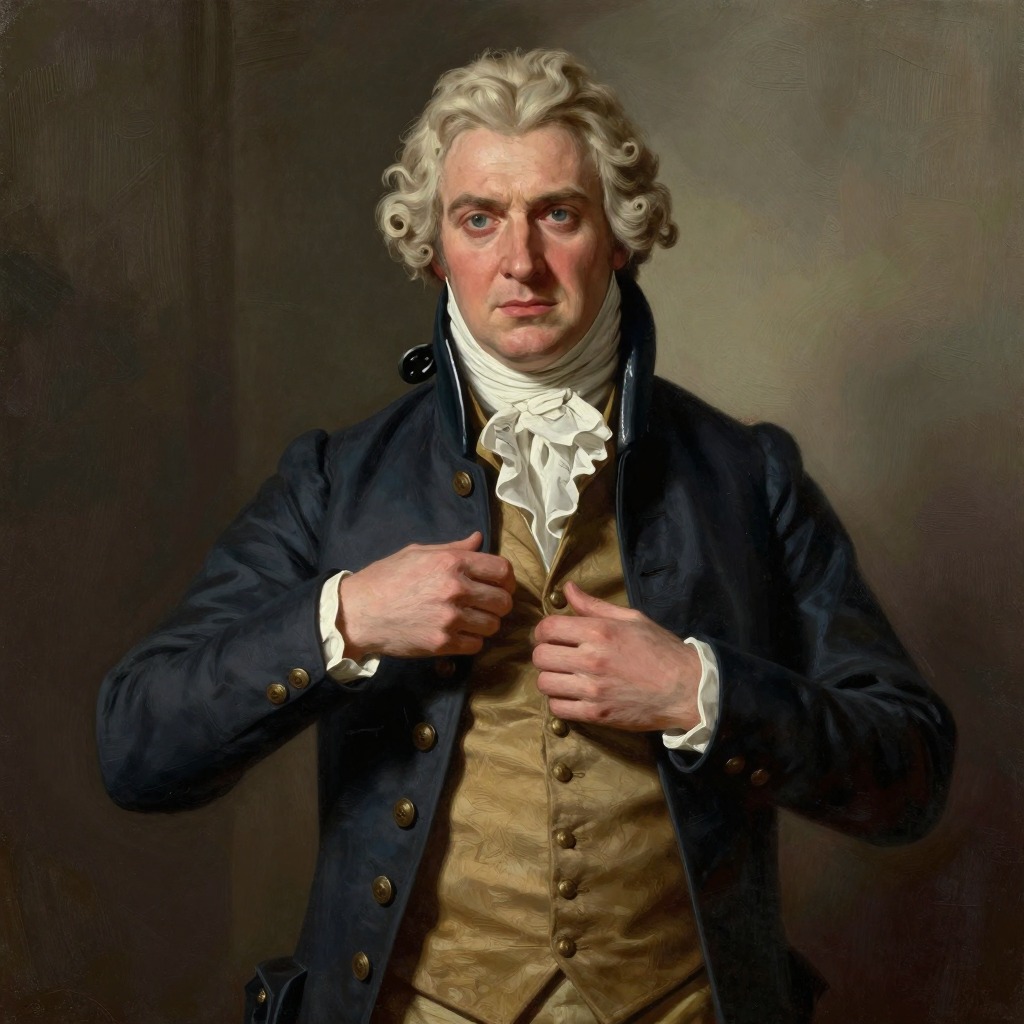
Mr. Denny
Mr. Denny is a minor officer in the ——shire militia regiment quartered in Meryton, whose function in the novel is almost entirely instrumental: he introduces George Wickham to the Bennet sisters, conveys key information about Wickham's movements and character, and later becomes a source of anxious speculation during Lydia Bennet's elopement. Though he appears only briefly and speaks few lines, his actions set in motion the central romantic entanglement with Wickham and supply the first troubling hints that Wickham never intended marriage.
Identity and Introduction
Mr. Denny is first mentioned by Lydia Bennet, who announces her intention to walk to Meryton to ask "when Mr. Denny comes back from town" . He is a fellow officer in the militia regiment that has recently arrived in the neighbourhood. When the Bennet sisters and Mr. Collins walk into Meryton, they encounter Mr. Denny walking with a stranger on the other side of the street. Denny bows as they pass, and when Kitty and Lydia cross to investigate, he "addressed them directly, and entreated permission to introduce his friend, Mr. Wickham, who had returned with him the day before from town, and he was happy to say had accepted a commission in their corps" . This single act of introduction makes Denny the catalyst for Wickham's entry into the story and into Elizabeth Bennet's life.
Role in the Wickham-Darcy Conflict
At the Phillipses' card party, Mr. Denny is present among the officers but does not play whist; instead, he sits at the other table with Elizabeth and Lydia, where Wickham is the centre of attention . Denny's most significant narrative contribution comes at the Netherfield ball. When Lydia eagerly asks about Wickham's absence, Denny tells the party that Wickham "had been obliged to go to town on business the day before, and was not yet returned; adding, with a significant smile, 'I do not imagine his business would have called him away just now, if he had not wanted to avoid a certain gentleman here'" . This remark, though unheard by Lydia, is caught by Elizabeth and confirms her suspicion that Darcy is responsible for Wickham's absence, sharpening her resentment against Darcy.
Involvement in the Lydia-Wickham Elopement
When Lydia Bennet elopes with Wickham, Denny becomes a figure of intense scrutiny. Colonel Forster, investigating the flight, questions Denny about his knowledge of the couple's plans. Jane Bennet reports to Elizabeth that "when questioned by him, Denny denied knowing anything of their plans, and would not give his real opinion about it. He did not repeat his persuasion of their not marrying—and from that, I am inclined to hope, he might have been misunderstood before" . The ambiguity of Denny's earlier statement—that Wickham never intended to marry Lydia at all—hangs over the family's anxious days. Elizabeth, however, is not reassured: she recalls that "something was dropped by Denny expressing his belief that W. never intended to go there, or to marry Lydia at all" , and this information, repeated to Colonel Forster, is what first alarms him into pursuing the couple.
Narrative Significance
Mr. Denny is a flat character in E. M. Forster's sense—built around a single narrative function—but that function is structurally important. He is the threshold guardian who admits Wickham into the story, the herald who first signals Wickham's duplicity, and the source of the earliest credible evidence that Wickham's intentions toward Lydia were dishonourable. Without Denny's introduction, Wickham would have no entry into the Bennet circle; without his significant smile and his later reluctant testimony, the family might have remained ignorant of the true danger until too late. Denny thus serves as a minor but indispensable gear in the novel's plot machinery, his few appearances precisely timed to advance the Wickham-Darcy conflict and the Lydia elopement crisis.