Dr. Lamai
Dr. Lamai is the Thai scientist whose research into medically induced comas became the cornerstone of the Hail Mary mission's strategy for long-duration interstellar travel. Her work on coma resistance genetics and automated patient care directly enabled the crew to survive the multi-year journey to Tau Ceti, though the technology's inherent risks also contributed to the deaths of Commander Yáo and Engineer Ilyukhina.
Background and Research
Dr. Lamai was the lead scientist for a Thai company that developed coma technology intended to allow cancer patients to undergo chemotherapy while unconscious, sparing them the suffering of the treatment. The company failed because the technology only worked on approximately one in every seven thousand people, giving it limited commercial potential. Despite the company's collapse, Dr. Lamai's research proved critical when Eva Stratt recruited her to lead all medical aspects of the Hail Mary project. Stratt introduced her to Ryland Grace as the person who "was the lead scientist for the company that developed the coma technology we're going to use." Dr. Lamai expressed her satisfaction that her research "may yet help humanity," though Stratt corrected her, saying the technology "might save humanity."
The Coma Technology and Genetic Markers
Dr. Lamai's team successfully isolated the genetic markers that indicate long-term coma resistance, developing a simple blood test to identify candidates. This discovery revealed that the coma-resistance genes were found in what scientists had previously considered junk DNA, likely inherited from ancient aquatic ancestors that hibernated. The genes were also present in lower primates, suggesting the trait went far back in the evolutionary tree. When Stratt insisted on testing her own blood for the genes, Dr. Lamai performed the blood draw herself, demonstrating her hands-on competence despite her high-level position. She also tested Grace, who was surprised to learn he possessed the coma-resistance markers, a fact Stratt had deliberately withheld from him.
The Automated Medical System
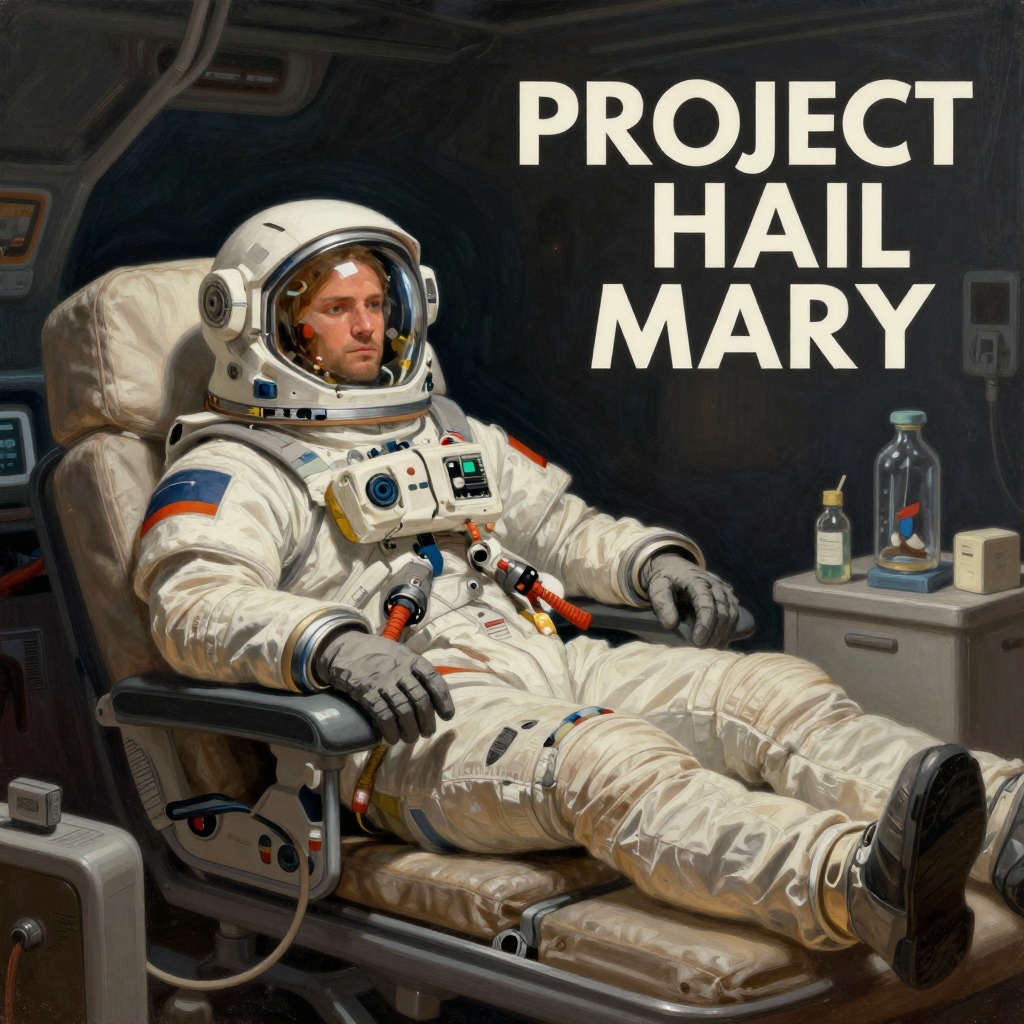
Dr. Lamai developed the automated coma-monitoring and care stations that would sustain the Hail Mary crew during their journey. The original design was not intended to be fully independent—it would handle routine care but alert a human doctor if it encountered an unsolvable problem. For the Hail Mary mission, her team in Bangkok developed extremely high-end procedural software to make the system fully automated. The armature watched vitals, applied medical care, fed patients, and monitored fluids. Dr. Lamai emphasized that the system was not artificial intelligence but a strictly procedural algorithm, chosen because the team needed to test it in thousands of ways and understand exactly how it would respond. The system included mechanical arms that could physically move patients, clean them, prevent bedsores, and diagnose secondary issues like inflammation and infection around IV and probe entry points.
Narrative Role and Significance
Dr. Lamai's research created the fundamental dilemma that shaped the Hail Mary crew selection: the coma-resistance genes were so rare that the mission could not send the most qualified people, only those who could survive the journey. This led to Grace—a junior high school science teacher with the right genes but minimal astronaut training—being drafted as the mission's science specialist. The automated medical system, while sophisticated, was not perfect: Yáo and Ilyukhina died during the coma, likely from a medical situation the robot could not resolve. Grace survived only by random luck, and the system's limitations forced him to make difficult decisions about whether to risk another coma on the return journey. Dr. Lamai's work thus represents both the technological ingenuity that made interstellar travel possible and the tragic limitations that cost lives.