Henry Jekyll
Henry Jekyll, M.D., D.C.L., L.L.D., F.R.S., is a wealthy, well-born London physician whose scientific ambition and concealed appetites drive him to create a drug that separates his good and evil natures, a discovery that destroys his life, his friendships, and ultimately himself. Born to a large fortune and endowed with excellent parts, Jekyll is inclined by nature to industry and fond of the respect of the wise and good, yet he harbors a certain impatient gaiety of disposition that he finds hard to reconcile with his imperious desire to carry his head high before the public. This conflict leads him to conceal his pleasures and, by the time he reaches years of reflection, he stands already committed to a profound duplicity of life. His scientific studies, which lead wholly toward the mystic and the transcendental, shed a strong light on his consciousness of the perennial war among his members, and he draws steadily nearer to the truth that man is not truly one, but truly two. From an early date, even before his scientific discoveries suggest the possibility of such a miracle, he learns to dwell with pleasure on the thought of the separation of these elements, imagining that if each could be housed in separate identities, life would be relieved of all that is unbearable.
Scientific Discovery and the Birth of Hyde
Jekyll manages to compound a drug that can shake and pluck back the fleshly vestment of identity, substituting a second form and countenance that bears the stamp of the lower elements in his soul. Late one accursed night, he compounds the elements, watches them boil and smoke together in the glass, and drinks off the potion. The most racking pangs succeed—a grinding in the bones, deadly nausea, and a horror of the spirit—but then these agonies subside, and he comes to himself as if out of a great sickness, feeling younger, lighter, happier in body, and conscious of a heady recklessness and an unknown but not an innocent freedom of the soul. He knows himself, at the first breath of this new life, to be more wicked, tenfold more wicked, sold a slave to his original evil, and the thought braces and delights him like wine. Stretching out his hands, he is suddenly aware that he has lost in stature. Stealing through his own house as a stranger, he comes to his room and sees for the first time the appearance of Edward Hyde, who is so much smaller, slighter, and younger than Henry Jekyll because the evil side of his nature, having been less exercised and less exhausted, is less robust and less developed. Evil, which Jekyll still believes to be the lethal side of man, has left on that body an imprint of deformity and decay, yet when he looks upon that ugly idol in the glass, he is conscious of no repugnance, rather of a leap of welcome. This, too, is himself; it seems natural and human, bearing a livelier image of the spirit than the imperfect and divided countenance he had been accustomed to call his own.
The Double Life and Its Escalation
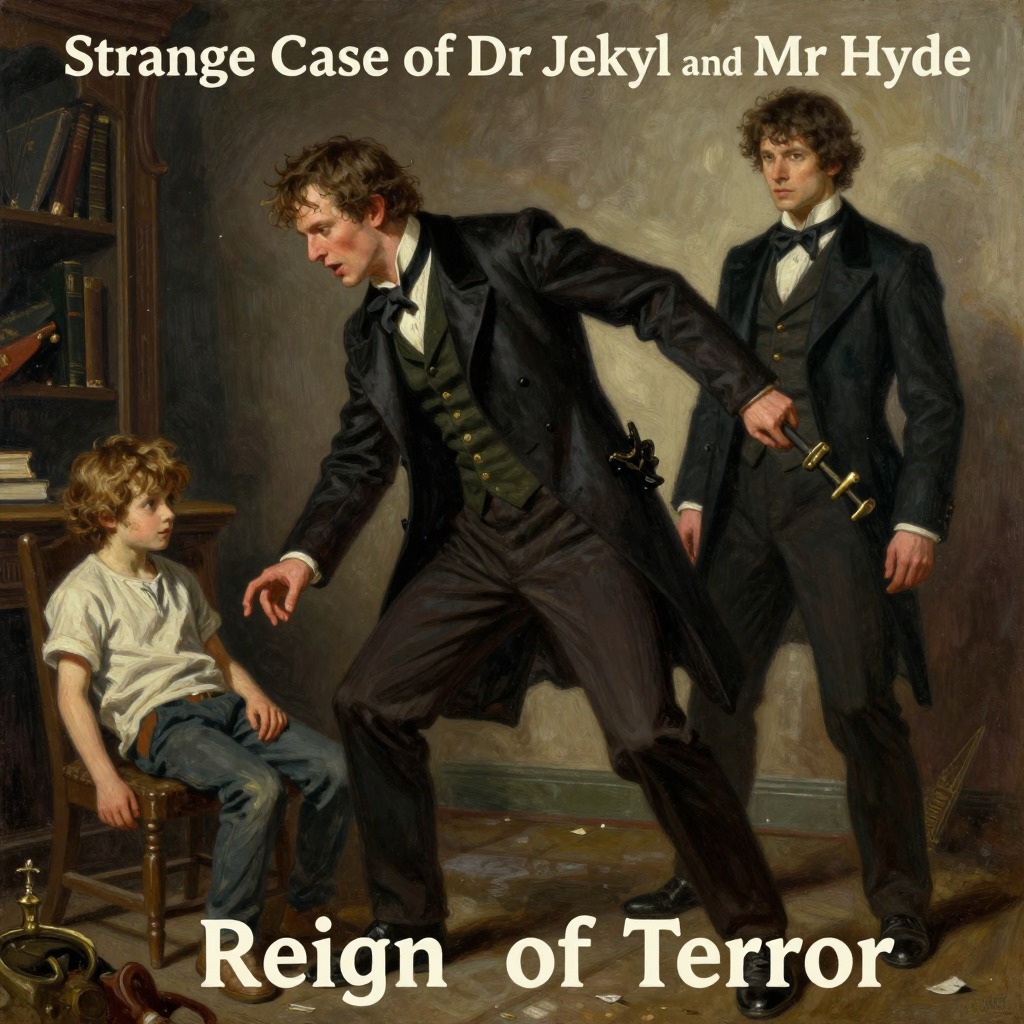
Jekyll takes and furnishes a house in Soho for Hyde, engages a housekeeper he knows to be silent and unscrupulous, and announces to his own servants that a Mr. Hyde is to have full liberty and power about his house in the square. He draws up a will providing that in case of his decease or disappearance for any period exceeding three calendar months, all his possessions pass to Edward Hyde. He begins to profit by the strange immunities of his position, becoming the first man ever to hire a bravo for his pleasures, able to plod in the public eye with a load of genial respectability and in a moment strip off these lendings and spring headlong into the sea of liberty. The pleasures he seeks in his disguise are undignified, but in the hands of Edward Hyde they soon begin to turn toward the monstrous. Hyde is a being inherently malign and villainous, drinking pleasure with bestial avidity from any degree of torture to another, relentless like a man of stone. Henry Jekyll stands at times aghast before the acts of Edward Hyde, but the situation is apart from ordinary laws and insidiously relaxes the grasp of conscience; it is Hyde, after all, and Hyde alone, that is guilty, and Jekyll wakes again to his good qualities seemingly unimpaired, even making haste to undo the evil done by Hyde. An act of cruelty to a child arouses against him the anger of a passer-by, and Hyde is forced to pay a cheque drawn in the name of Henry Jekyll, but Jekyll eliminates this danger by opening an account at another bank in the name of Edward Hyde himself and supplying his double with a signature by sloping his own hand backward.
The Murder of Sir Danvers Carew and the Beginning of the End
Some two months before the murder of Sir Danvers Carew, Jekyll wakes one day in bed with the hand of Edward Hyde lying on the bedclothes—lean, corded, knuckly, of a dusky pallor and thickly shaded with a swart growth of hair. He has gone to bed Henry Jekyll and awakened Edward Hyde. This reversal of his previous experience seems like the Babylonian finger on the wall, spelling out the letters of his judgment. He begins to reflect more seriously than ever on the issues and possibilities of his double existence, spying a danger that the balance of his nature might be permanently overthrown and the character of Edward Hyde become irrevocably his. He chooses the better part, bidding a resolute farewell to the liberty and secret pleasures of Hyde, and for two months leads a life of severity, enjoying the compensations of an approving conscience. But in an hour of moral weakness, he once again compounds and swallows the transforming draught. His devil has been long caged and comes out roaring; he is conscious of a more unbridled, more furious propensity to ill, and it is this that stirs in his soul the tempest of impatience with which he listens to the civilities of Sir Danvers Carew. He strikes in no more reasonable spirit than that in which a sick child may break a plaything, mauling the unresisting body with a transport of glee and tasting delight from every blow. Instantly the spirit of hell awakes in him and rages; he flees from the scene, at once glorying and trembling, his lust of evil gratified and stimulated. The pangs of transformation have not done tearing him before Henry Jekyll, with streaming tears of gratitude and remorse, falls upon his knees and lifts his clasped hands to God. He sees his life as a whole, following it up from the days of childhood to the damned horrors of the evening, and resolves that Hyde is thenceforth impossible. He locks the door by which he has so often gone and come and grinds the key under his heel.
The Collapse of Control and the Final Calamity
Jekyll labors earnestly in the last months of the year to relieve suffering, and the days pass quietly, almost happily. But he is still cursed with his duality of purpose, and as the first edge of his penitence wears off, the lower side of him begins to growl for licence. It is as an ordinary secret sinner that he at last falls before the assaults of temptation, and this brief condescension to his evil finally destroys the balance of his soul. Sitting in the sun on a bench in Regent's Park, he is seized with a horrid nausea and the most deadly shuddering; he looks down and sees that his clothes hang formlessly on his shrunken limbs, and the hand that lies on his knee is corded and hairy. He is once more Edward Hyde, the common quarry of mankind, hunted, houseless, a known murderer, thrall to the gallows. His reason does not fail him utterly, and he manages to reach Lanyon, composing two important letters and sending them out to be registered. After the transformation back at Lanyon's, he comes home and gets into bed, sleeping with a stringent and profound slumber. But the next day, while stepping leisurely across the court after breakfast, he is seized again with the indescribable sensations that herald the change, and from that day forth it seems only by a great effort and under the immediate stimulation of the drug that he is able to wear the countenance of Jekyll. At all hours of the day and night, he is taken with the premonitory shudder; if he sleeps or even dozes for a moment in his chair, it is always as Hyde that he awakens. The powers of Hyde seem to have grown with the sickliness of Jekyll, and the hate that now divides them is equal on each side. Jekyll thinks of Hyde as something not only hellish but inorganic, the slime of the pit uttering cries and voices, the amorphous dust gesticulating and sinning, what is dead and has no shape usurping the offices of life. This insurgent horror is knit to him closer than a wife, closer than an eye, lying caged in his flesh where he hears it mutter and feels it struggle to be born. Hyde, for his part, loathes the despondency into which Jekyll is fallen and resents the dislike with which he is himself regarded, playing ape-like tricks such as scrawling blasphemies in Jekyll's own hand on the pages of his books, burning the letters, and destroying the portrait of Jekyll's father.
The Final Statement and Death
Jekyll's provision of the salt, never renewed since the date of the first experiment, begins to run low. He sends out for a fresh supply and mixes the draught, but the ebullition follows and the first change of color, not the second; he drinks it and it is without efficiency. He has London ransacked, but in vain, and he becomes persuaded that his first supply was impure and that it was that unknown impurity which lent efficacy to the draught. About a week has passed when he finishes his statement under the influence of the last of the old powders. He knows that this is the last time, short of a miracle, that Henry Jekyll can think his own thoughts or see his own face in the glass. He writes that the doom closing on them both has already changed and crushed Hyde, and that half an hour from now, when he shall again and forever reindue that hated personality, he knows how he will sit shuddering and weeping in his chair or pace up and down this room, his last earthly refuge, giving ear to every sound of menace. He lays down the pen and proceeds to seal up his confession, bringing the life of that unhappy Henry Jekyll to an end. When Poole and Mr. Utterson break into the cabinet, they find the body of Edward Hyde, dressed in clothes far too large for him, with a crushed phial in his hand and the strong smell of kernels upon the air—a self-destroyer. Of Henry Jekyll, dead or alive, there is no trace anywhere.