the camel driver
The camel driver is a minor but philosophically pivotal character in Paulo Coelho's The Alchemist, a man who lost his former life to a natural disaster and remade himself as a caravan guide across the Sahara. He becomes Santiago's closest companion during the desert crossing, and his quiet, present-centered wisdom—drawn from personal catastrophe and a seer's teaching—provides the boy with the practical and spiritual tools to interpret omens, accept fate, and act courageously. More than a mere fellow traveler, the camel driver embodies the novel's core teaching that the secret of happiness lies in concentrating on the present moment, and that the same hand that writes one's destiny also writes the history of the world.
Background and Transformation
The camel driver was not always a man of the desert. He once lived near El Cairum, where he owned an orchard, raised children, and expected his life to remain unchanged until his death. One year, after the best harvest of his life, he fulfilled the fifth obligation of every Muslim—the pilgrimage to Mecca—and felt he could die happily. But soon after, the earth trembled, the Nile overflowed its banks, and the flood he had believed could happen only to others destroyed his land and his livelihood. Forced to find a new way to earn a living, he became a camel driver. That disaster, he tells Santiago, taught him to understand the word of Allah: people need not fear the unknown if they are capable of achieving what they need and want. The fear of losing what one has—whether life, possessions, or property—evaporates, he explains, when one understands that one's life story and the history of the world were written by the same hand.
Philosophy of the Present and the Desert
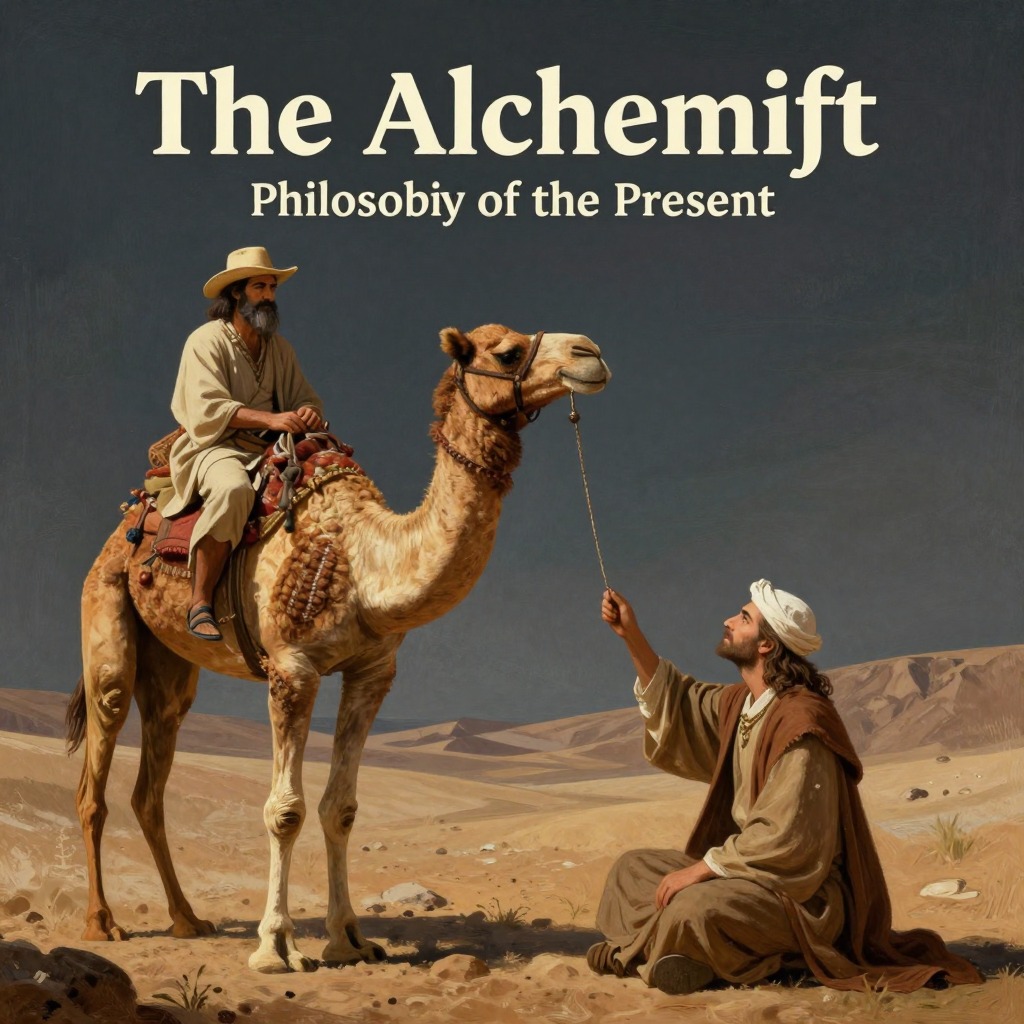
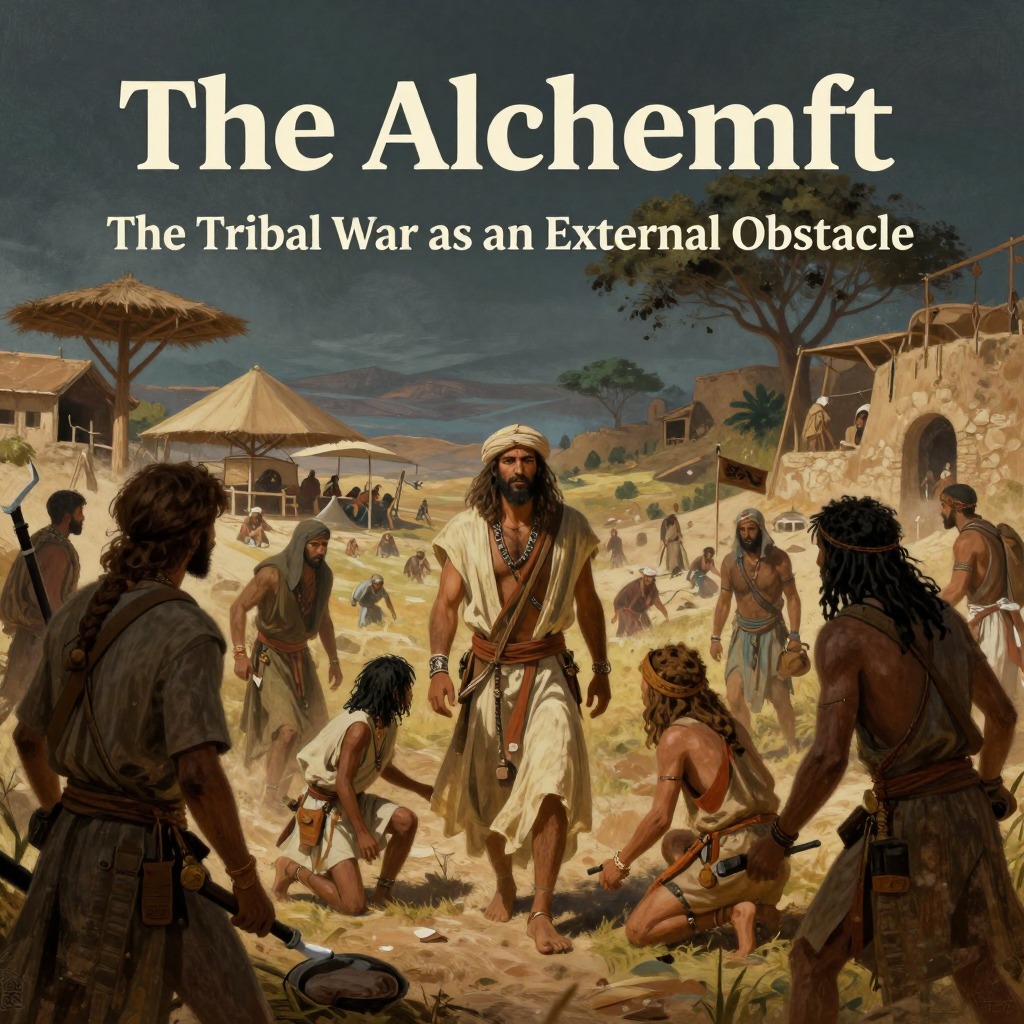
Throughout the caravan journey, the camel driver serves as Santiago's most practical teacher. He explains that the desert is so huge and its horizons so distant that they make a person feel small and as if he should remain silent—a lesson Santiago intuits even before setting foot in the desert. When rumors of tribal wars spread and the caravan grows fearful, the camel driver remains unperturbed. "Once you get into the desert, there's no going back," he tells Santiago and the Englishman. "And, when you can't go back, you have to worry only about the best way of moving forward. The rest is up to Allah, including the danger." He concludes with the mysterious word "Maktub." Later, when the caravan travels day and night and the silence becomes terrifying, he elaborates his philosophy: "I'm alive. When I'm eating, that's all I think about. If I'm on the march, I just concentrate on marching. If I have to fight, it will be just as good a day to die as any other. Because I don't live in either my past or my future. I'm interested only in the present. If you can concentrate always on the present, you'll be a happy man. You'll see that there is life in the desert, that there are stars in the heavens, and that tribesmen fight because they are part of the human race. Life will be a party for you, a grand festival, because life is the moment we're living right now." This teaching directly shapes Santiago's later ability to face his own ordeal with the hostile chief.
The Seer's Lesson and the Role of Omens
The camel driver's own past includes a crucial encounter with a seer, which he recounts to Santiago. He had consulted many seers, some right and some wrong, until the oldest and most feared one asked why he was so interested in the future. When the camel driver replied that he wanted to know so he could do things and change what he didn't want to happen, the seer told him that if good things were coming, they would be a pleasant surprise, and if bad things were, knowing in advance would make him suffer before they occurred. The seer, who made his living forecasting the future by casting twigs, explained that he did not read the future but guessed at it based on the omens of the present. "The secret is here in the present. If you pay attention to the present, you can improve upon it. And, if you improve on the present, what comes later will also be better. Forget about the future, and live each day according to the teachings, confident that God loves his children. Each day, in itself, brings with it an eternity." The seer also revealed that God only rarely reveals the future, and when he does, it is for only one reason: it is a future that was written so as to be altered. This lesson becomes the philosophical foundation for the camel driver's own equanimity and for his decisive role in the oasis crisis.
The Oasis Warning and the Climax of Trust
When Santiago, after his vision of the hawks, tells the camel driver that an army is coming, the driver does not dismiss him. He understands that the boy has plunged to the Soul of the World, and he knows that any given thing on the face of the earth can reveal the history of all things. He explains that the desert is full of men who earn their living by penetrating to the Soul of the World—seers—and that tribesmen are wary of consulting them because it would be impossible to be effective in battle if one knew he was fated to die. But the camel driver, who is not a fighter, has consulted seers himself. He tells Santiago that the men of the desert are used to dealing with omens, and that if they have to know about something Allah wants them to know, someone will tell them about it. "But, this time, the person is you," he says, and urges Santiago to go speak to the tribal chieftains. This act of trust and interpretation—the camel driver recognizing the boy as an instrument of divine will—directly leads to the defense of the oasis and the saving of hundreds of lives. The camel driver thus becomes the bridge between Santiago's mystical vision and the practical action that alters the course of the war.
Significance and Narrative Role
The camel driver is a flat character in E. M. Forster's sense—built around a single, consistent idea—but that idea is the novel's most profound teaching: the power of living in the present and trusting the hand that wrote all. He never wavers from this philosophy, and his calm presence provides a moral and emotional anchor for Santiago during the most uncertain days of the caravan journey. His story of loss and renewal mirrors Santiago's own trajectory: both men lose everything they have (the driver his orchard, Santiago his sheep and his money) and both find a deeper understanding of destiny. The camel driver's repeated use of "Maktub"—a word the crystal merchant taught Santiago—ties him to the novel's network of wise figures who speak the Language of the World. He is the only character who directly enables Santiago to act on an omen, and his seer's teaching about the future being written so as to be altered gives the novel its central dramatic tension: destiny is not a fixed script but a dialogue between divine will and human courage.