the leader of the caravan
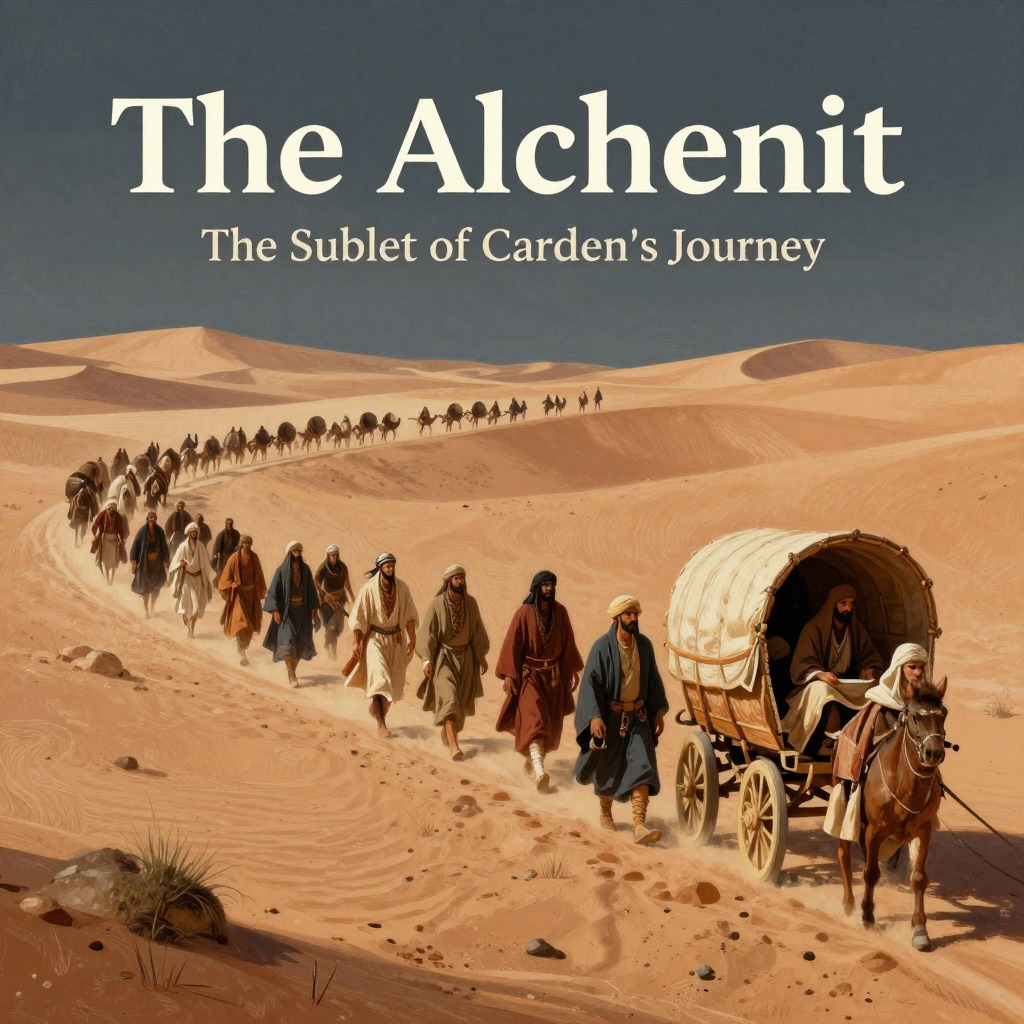
The leader of the caravan is a dark-eyed, bearded man who commands the immense expedition that carries Santiago and the Englishman from Tangier toward the Al-Fayoum oasis. He is introduced as a figure of absolute authority, declaring to the assembled travelers—nearly two hundred people with four hundred animals—that he holds the power of life and death over every person he takes with him. He demands that each traveler swear by their own God to follow his orders without question, warning that in the desert, disobedience means death. This establishes him as the embodiment of the desert's unforgiving laws, a ruler whose word is final in a landscape where survival depends on strict hierarchy and immediate obedience.
Authority and the Laws of the Desert
The caravan leader's authority is rooted in his intimate knowledge of the desert's dangers and his role as its interpreter. He explains that the desert is a capricious lady who sometimes drives men crazy, and he swears by Allah to do everything possible to win out over it. His commands are not arbitrary but are shaped by the practical necessities of crossing a hostile terrain: he dictates the pace of travel, halts during the heat of the day, and enforces silence and caution when tribal wars threaten. When the caravan encounters obstacles—boulders, fine sand, salt flats from dried-up lakes—he and his guides make the decisions that keep the group moving toward its compass point, sighting on a star that indicates the location of the oasis. The leader's rule is the human expression of the desert's own logic: survival requires submission to a greater will.
The Principle of Oasis Neutrality
When the caravan finally reaches Al-Fayoum, the leader enforces the sacred tradition of oasis neutrality. He gathers all his people and instructs them that the oasis is neutral territory because the majority of its inhabitants are women and children, and that the oases may not shelter armies or troops. He orders everyone, including his own sentinels, to hand over their arms to the men appointed by the tribal chieftains. This act demonstrates that the leader's authority is not absolute but is itself subject to a higher law—the law of hospitality and the customs that have governed desert life for generations. He understands that the oasis is a refuge from war, and he respects its inviolability even as he commands a heavily armed caravan.
The War and the Decision to Wait
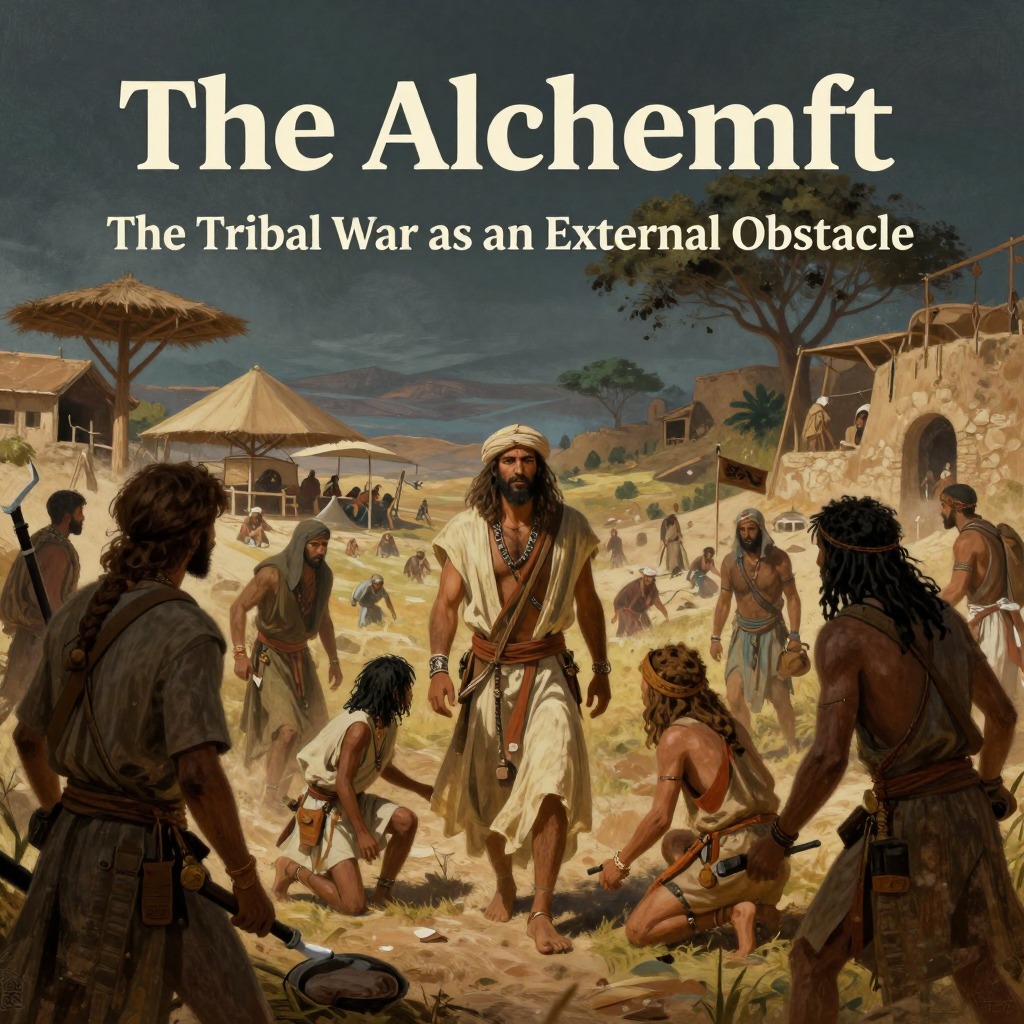
As the tribal war intensifies, the leader calls a meeting of all travelers and delivers a sobering assessment: the battles may last for years, because it is not a battle of good against evil but a war between forces fighting for the balance of power, and when that type of battle begins, it lasts longer than others because Allah is on both sides. He announces that the caravan cannot continue its journey and that the group must remain at the oasis until the conflict ends. This moment marks a shift in the leader's role: from the active commander of a moving expedition to the patient overseer of a stranded community. He does not panic or attempt to force a passage; instead, he accepts the desert's timing and adapts to it, embodying the fatalism that the camel driver later articulates as "Maktub."
Narrative Significance
The leader of the caravan functions as a threshold guardian and a representative of the desert's own authority. He is not a mentor like Melchizedek or the alchemist, nor a companion like the camel driver, but a force of order that Santiago must submit to in order to continue his journey. His presence reinforces the novel's theme that the path to one's destiny is not a solitary adventure but a passage through structures of power and tradition that must be respected. The leader's enforcement of oasis neutrality directly enables Santiago's encounter with Fatima and his vision of the invading army, making him an indirect but essential catalyst for the boy's transformation. He disappears from the narrative once the caravan is halted, his function fulfilled: he has delivered Santiago to the threshold of his destiny and then yielded to the larger forces of fate and war.