the tribal chieftain
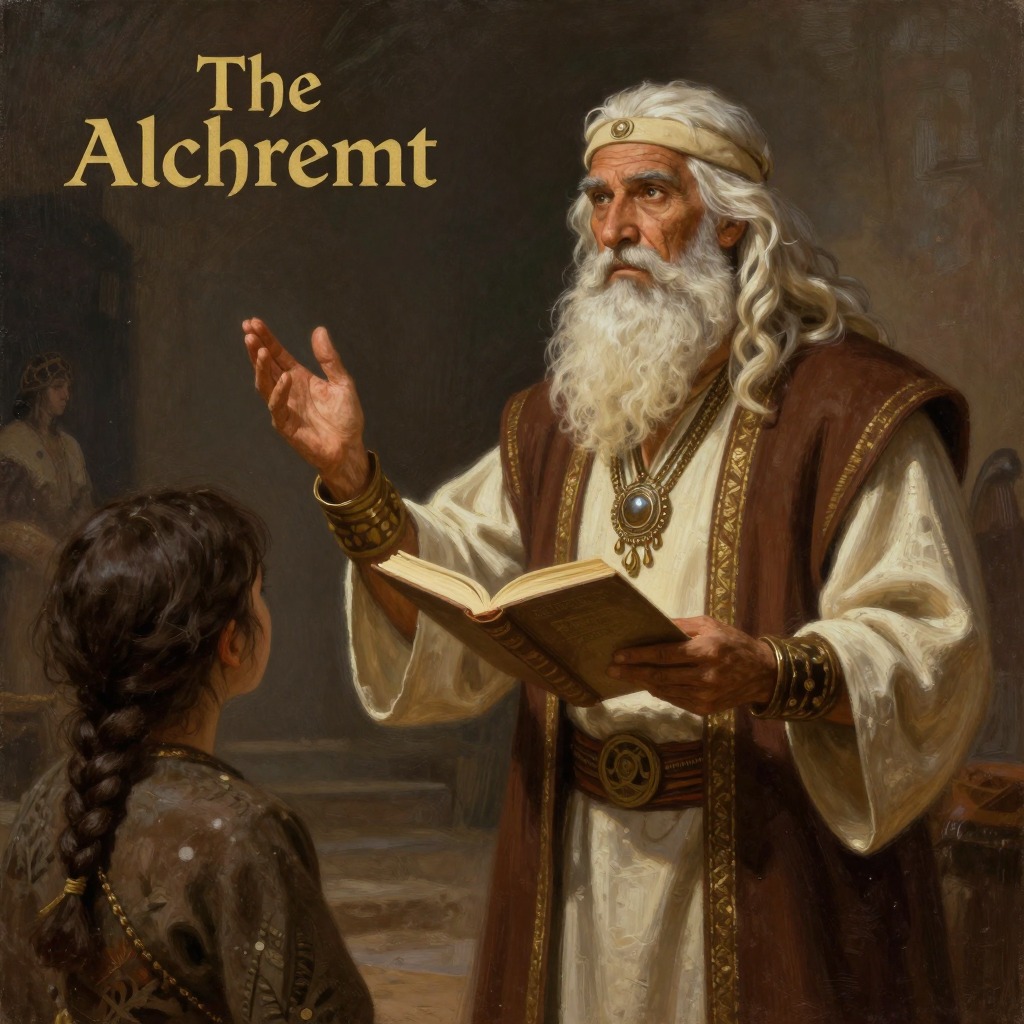
The tribal chieftain is the supreme authority at the Al-Fayoum oasis, a figure who embodies the ancient traditions of the desert and the wisdom of its people. He presides over a tent of extraordinary luxury—the ground covered with the most beautiful carpets, lamps of hand-wrought gold hanging from the structure, and richly embroidered silk cushions where the eight chieftains sit in a semicircle. It is he, dressed in white and gold at the center, who ultimately decides the fate of those who come before him, including the young shepherd Santiago.
Authority and the Testing of Omens
When Santiago, guided by a vision of hawks attacking each other, warns that an army is approaching the oasis, the chieftain does not immediately accept the word of a stranger. He listens as other chieftains question why the desert would reveal such things to an outsider rather than to those who have lived there for generations. Santiago answers that his eyes, not yet accustomed to the desert, can see what habituated eyes might miss. The chieftain then invokes the story of Joseph, a stranger in a strange land who interpreted the pharaoh's dream of thin and fat cows and saved Egypt from famine. He declares that the Tradition, which has preserved the oasis and taught men how to cross the desert, also commands that the messages of the desert be believed. With a signal, he ends the meeting and announces that the oasis will break its own sacred agreement: the next day, men will carry arms, and if at least one weapon has not been used by sunset, that weapon will be used on Santiago himself.
The Battle and Its Aftermath
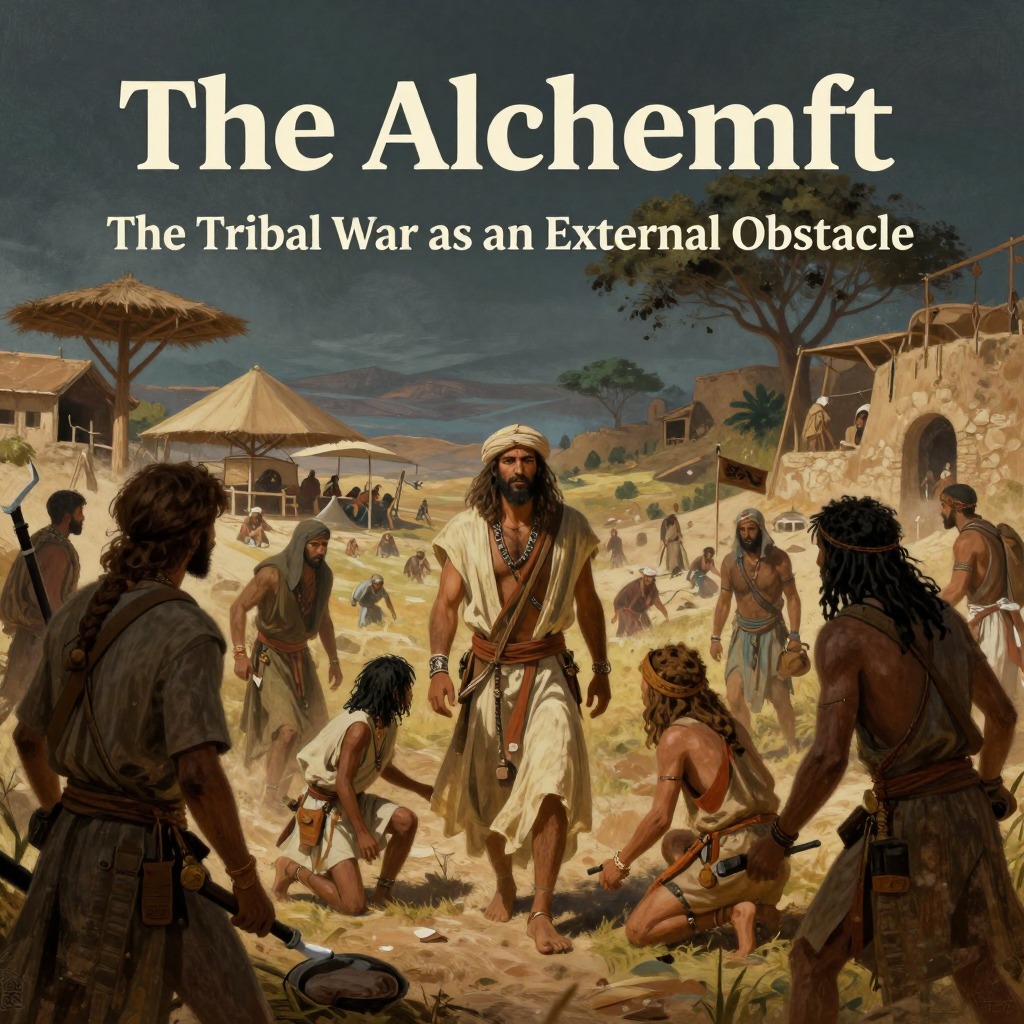
The chieftain's decision proves correct. The next morning, two thousand armed men hide among the palm trees. When five hundred tribesmen enter the oasis from the north, they attack an empty tent, and the men of the oasis surround and kill all but one of the intruders. The surviving commander is brought before the chieftain, who condemns him to death without honor—hanged from a dead palm tree rather than killed by blade or bullet—because the Tradition is sacred. After the battle, the chieftain calls for Santiago, presents him with fifty pieces of gold, and repeats the story of Joseph, asking the boy to become the counselor of the oasis. In this moment, the chieftain recognizes that Santiago, like Joseph, has been chosen by God to serve as an instrument, and he offers the boy a position of lasting influence and power.
Wisdom and the Role of Every Person
The chieftain's authority is rooted not in brute force but in a deep understanding of the desert's laws and the interconnectedness of all things. He knows that the future belongs to God and that it is revealed only under extraordinary circumstances, for a future that is written so as to be altered. His judgment of Santiago's vision reflects this belief: the omens are real, but they require a human agent to act upon them. The chieftain himself becomes that agent, mobilizing the oasis for defense and thereby altering the course of events. In this, he embodies the principle that no matter what a person does, every individual on earth plays a central role in the history of the world, often without knowing it. The chieftain, by acting on the message brought by a stranger, fulfills his own destiny as the protector of his people and the guardian of the Tradition.
Significance and Legacy
The tribal chieftain represents the culmination of Santiago's encounters with authority figures who test his courage and faith. Unlike the crystal merchant, who fears the realization of his dream, or the Englishman, who seeks knowledge through books, the chieftain acts decisively on the omens he is given. He is a man of the desert who understands that the desert is a capricious lady, but also that it teaches everything worth knowing. His willingness to break the rule of oasis neutrality—a rule that has protected both sides for generations—demonstrates that true wisdom sometimes requires the courage to violate tradition in order to preserve it. The chieftain's reward of gold and his offer of the counselor's position are not merely payment for a warning; they are recognition that Santiago has proven himself worthy of a place among the desert's leaders. The chieftain's story, like the story of Joseph he recounts, becomes part of the larger narrative of how a stranger can change the fate of a people, and how the hand that wrote all things works through those who are willing to listen.