Milo Pressman
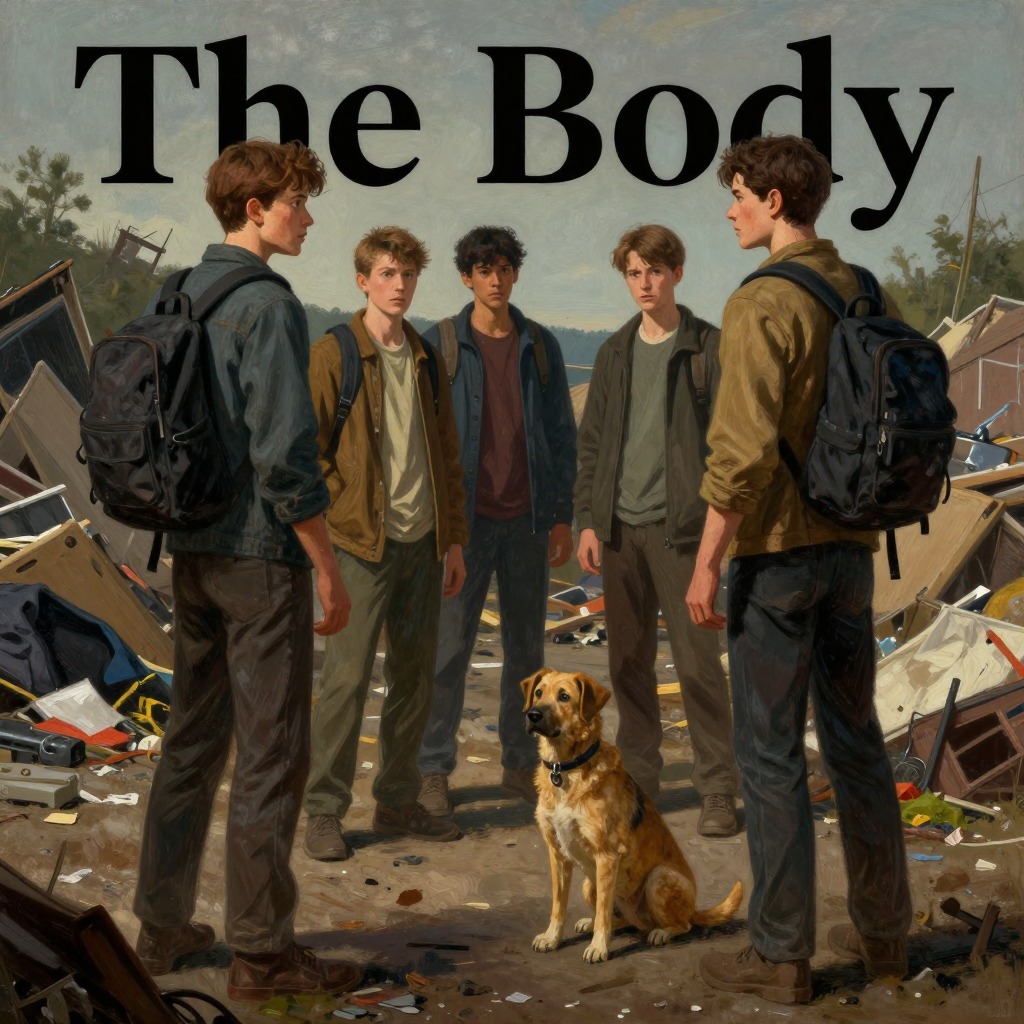
Milo Pressman, the dump-keeper of the Castle Rock Dump, is a minor but memorable antagonist in the boys' journey, a figure whose fearsome reputation—built on the legend of his savage dog Chopper—proves to be almost entirely myth. A middle-aged man with a pot belly, a sweat-stained fatigue uniform, and a New York Giants baseball cap, Pressman embodies the petty, blustering authority that the boys must outwit and defy as they cross into Harlow. His confrontation with Teddy Duchamp, Chris Chambers, Vern Tessio, and Gordon Lachance reveals the vast gap between the town's whispered legends and the shabby reality, and his failure to follow through on his threats marks a turning point in the boys' sense of their own power and independence.
Identity and Reputation
Milo Pressman is the dump-keeper of the Castle Rock Dump, a position that gives him a small town salary which he supplements by fixing discarded items and selling them around town. He is described as "half-bright" and a "working joe," a man of limited intelligence and limited ambition. His real power in the children's imagination comes not from himself but from his dog, Chopper, who is the subject of elaborate and terrifying legends. The kids whisper that Chopper is half German shepherd, mostly boxer, a Doberman pinscher with surgically removed vocal cords, or a maniacal Irish wolfhound fed a special mixture of Gaines Meal and chicken blood. The most common story is that Pressman has trained Chopper to sic specific parts of the human anatomy—hand, ear, eye, foot, leg, and even "balls" for a second offender—so that a kid caught trespassing might hear the dread cry and be maimed for life. Pressman himself is more commonly seen and thus more commonly regarded as just a half-bright working joe, but the legend of Chopper makes him a figure of real terror.
Confrontation with the Boys
The boys' encounter with Pressman begins when Gordon Lachance, returning from the Florida Market with supplies, cuts through the dump and is spotted by Pressman, who shouts, "Hey! Hey, you! Kid! Get away f'n that fence! Get outta here!" When Gordon breaks for the fence, Pressman escalates, bawling, "Come back here or I'll sic my dawg on you, goddammit!" He then unleashes Chopper, shouting, "Sic 'im, Chopper! Go get 'im, boy!" But the reality of Chopper is a profound anticlimax: instead of a huge hellhound, the dog is a medium-sized black-and-white mongrel, yapping and jumping fruitlessly at the fence. Teddy Duchamp, far from being cowed, begins to taunt Pressman and his dog, strutting up and down, bumping his rump against the fence, and calling the dog "Choppie." Chopper, in a frenzy, charges the fence at full speed, hits it with a low musical twang, and performs a reverse snap-roll, landing on his back and crawling off with his tongue hanging crookedly. Pressman, his complexion darkening to a scary plum color, goes almost berserk with rage, but he is too old and too fat to climb the fence and reach the boys.
The Verbal Duel and Its Aftermath
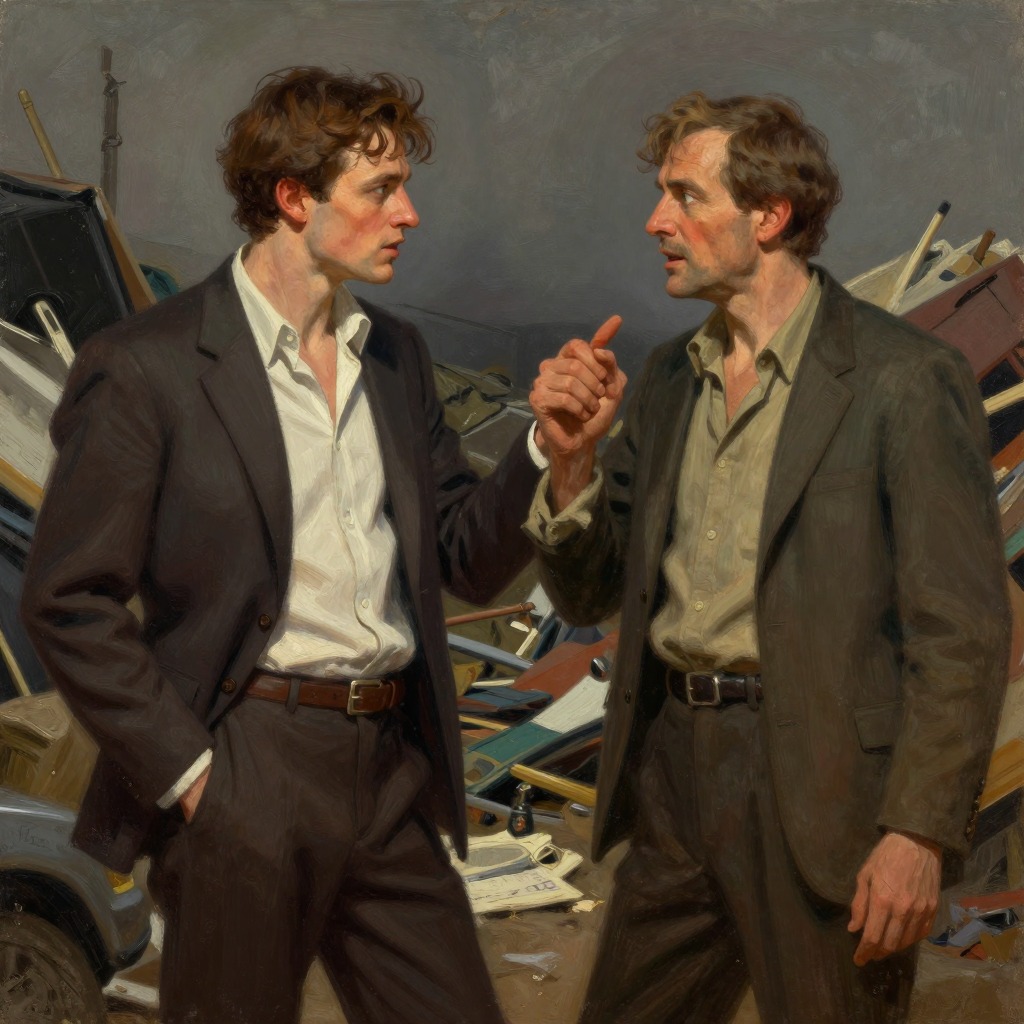
Pressman, unable to physically retaliate, resorts to verbal abuse, and he quickly finds the most devastating weapon: Teddy's father. He calls Teddy's father a "loony" and says he is "up to Togus" because "HE WENT FUCKING SECTION EIGHT!" This provokes a near-violent reaction from Teddy, who screams, "YOUR MOTHER BLOWS DEAD RATS! AND IF YOU CALL MY DAD A LOONY AGAIN, I'LL FUCKING KILL YOU, YOU COCKSUCKER!" Pressman, having found the "loony button," presses it again and again, grinning smugly. The confrontation ends with the boys walking away, and Pressman, standing behind the security fence with his fingers hooked through the chain-link diamonds, shouting threats about the reformatory. Gordon Lachance, looking back, feels a sudden pang of pity for him: "he looked like the biggest third-grader in the world, locked inside the playground by mistake, yelling for someone to come and let him out." Pressman's threats never materialize; the boys later speculate that he thought twice about reporting them, knowing that they would swear he sicced his dog on them first. He never spoke up, and the story of their weekend never came out through him.
Narrative Significance
Milo Pressman serves as a comic and deflating counterpoint to the boys' fears. The elaborate mythology surrounding Chopper—a dog that could supposedly take an ear, an eye, a foot, or a leg on command—is revealed to be almost entirely the product of childish imagination and town gossip. Pressman himself, for all his bluster and rage, is a figure of impotence: he cannot climb the fence, his dog is a clumsy fool, and his threats are empty. His confrontation with the boys, particularly with Teddy Duchamp, marks a moment when the boys—especially Teddy—begin to assert their own agency against the adult world's authority. Pressman's failure to follow through on his threats, and his ultimate silence, underscores the theme that the adult world's power is often a bluff, and that the boys' own courage and solidarity can carry them through dangers that are more imagined than real.