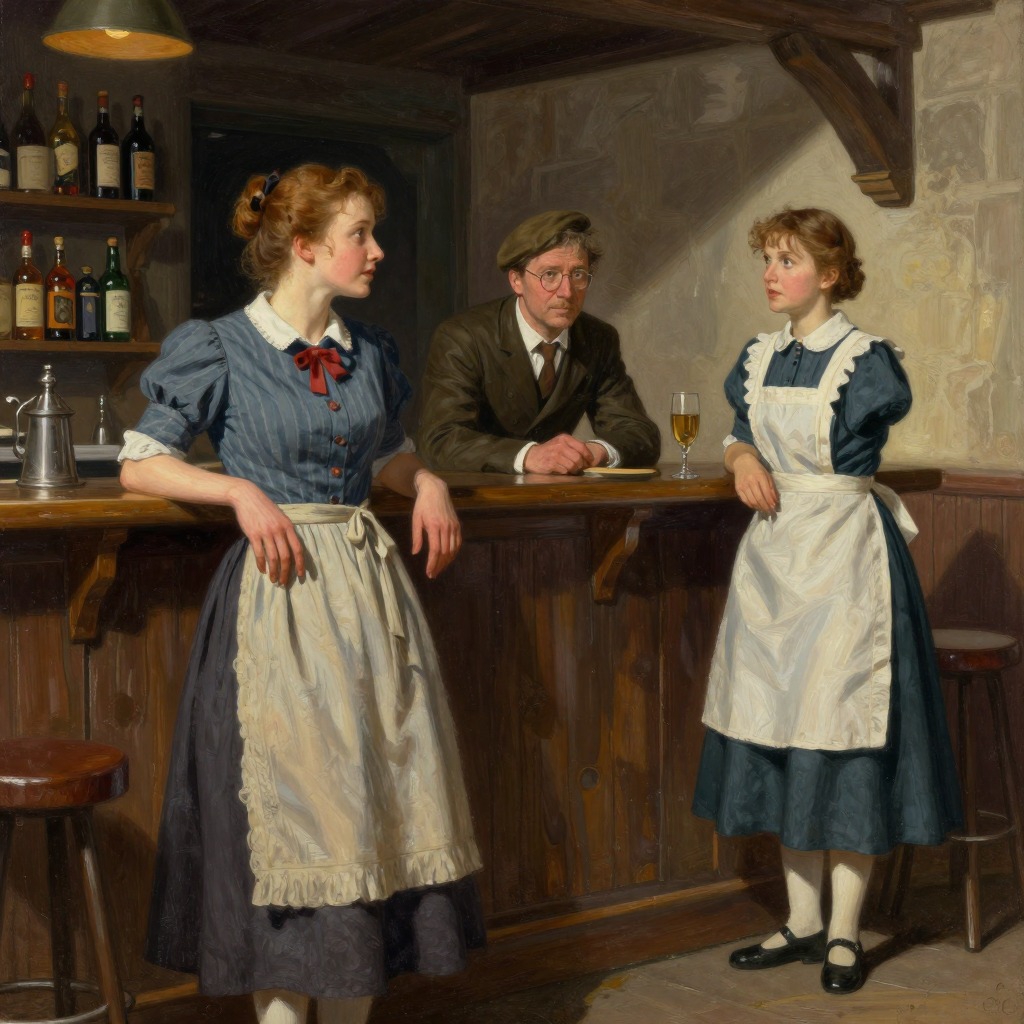
Henriette
Henriette is a minor character in Franz Kafka's novel The Castle, known only through the words of Pepi, the former barmaid who, after losing her position, plans to return to the chambermaids' quarters. She is one of the two chambermaids—the other being Emilie—who share a small, cramped room with Pepi in the Castle Inn. Henriette is never seen directly in the narrative; her existence is revealed when Pepi, in a moment of despair and hope, invites K. to join her and her friends in their secret refuge.
Identity and Background
Henriette is introduced as one of Pepi's close companions, part of a trio of chambermaids who live together in a room that is described as "warm if cramped" and where they "keep close together." Pepi speaks of Henriette with affection, noting that she and Emilie are "good souls" who have adjusted to their wretched life. Henriette's background is not detailed, but she is implied to be a young woman like Pepi, working in the lowly position of chambermaid at the Castle Inn, a job that involves cleaning the rooms of the castle officials and enduring the constant fear and discomfort of their presence.
Role in Pepi's Invitation to K.
Henriette's significance lies in her role as part of the alternative life Pepi offers K. after Frieda has left him. When K. is alone in the bar, Pepi, having just lost her job as barmaid, suggests that he come with her to the maids' room, saying, "You'll like my friends, we'll make you comfortable." She specifically mentions Henriette and Emilie, promising that they will tell K. stories about Frieda and show him pictures of her. Henriette is thus part of a collective that represents a hidden, secretive community within the inn, one that exists outside the official hierarchy and offers K. a potential refuge from his isolation.
The Chambermaids' Life and Its Significance
Henriette's life as a chambermaid is described by Pepi in vivid detail, painting a picture of a harsh and fearful existence. The chambermaids live in a room that is "really no more than a big cupboard with three compartments," where they sleep in bunk beds and are constantly disturbed by the noise of the gentlemen and the fear of someone lurking outside their door. They are forbidden to show themselves in the corridor during the day, and their work is thankless, involving cleaning up after the officials and enduring the suspicion of losing files. Henriette, like her companions, is part of this marginalized group, and her presence in Pepi's invitation underscores the theme of exclusion and the search for connection in a world where the castle's authority permeates every aspect of life.
Thematic Significance
Henriette, though barely present, contributes to the novel's exploration of the lives of the lower servants and the social stratification of the village. Her existence, along with Emilie's, highlights the contrast between the visible world of the officials and the hidden, communal world of the chambermaids. Pepi's offer to K. to join them represents a possible escape from the futile struggle with the castle, a retreat into a private, secret space where human warmth and solidarity might be found. Henriette is thus a symbol of the alternative paths that K. could take, and her mention serves to deepen the sense of the village's complex social fabric and the many lives that exist in its shadows.