Klamm
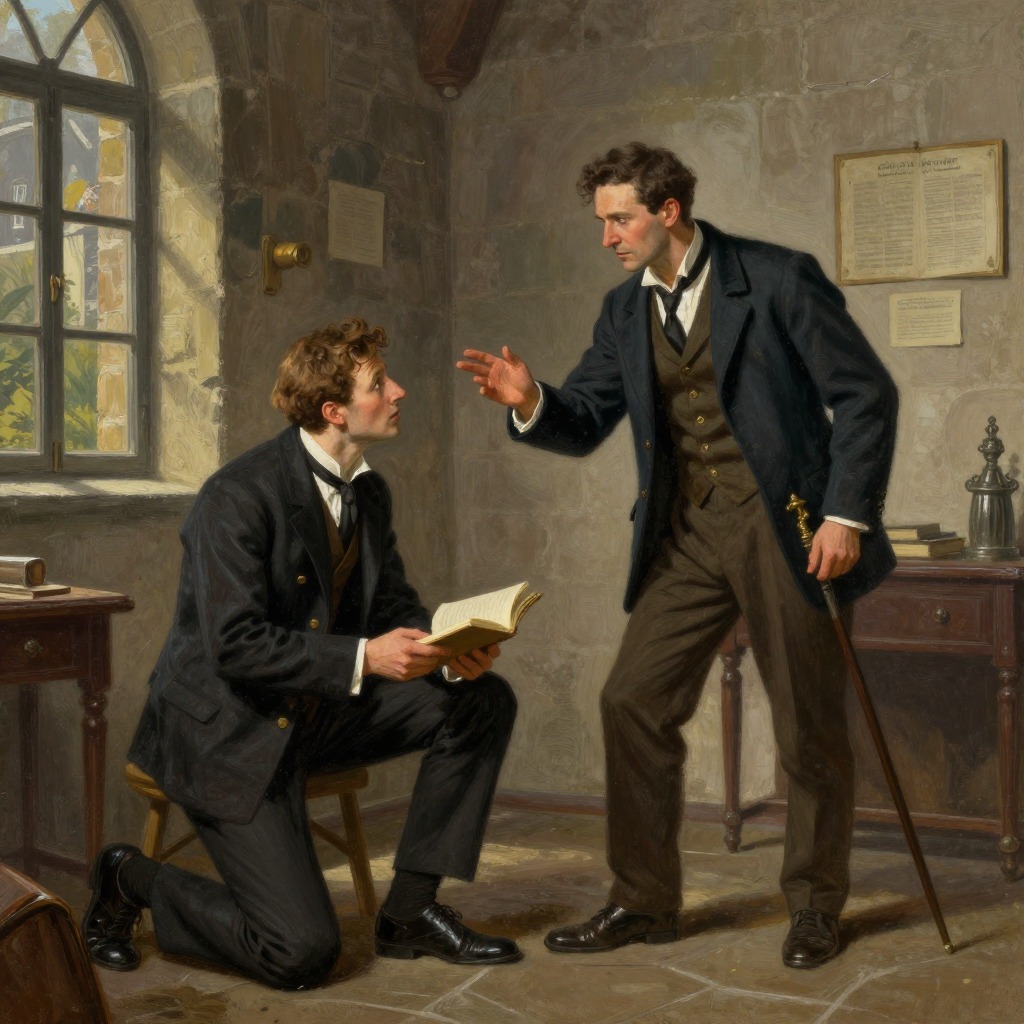
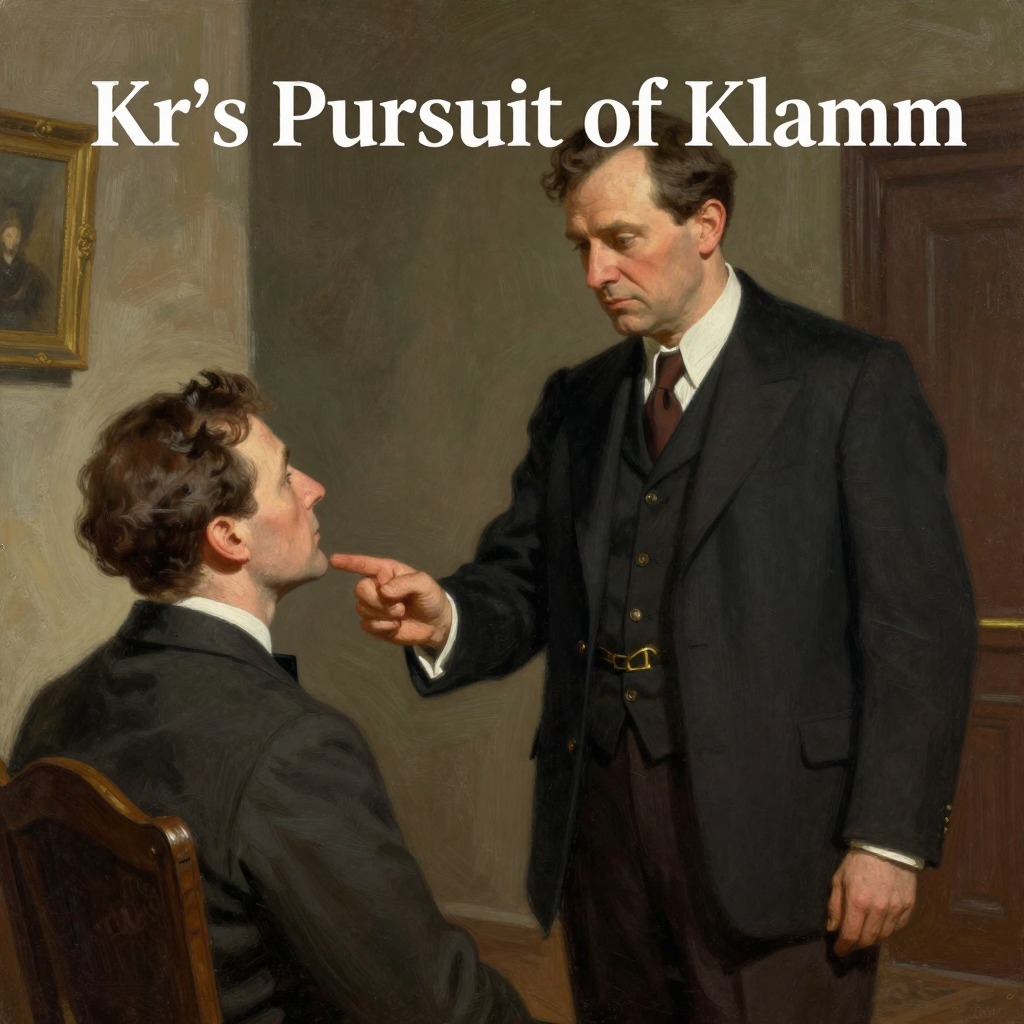
Klamm is the chief executive of Office X at the castle, the highest authority K. encounters in the village. He is the object of K.'s relentless quest for recognition and a personal interview, yet he remains almost entirely inaccessible, communicating only through letters, intermediaries, and brief, indirect sightings. His presence dominates the lives of the villagers, particularly Frieda, his former lover, and the landlady, who treasures three mementos of him. Klamm embodies the castle's inscrutable power, its arbitrary grace, and the profound distance between the individual and authority.
Identity and Position
Klamm is identified by Barnabas, the messenger, as the chief executive of Office X, the authority whose signature appears on the first letter K. receives. The letter, which is signed with an illegible signature but printed with the words "Chief Executive, Office X," establishes Klamm as K.'s immediate superior, though the village mayor later interprets it as a private letter rather than an official communication. Klamm is a stout, ponderous man of middle height, with a smooth face, drooping cheeks, a long black moustache, and a pair of pince-nez set crookedly on his nose. He is often seen in a comfortable round armchair, illuminated by an electric light, resting his left elbow on the desk and holding a Virginia cigarette in his right hand. He is described as a gentleman from the castle, of high rank, and is compared by the landlady to an eagle, a comparison K. initially finds ridiculous but later comes to appreciate.
The Inaccessible Authority
Klamm is characterized by his profound inaccessibility. He never speaks to anyone from the village, and the landlady insists that he never has. He is often asleep, even when sitting at his desk, and the gentlemen of the castle are said to sleep a great deal. When K. attempts to see him, he is thwarted at every turn. The Castle Inn is exclusively for the gentlemen from the castle, and K. is not allowed anywhere but the bar. When K. waits for Klamm in the yard, he is discovered by a young gentleman who orders the sleigh to be unharnessed, and Klamm is able to leave only after K. has been driven away. The telephone, which K. uses to try to contact the castle, is described by the village mayor as unreliable, with calls often answered by lower officials or resulting in jokes. Klamm's inaccessibility is further emphasized by the fact that he never reads the records kept by his village secretary, Momus, and that he is said to forget people entirely once he stops summoning them.
Relationships and Influence
Klamm's influence extends over the lives of several characters. Frieda, his former lover, is described as having been his mistress, a position that gave her a certain status and that she gave up for K. The landlady, Gardena, was also once summoned by Klamm three times, and she treasures three mementos of him: a photograph, a shawl, and a nightcap. She confesses that without these mementos she could not have borne her life. Klamm's relationship with Frieda is a source of both pride and anxiety for K., who hopes to use her to gain access to Klamm. The assistants, Artur and Jeremias, are said to have been sent by Galater, who was deputizing for Klamm, to cheer K. up, and Frieda later claims that they are Klamm's envoys, though K. dismisses this. Klamm's presence is felt even in the smallest details of village life, such as the change of barmaid at the Castle Inn, which Erlanger, one of Klamm's principal secretaries, insists must be reversed to avoid disturbing Klamm's comfort.
The Letters and the Quest
Klamm communicates with K. primarily through letters delivered by Barnabas. The first letter, which K. receives on his first day, states that K. has been taken into the count's service and that his immediate superior is the village mayor. The second letter, delivered later, praises K.'s surveys and the work of his assistants, and assures him that his remuneration will be decided soon. K. reads these letters with a mixture of hope and suspicion, recognizing their contradictions and their ambiguous significance. The village mayor interprets the first letter as a private communication, not an official one, and the second letter as evidence that Klamm has been misinformed about K.'s activities. K.'s quest to speak to Klamm in person becomes the central driving force of his time in the village, but it remains unfulfilled. He is told by the landlady that the only way to reach Klamm is through Momus's records, but Momus himself denies that his records can lead to an interview. K.'s attempts to see Klamm, whether by waiting in the yard or by entering the Castle Inn, are all unsuccessful, and he is ultimately ordered by Erlanger to bring Frieda back to the bar, a command that underscores his powerlessness.
The Symbol of the Castle
Klamm represents the castle's inscrutable and arbitrary power. He is a figure of immense authority who is never fully seen or understood. His silence, his sleep, and his distance from the village all contribute to his mythic quality. The landlady's comparison of Klamm to an eagle, with his piercing glance from on high and his immutable circles, captures his remote and untouchable nature. K. thinks of Klamm's "remote distance, his impregnable residence, his silence," and the "immutable circles in which he soared, free from any interference by the likes of K. down below." Klamm's inaccessibility is not merely a personal trait but a structural feature of the castle's bureaucracy, which operates through intermediaries, documents, and arbitrary decisions. He is the ultimate authority to whom K. seeks to appeal, but he is also the embodiment of the impossibility of that appeal. Klamm's significance lies not in what he does, but in what he represents: the unattainable goal of K.'s quest and the profound alienation of the individual in the face of an incomprehensible and indifferent power.