Lasemann
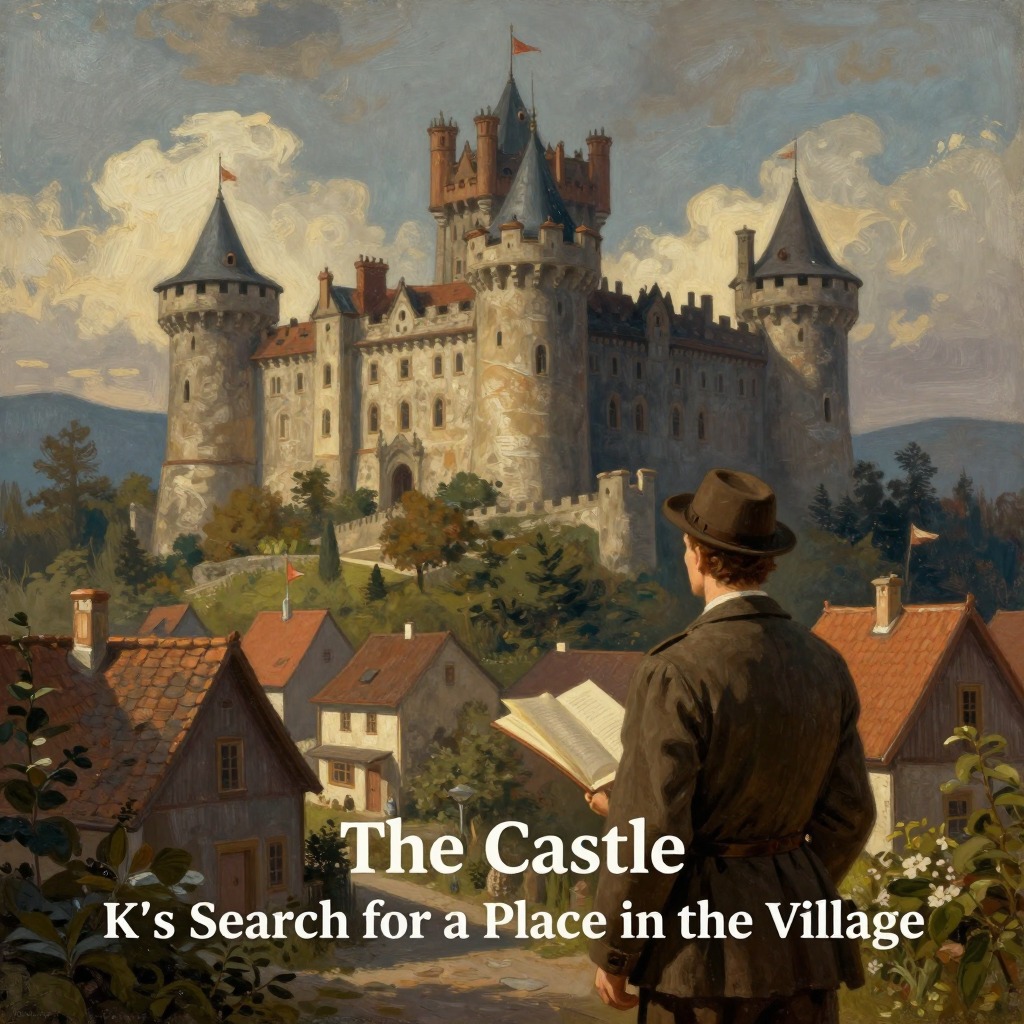
Lasemann, the master tanner, is a minor but pivotal figure in Franz Kafka's The Castle, whose home becomes the site of K.'s first unsettling encounter with the village's social order and its complex relationship with the castle. His character embodies the villagers' mixture of hospitality and exclusion, and his family's connections—particularly through his brother-in-law Brunswick—link him to the bureaucratic entanglements that define K.'s struggle.
Identity and Introduction
Lasemann is introduced as "the master tanner," a tradesman whose house K. stumbles into on his first morning in the village, exhausted and lost in the deep snow. He is described as a bearded, moustached man who keeps his mouth open under his moustache, breathing noisily. When K. enters his dimly lit, steam-filled parlour—where clothes are being washed and two men bathe in a large wooden tub—Lasemann is one of the bathers. He is initially presented as the less important of the two men, with the other, quieter man taking the lead in addressing K. However, it is Lasemann who ultimately identifies himself to K. as the master tanner, and who, with his companion, forcibly frogmarches K. out of the house, demonstrating the village's inhospitable reception of strangers.
Life and Role in the Village
Lasemann's role extends beyond this single encounter. He is a respected member of the community, connected by marriage to Brunswick, the master shoemaker who becomes a significant figure in K.'s bureaucratic struggles. The village mayor later mentions Brunswick as Lasemann's brother-in-law, noting that Brunswick's agitation on the parish council was a source of trouble, and that "not least Lasemann" would be glad to see him removed. This connection places Lasemann within the web of village politics and the dispute over the land surveyor's appointment. His house, with its large bathing tub, serves as a communal gathering place, as evidenced by Hans Brunswick's account of visiting to bathe with his family. Lasemann's wife, described by K. as beautiful but pale and ailing, is also present during K.'s visit, and K. speculates that she might come from the castle, a question the mayor deflects.
Key Actions and Interactions with K.
Lasemann's primary interaction with K. is marked by a blunt rejection. After K. rests in his house, Lasemann tells him, "You're probably surprised to find us so inhospitable... but hospitality isn't a custom here, and we don't need any visitors." This statement crystallizes the village's attitude toward outsiders. When K. asks who he is, Lasemann replies, "I am Lasemann, the master tanner... and you owe no one any thanks." He then dismisses K.'s hope of meeting again with a curt "I shouldn't think so." This encounter, though brief, is significant: it is one of the first direct rejections K. faces, and it shapes his understanding of the village's social dynamics. Later, K. reflects on this experience, noting that the villagers who "sent him away or seemed to fear him" were less dangerous than those who offered false help, as they at least helped him "concentrate his forces."
Relationships and Connections
Lasemann's relationships reveal the village's intricate social fabric. His brother-in-law Brunswick is a central figure in the bureaucratic confusion surrounding K.'s appointment, having been the leader of those who wanted a land surveyor appointed for political reasons. This connection suggests that Lasemann, despite his personal rejection of K., is indirectly linked to the forces that brought K. to the village. The village mayor's account of the bureaucratic error—involving Department A, Department B, and the conscientious official Sordini—implicates Brunswick's agitation as a complicating factor. Lasemann's wife's possible castle origins add another layer of mystery, hinting at the permeability of the boundary between village and castle that the novel constantly questions.
Change and Significance
Lasemann himself undergoes little change over the course of the novel; he remains a static figure representing the village's entrenched attitudes. However, his significance lies in his role as a threshold guardian, one of the first villagers to explicitly reject K. and define the terms of his exclusion. His house, with its communal bathing and washing, stands in contrast to the castle's inaccessibility, offering a glimpse of village life that is both intimate and closed. Lasemann's bluntness—"we don't need any visitors"—echoes the broader theme of the village's self-containment and its complex, often hostile relationship with the castle. Through Lasemann, Kafka illustrates the social mechanisms of inclusion and exclusion that K. must navigate, and the seemingly minor characters who shape his fate.
Narrative Role and Evaluation
Lasemann functions as a minor but memorable character whose actions have lasting consequences for K.'s perception of the village. His rejection, along with that of his companion, forces K. to confront the reality of his outsider status. The master tanner's name is invoked later in the novel, particularly in connection with Brunswick and the bureaucratic intrigue, reinforcing his place in the village's social hierarchy. Lasemann's character is a testament to Kafka's ability to create vivid, symbolic figures from seemingly ordinary tradesmen, whose brief appearances resonate throughout the narrative. He is not a villain, but a representative of the village's collective resistance to the stranger, a resistance that is both personal and institutional.