Mizzi
Mizzi is the wife of the village mayor, a quiet, shadowy presence in the dimly lit room where K. first encounters the village's administrative heart. She is described as "a quiet woman, looking almost shadowy in the dimly lit room," and her role is largely domestic and supportive, yet she is indispensable to her husband's official work. The mayor himself admits, "My wife is a great help to me," and the landlady later asserts that Mizzi is "in charge of everything," suggesting that her influence far exceeds her unobtrusive appearance.
Identity and Introduction
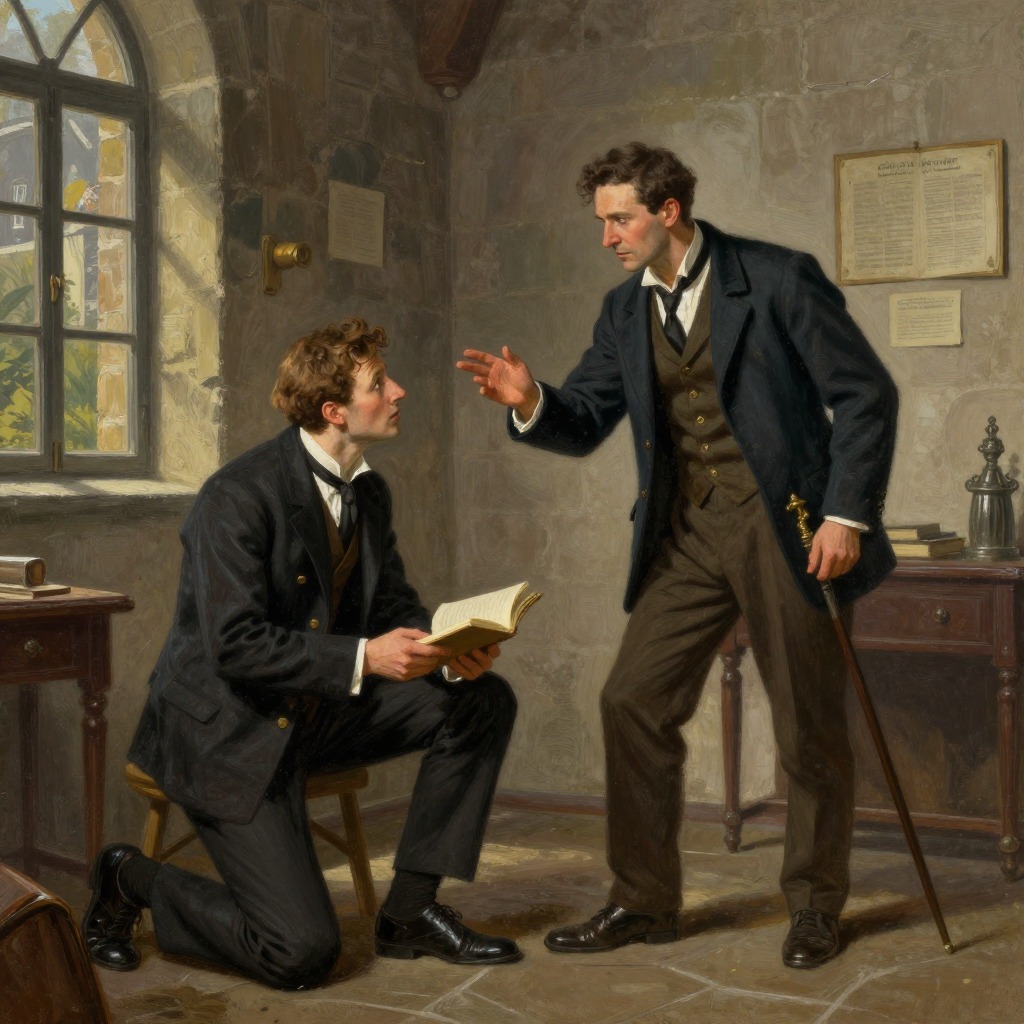
Mizzi first appears when K. visits the village mayor, who is bedridden with gout. She brings a chair for K. and places it by the bed, then scurries about the room, though K. cannot make out what she is doing. Her movements are quiet and efficient, and she seems to be the one who manages the household's practical affairs. The mayor, a stout, clean-shaven man, relies on her to search for the decree about the land surveyor, and she obediently opens the cupboard, which is stuffed with papers, causing two large bundles of files to fall out. She flinches in alarm but continues the search, kneeling in front of the cupboard with a candle, while the assistants, who have been allowed to help, merely churn up the heaps of files without finding anything.
Role in the Bureaucratic Confusion
Mizzi's most significant action occurs during K.'s conversation with the mayor about the bureaucratic mix-up that led to his appointment. The mayor recounts how he and Mizzi were the only ones doing the work at the time, and how they kept copies of only the most important documents. When the mayor asks Mizzi to find the file with "Land Surveyor" underlined in blue, she is unable to locate it, and the mayor eventually concludes that it is "sure to be found some time, it's probably at the teacher's place." Mizzi's failure to find the file is emblematic of the chaos that pervades the village's official records, and it underscores the impossibility of K.'s quest for clarity.
Later, when the mayor reads Klamm's letter with Mizzi, she clasps her hands and says, "From Klamm," showing her recognition of the letter's significance. They read it together, whispering to each other, and Mizzi's opinion is clearly valued by the mayor, who says, "Mizzi thinks just as I do, and now I can venture to speak my mind." This moment reveals that Mizzi is not merely a passive helper but an active participant in interpreting official communications, even if her role is hidden from outsiders.
The Paper Boat and the Mayor's Dependence
At the end of the conversation, Mizzi toys with Klamm's letter, folding it into a paper boat. K. is alarmed and takes it from her, but the gesture is telling: it shows Mizzi's casual, almost childlike handling of a document that K. regards as crucial. This act also highlights the disparity between K.'s desperate seriousness and the villagers' more relaxed, even dismissive attitude toward official papers. The mayor, meanwhile, is clearly dependent on Mizzi, not only for practical help but for emotional support. When his leg begins to hurt, he calls to her, "Mizzi, my leg is beginning to hurt badly again, we'll have to change the compress," and she prepares the ointment, showing her role as caretaker.
Significance and Thematic Resonance
Mizzi's character embodies the theme of hidden influence and the human face of bureaucracy. Though she is never the center of attention, her actions—searching for files, reading letters, folding paper boats—reveal the arbitrary and often absurd nature of the castle's administrative processes. She is also a counterpoint to the more assertive women in the novel, such as Frieda and the landlady, as she operates entirely in the background, yet her quiet competence is essential to the mayor's functioning. The landlady's remark that Mizzi is "in charge of everything" suggests that even the most seemingly insignificant figures in the village hold real power, a theme that resonates throughout the novel's exploration of authority and its elusive nature.