Olga
Olga is the elder daughter of the Barnabas family, a household marked by tragedy and social exclusion. She is first encountered in the dim, steamy interior of Lasemann's house, where she is one of the sisters who, along with her parents and brother Barnabas, greets K. when he is led there by mistake. From the outset, she is distinguished by a certain gentleness and a touch of girlish awkwardness, which contrasts with the grave, direct gaze of her younger sister Amalia. As the novel unfolds, Olga emerges as the family's most active and self-sacrificing member, the one who attempts to navigate the castle's opaque bureaucracy and who ultimately confides the family's painful secret to K., making her a pivotal figure in his own quest for recognition.
Identity and Family Background
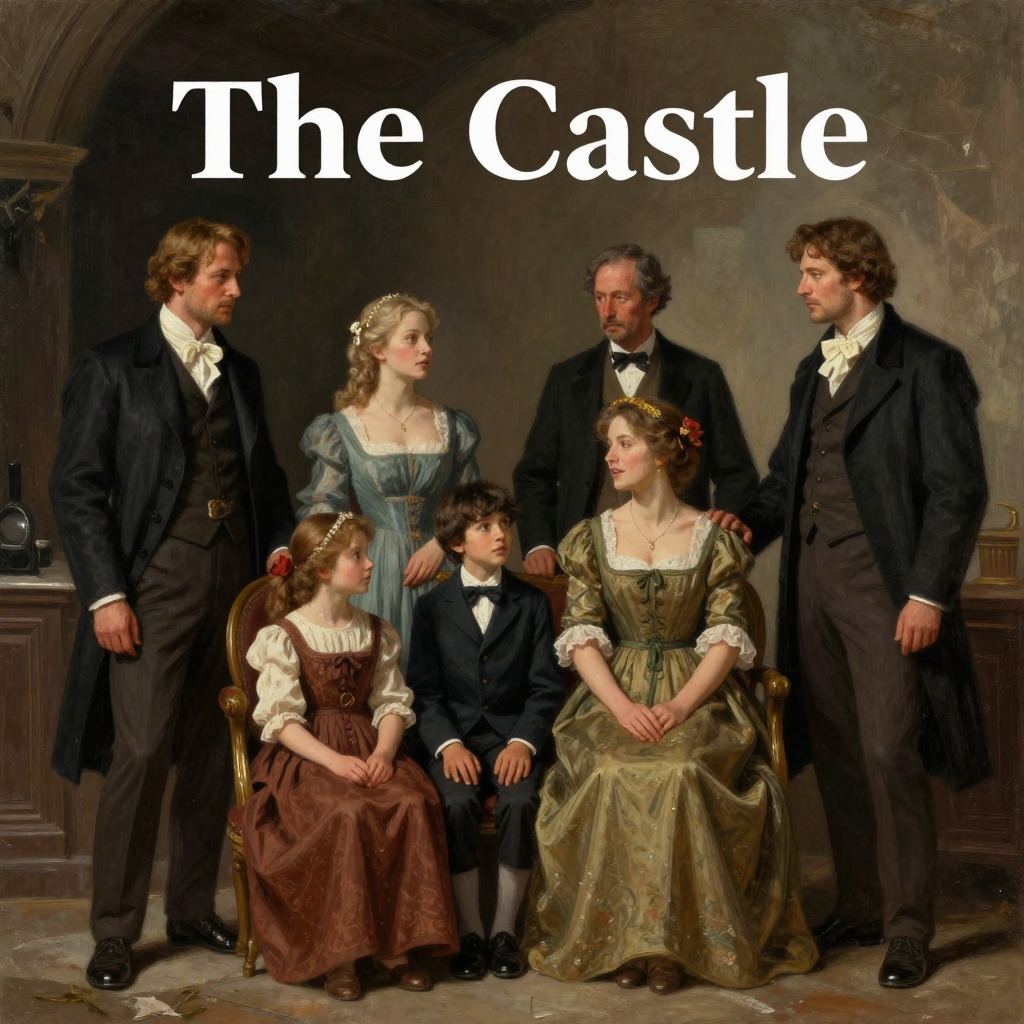
Olga is the daughter of a once-respected shoemaker and the sister of Barnabas, the castle messenger, and Amalia, the youngest. The family lived in relative prosperity until a single event—Amalia's rejection of an official's summons—plunged them into disgrace. Olga describes how, three years before K.'s arrival, the family was well-to-do, with her father serving as Trainer Number Three in the fire brigade. They were so respected that the fire-brigade festival could not begin without them. Olga herself was a lively, somewhat envious girl, who cried half the night before the festival because her mother had lent all her lace to Amalia. This background of former respectability makes their subsequent fall all the more devastating, and Olga's narrative is steeped in the memory of what was lost.
The Family's Fall and Olga's Role
Olga's account of the family's downfall is the centerpiece of her role in the novel. She tells K. the story of the fire-brigade festival on 3 July, when the official Sortini, after noticing Amalia, sent her a crude letter summoning her to the Castle Inn. Amalia tore the letter up and threw it in the messenger's face, an act of defiance that Olga insists was heroic but that sealed the family's fate. In the aftermath, the family was ostracized by the village: customers withdrew, the fire brigade dismissed her father, and even their closest friends abandoned them. Olga describes how they were forced to move to a hovel, pulling their belongings on a handcart, and how the family name was replaced by the contemptuous label "the family of Barnabas." Throughout this ordeal, Olga, along with her brother, tried to devise plans to regain favor, while Amalia remained silent and aloof, bearing the burden of her decision alone.
Sacrifice and the Servants
Olga's most drastic measure was to spend nights with the castle servants in the stables of the Castle Inn, a practice she began over two years before K.'s arrival. She explains that this was part of a plan to find Sortini's messenger and make amends, but it also served to establish a tenuous connection with the castle. She endured the servants' wild, unruly behavior, taking money from them to support her family, and listening to their stories in the hope of gleaning useful information. This sacrifice, which she does not regret, has further tarnished her reputation, yet she bears it with a kind of stoic pride, seeing it as a continuation of her father's futile efforts. Her willingness to debase herself for her family's sake stands in stark contrast to Amalia's proud refusal to compromise.
The Confession to K.
Olga's most significant act in the novel is her long confession to K. during his visit to the Barnabas house. She reveals the full story of Amalia and Sortini, the family's ostracism, and her own desperate schemes. She also shares her doubts about Barnabas's role as a messenger, questioning whether he truly serves Klamm or is merely an intruder in the castle's anterooms. This confession is motivated by a desire to win K.'s trust and to protect him from disappointment, but it also reveals her own deep anxieties and her hope that K.'s arrival might signal a turn in the family's fortunes. She tells K. that the two letters Barnabas delivered are the only sign of grace the family has received in three years, and that their fate now depends on him to some extent. In doing so, she binds K. to her family's cause, even as she acknowledges the impossibility of their situation.
Relationships and Conflict
Olga's relationships are defined by her family's tragedy. She is devoted to Barnabas, whom she describes as her only confidante, yet she is also critical of his naivety and his failure to assert himself in the castle. She is in awe of Amalia, despite Amalia's coldness toward her, and she defends her sister's actions even as she admits that Amalia's silence has made their suffering worse. With K., Olga is open and trusting, seeing in him a potential ally. She is also aware of the hostility between her family and Frieda, K.'s fiancée, and she tries to navigate this by being honest about her own motives. Her relationship with the servants is one of exploitation and self-abasement, yet she maintains a certain dignity, insisting that she is not sorry for what she has done.
Change and Ending
Olga's story does not end with a resolution; rather, it remains suspended in a state of ongoing struggle. She continues to wait for Barnabas, to hope for a change in the family's fortunes, and to offer K. her help, even as she acknowledges that their efforts may be futile. Her final appearance in the novel is marked by a quiet resignation, as she watches K. leave with Gerstäcker, having failed to secure his full allegiance. Yet her confession has left a lasting impression on K., who reflects that Olga, with her courage, circumspection, and self-sacrifice, is almost more important to him than the messages Barnabas brings. In this way, Olga emerges as a figure of tragic endurance, whose story illuminates the arbitrary cruelty of the castle and the human cost of its authority.