Pepi
Pepi is a young chambermaid at the Castle Inn whose brief, intense rise to the position of barmaid and subsequent fall back into servitude forms one of the novel's most sustained and psychologically revealing episodes. Her story, told directly to K. in a long, impassioned monologue, provides a bitter counter-narrative to Frieda's account of events, exposing the ruthless social dynamics of the village, the power of rumor and connection, and the desperate, ultimately futile, hope for advancement that defines life at the margins of the castle's world.
Identity and Background
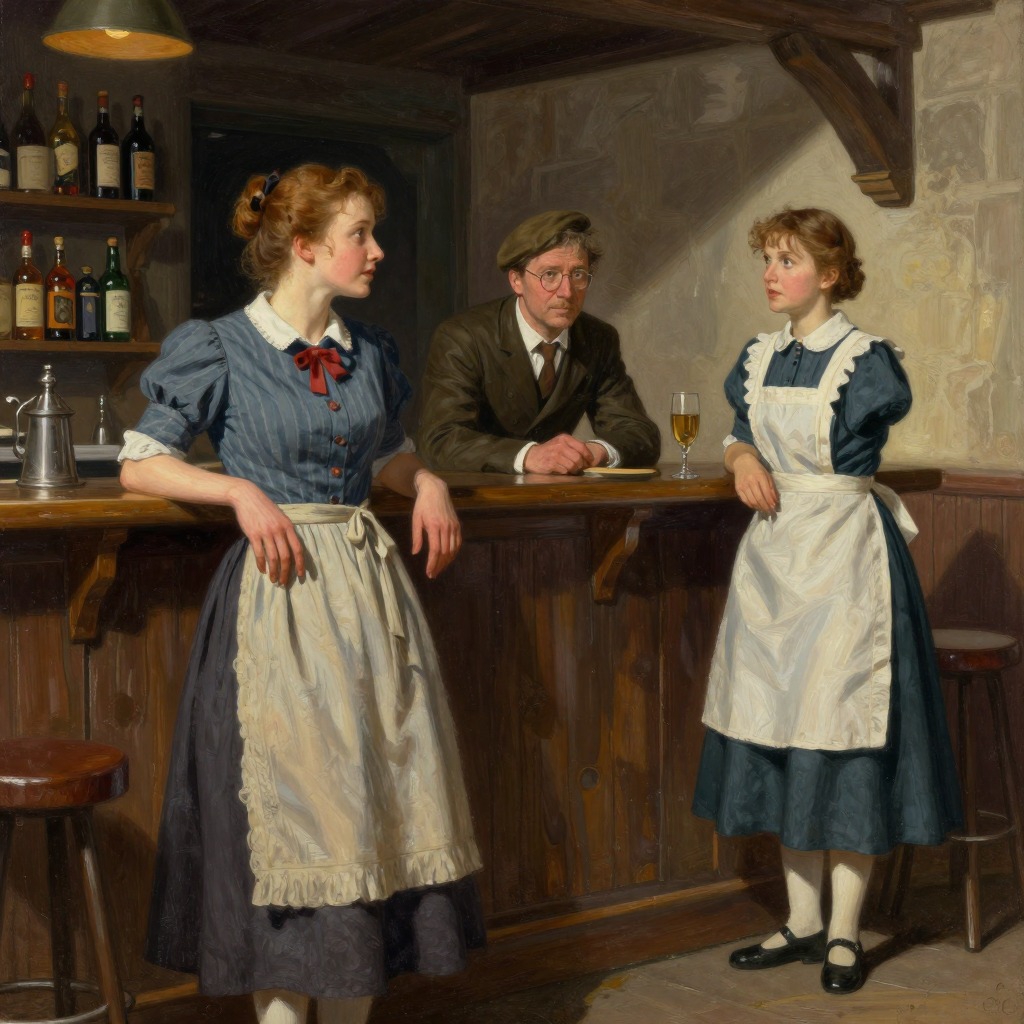
Pepi is introduced as a small, red-cheeked, healthy-looking girl with profuse sandy hair plaited into a big braid, from which curls have escaped to surround her face. She wears a dress of shiny grey fabric that does not suit her, drawn together at the hem with a childish silk ribbon bow that restricts her movement. She is Frieda's successor at the bar, having been a chambermaid before. She describes her former life in the maids' room as one of near-total obscurity and hardship: the chambermaids live in a cramped space like a big cupboard with three compartments, are forbidden to show themselves in the corridor during the day, and must clean the gentlemen's rooms in absolute silence. The work is grueling, the gentlemen are sensitive, and the maids live in constant fear of being blamed for lost files or of mysterious figures lurking outside their door at night. Pepi had dreamed of a better future but had resigned herself to this life.
Rise to Barmaid and Ambition
When Frieda suddenly leaves the bar to be with K., the landlord, needing an immediate replacement, promotes Pepi. She sees K. as a hero and deliverer who has opened the way for her rise, and she spends hours whispering her thanks to him. She throws herself into the new role with desperate energy, borrowing an expensive length of dress material from a friend and working with two other chambermaids to sew a beautiful, adaptable dress. She styles her hair with bows and ribbons, believing that her appearance is crucial to her success. She introduces innovations, leaving the supervision of the servants to the cellar lads so she can spend more time with the guests, and is friendly to everyone. For four days, she feels she is succeeding: the takings are slightly higher than in Frieda's time, the landlord is satisfied, and a clerk named Bratmeier gives her a chain and locket. She feels she is winning friends and patrons, and that she could make Frieda forgotten.
Downfall and Analysis of Frieda's Power
Pepi's downfall is swift and, in her analysis, engineered by Frieda. She believes Frieda never truly left the bar's orbit but instead used her connections—including K.'s own assistants, whom K. foolishly left to her—to intrigue against Pepi. Pepi argues that Frieda's power was not based on beauty or competence but on her claimed relationship with Klamm, a claim that Pepi sees as a cunning lie. Frieda, in Pepi's view, was a quick liar and deceptive, who knew how to make people believe she was a beauty and Klamm's lover. Pepi notes that Klamm did not come down to the bar during her four days, and she believes Frieda prevented him from doing so. When Frieda decides to return, the landlord hesitates but is persuaded, above all by the promise that Frieda will bring Klamm back. Pepi is forced to relinquish the post, handing over the cash register and preparing to return to the maids' room, her dress and ribbons to be hidden away in a corner.
Confrontation with K. and Thematic Significance
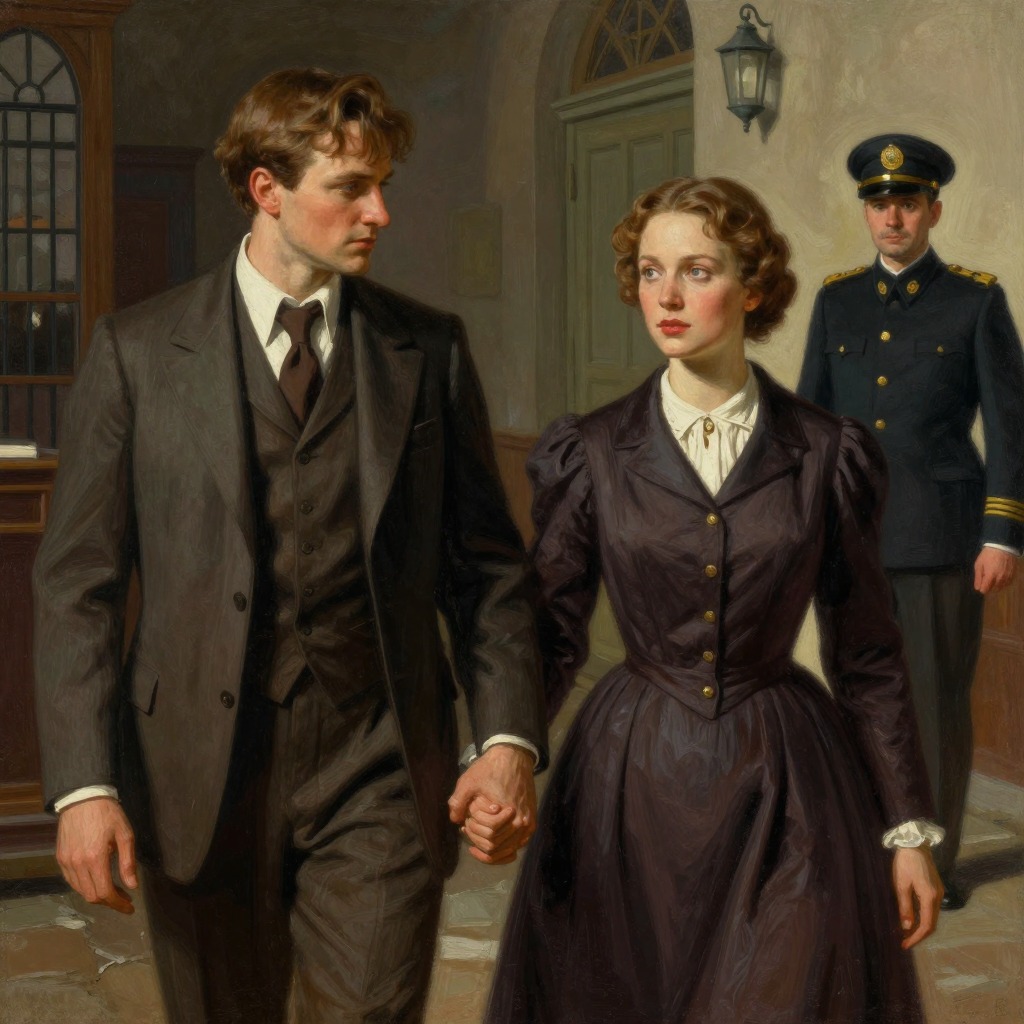
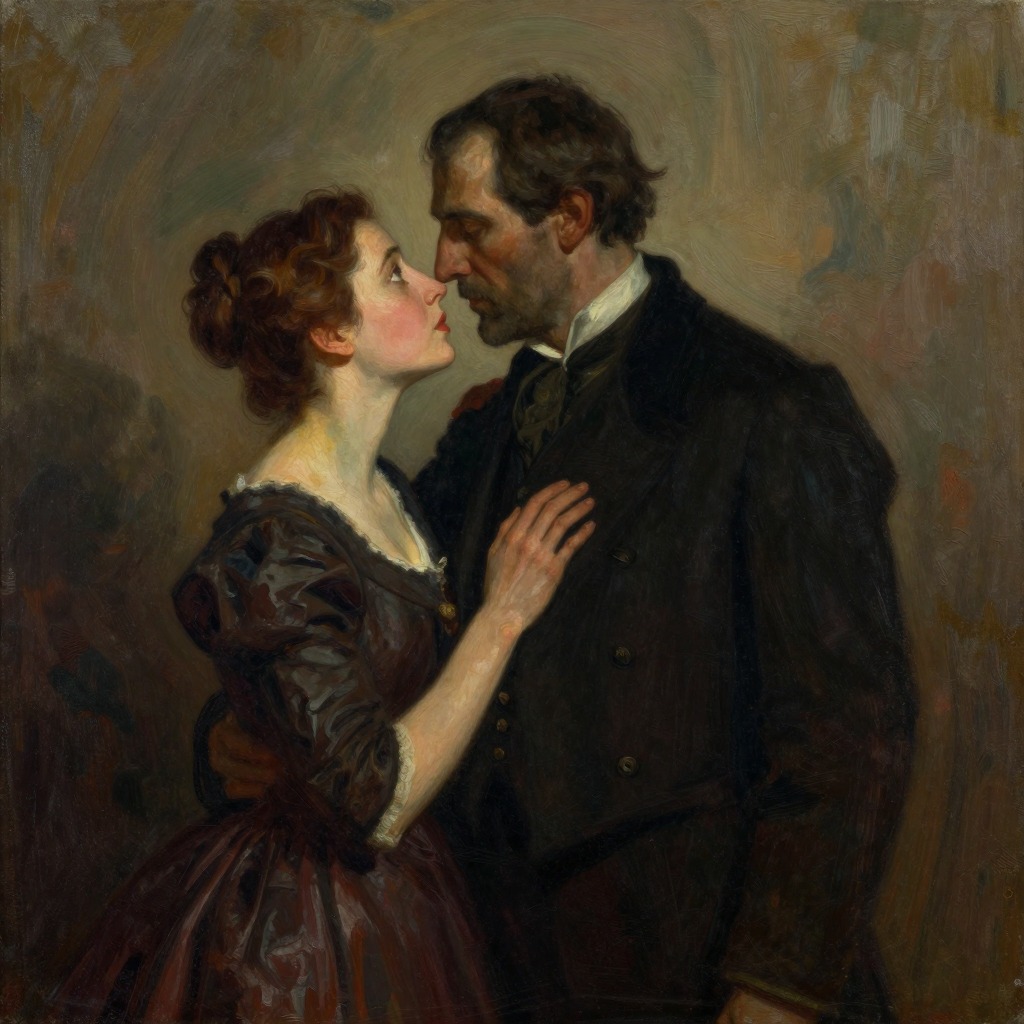
Pepi pours out her story to K. in the bar, blaming him for his foolishness in being manipulated by Frieda and for neglecting her, Pepi, who had hoped he might turn to her. K. responds with a surprisingly gentle but firm critique, telling Pepi that her imagination has run wild, that her dress and hairstyle are the fantastic outcome of the dark maids' room, and that she is simply not suitable for the barmaid's position. He argues that Frieda's calm, controlled, and experienced manner is what the guests want, and that Pepi's excessive enthusiasm and friendliness are a nuisance. He tells her that she and he are alike: both tried too hard, too noisily, and too childishly to gain something that can only be had with Frieda's calm objectivity. Pepi, in turn, offers K. a place to stay in the maids' room with her and her friends, a secret refuge from the winter and the world. K. does not accept, but the offer and the conversation reveal the deep loneliness and precariousness of both their positions. Pepi's story, for all its bitterness and self-justification, provides the most detailed and psychologically plausible account of the social mechanics of the village, the nature of Frieda's power, and the crushing weight of a hope that is raised only to be dashed.