the landlord
The landlord of the Bridge Inn is the first villager K. meets on his arrival, and his actions set the entire novel in motion. When K. stumbles into the snowbound village late at night, the landlord, though surprised and confused by a guest arriving so late, offers him a straw mattress in the saloon bar. This seemingly small act of charity is immediately revealed to be a breach of the village's strict rules, for as the castle warden's son Schwarzer explains, anyone staying in the village is, so to speak, staying at the castle, and requires a permit from the count. The landlord's failure to demand this permit leads directly to Schwarzer's confrontation with K., the telephone call to the castle, and the official recognition of K. as the land surveyor—a recognition that K. himself finds both fortunate and unfortunate, as it confirms his challenge has been accepted while also showing how much the castle already knows about him.
The Landlord's Character and Domestic Subordination
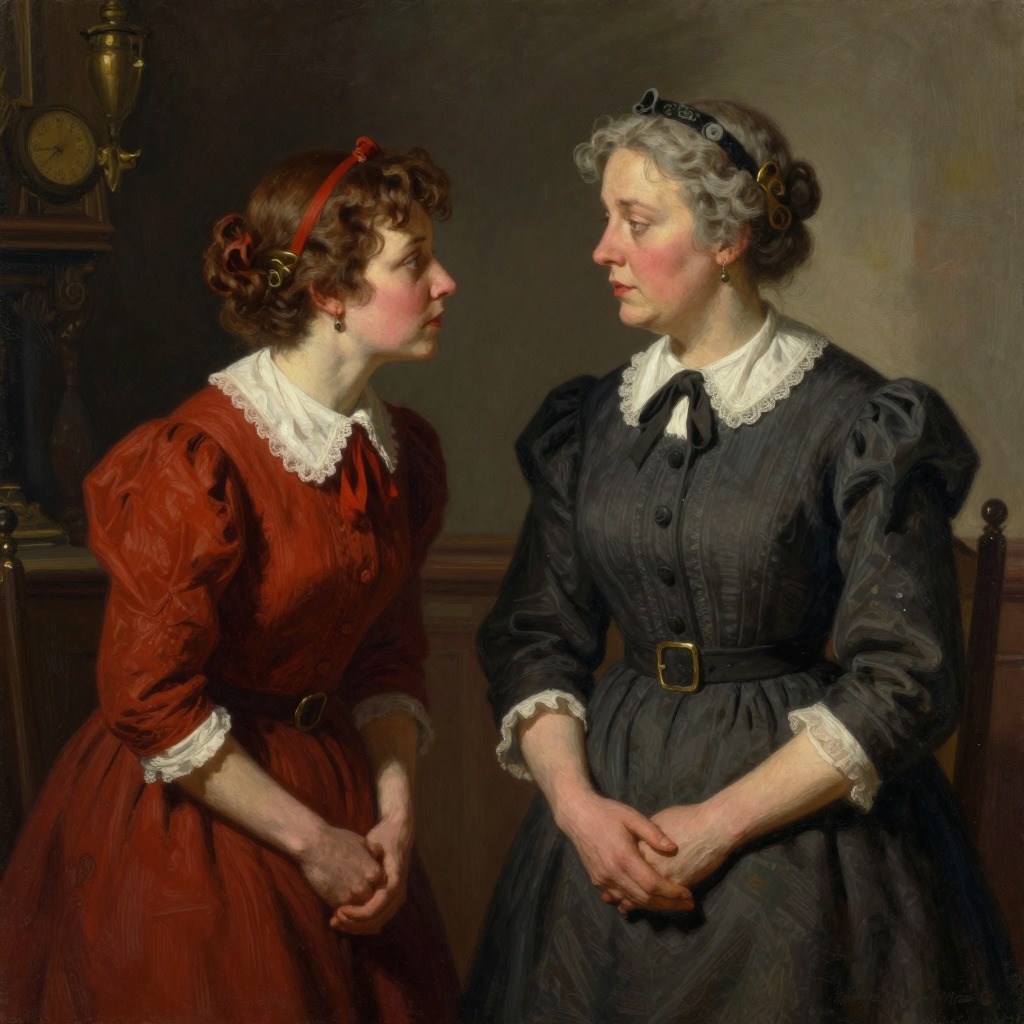
The landlord is portrayed as a young, almost boyish man, with a soft, nearly beardless face, who is strikingly dependent on his wife, Gardena. When K. first observes him, he is perched on a windowsill, looking at K. with large, brown, anxious eyes, and he seems eager to send K. off to the castle. K. notes that the landlord is "only a boy really," and wonders how he came to marry his stout, elderly wife, who bustles about the kitchen with hands on her hips. This impression is confirmed throughout the novel: the landlord defers to Gardena in all matters, and she openly criticizes his lack of responsibility. In her second conversation with K., Gardena reveals that the landlord's carelessness—being tired to death one evening—was the sole reason K. was allowed to stay in the village at all, and she takes credit for running the inn herself, saying her husband "will never understand the meaning of responsibility." The landlord's subordination is so complete that when K. asks if he is inquiring about new lodgings on his wife's behalf, the landlord admits he is not, but that Gardena is upset and lying in bed sighing, unable to work.
The Landlord's Role in K.'s Arrival and the Castle's Authority
The landlord's initial negligence in admitting K. without a permit is the catalyst for the novel's central conflict. Schwarzer, the son of a deputy warden, berates the landlord for neglecting his duty, and it is this incident that draws the castle's attention to K. on his very first night. The landlord's subsequent behavior reflects the village's anxious deference to the castle: he is eager to please K. once the castle has acknowledged him, but he also fears the consequences of any transgression. When K. later tries to spend the night at the Castle Inn, the landlord of that establishment—a different man—explains that the rules are strict and that the gentlemen from the castle are extremely sensitive, and he refuses K. admission. The Bridge Inn landlord, by contrast, is more accommodating, but his willingness to let K. stay is itself a source of tension with his wife, who initially wanted to turn K. away.
The Landlord's Interactions with K. and the Castle Officials
The landlord's interactions with K. are marked by a mixture of timidity and a desire to be helpful. He hovers around K. with a silent plea in his eyes, and K. takes pity on him, asking him to sit and keep him company. The landlord reveals that the castle pays well for good work, and he seems anxious to win K.'s trust, though K. finds it difficult. When K. is summoned to see Erlanger at the Castle Inn, the landlord of that inn—not the Bridge Inn landlord—is the one who escorts him through the corridor, and it is he who later scolds K. for lingering there. The Bridge Inn landlord, however, appears at the end of the novel when K. is in the Castle Inn's bar, and he and his wife confront K. about his behavior in the corridor, revealing that the gentlemen were so disturbed by K.'s presence that they rang their bells for help. This incident underscores the landlord's role as a guardian of the castle's protocols, even as he remains a relatively minor figure in the village hierarchy.
The Landlord's Significance in the Novel's Themes
The landlord embodies the village's precarious position between the castle and the individual. His initial act of hospitality, born of negligence, brings K. into the village and sets off a chain of events that K. himself cannot control. His dependence on Gardena highlights the inversion of domestic power, where the wife is the true authority, and his anxious deference to the castle reflects the villagers' fear of the unseen authorities. The landlord's character serves as a foil to K.: where K. is assertive and challenges the castle's authority, the landlord is passive and submissive, accepting the rules without question. His final confrontation with K. in the Castle Inn, where he and Gardena scold K. for his transgression, reinforces the theme of exclusion and the impossibility of K. ever truly belonging to the village or the castle. The landlord, like the village itself, is a gatekeeper who can offer temporary shelter but never true acceptance.