Andrea Cavalcanti
Andrea Cavalcanti, who also goes by the name Benedetto, is one of the most duplicitous figures in Alexandre Dumas's The Count of Monte Cristo. An escaped convict and murderer, he is thrust into the upper echelons of Parisian society as a supposed Italian prince, a role manufactured by the Count of Monte Cristo as part of his grand scheme of vengeance. His meteoric rise culminates in a betrothal to the wealthy Eugenie Danglars, but his past as a galley-slave and his true parentage as the illegitimate son of the king's attorney, Gerard de Villefort, are publicly revealed in a sensational trial, leading to his arrest and the utter ruin of his fortunes.
Identity and Manufactured Persona
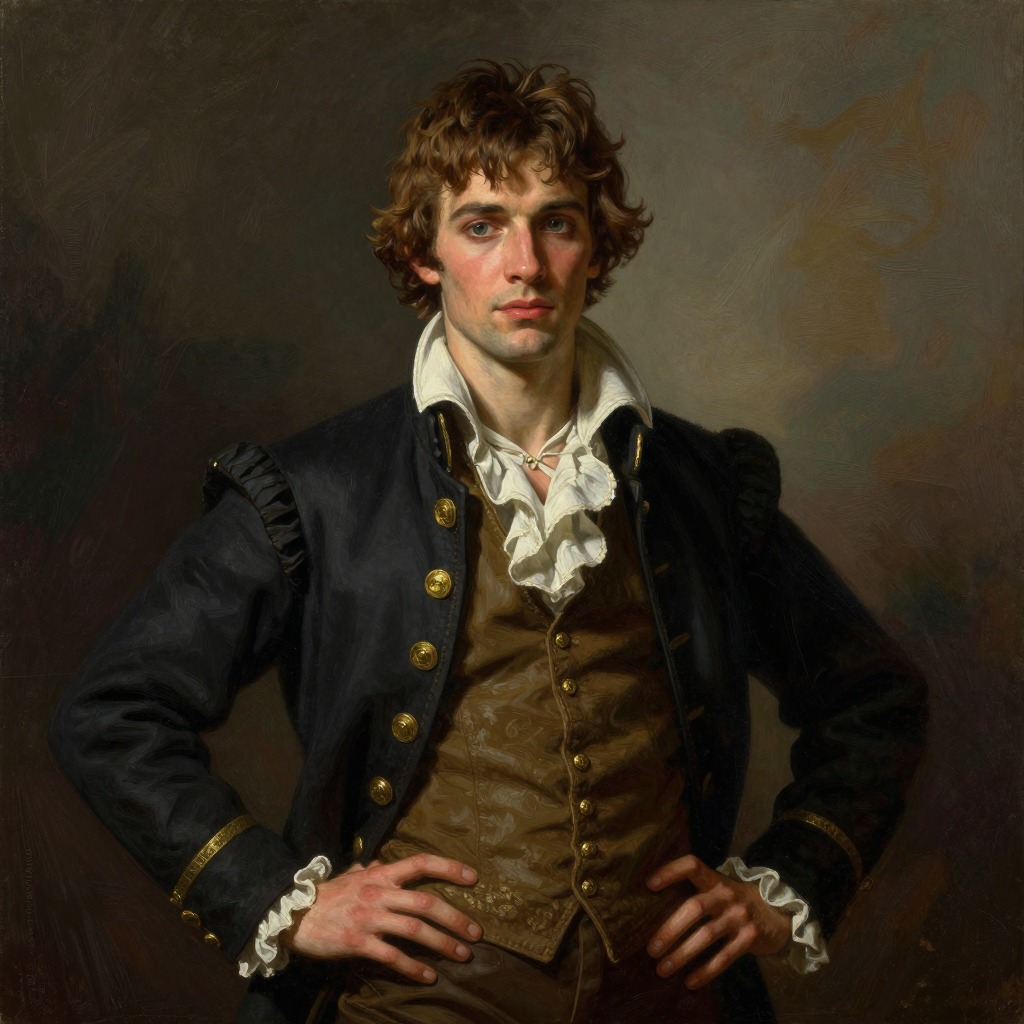
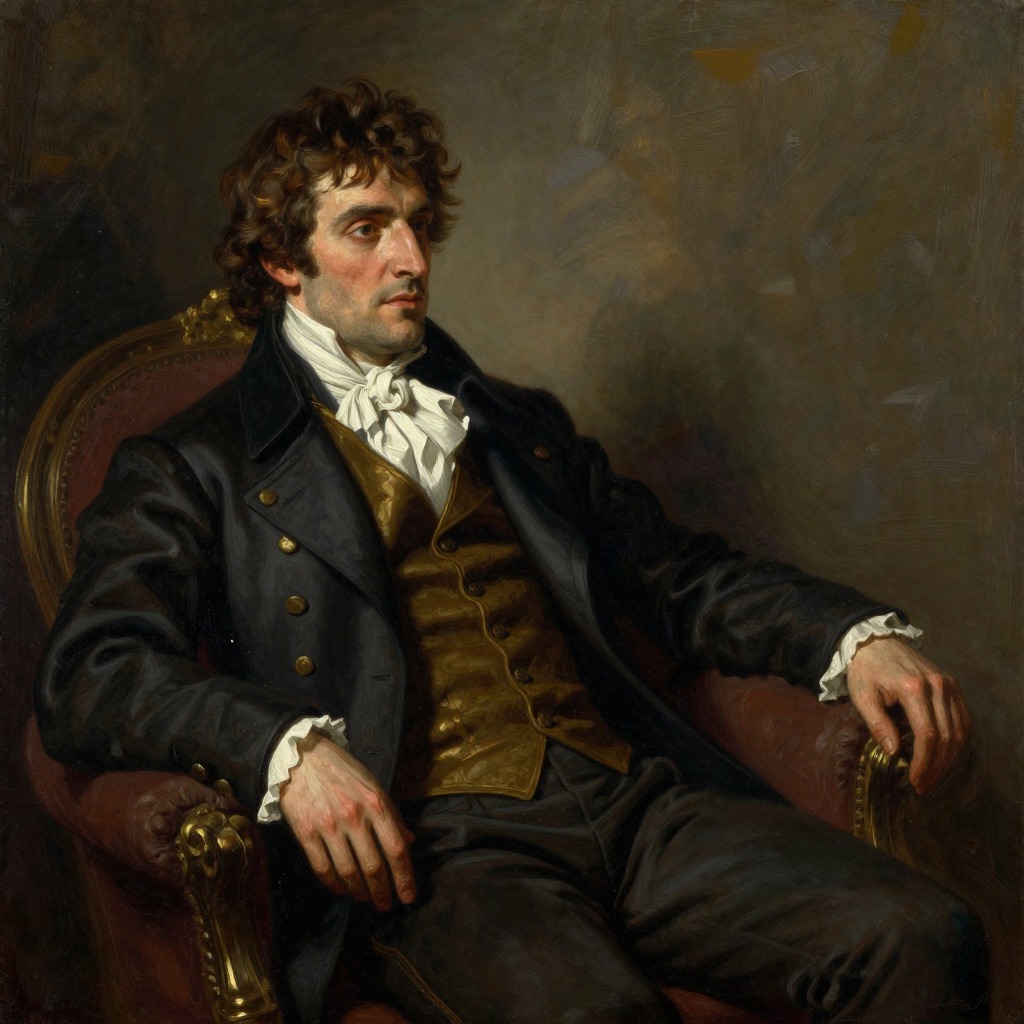
Andrea Cavalcanti is introduced to the reader not as a prince, but as a young man of graceful demeanor and elegant appearance, arriving at the Count of Monte Cristo's house in a cab. He presents a letter of introduction signed "Sinbad the Sailor," claiming to be the son of Major Bartolomeo Cavalcanti, a descendant of the noble Cavalcanti family of Florence. He asserts that he was stolen by a treacherous tutor at the age of five and has only recently been reunited with his father. This entire backstory is a fabrication, orchestrated by Monte Cristo. The count provides the young man with forged documents, including a certificate of his father's marriage and his own baptismal register, and instructs him on how to behave in Parisian society. Andrea is told to dress simply, to buy his clothes from Blin or Veronique, and to purchase his horses from Devedeux, all to maintain the appearance of a wealthy but unassuming nobleman. He is given an allowance of 50,000 livres per annum, paid through the bank of Danglars, and is presented to the banker as a desirable match for his daughter, Eugenie.
Rise in Society and Betrothal
Andrea quickly adapts to his new role, becoming a fixture in the fashionable world of Paris. He is described as a charming young man, and his supposed princely title and immense fortune make him a sought-after guest. He actively courts Eugenie Danglars, who is initially cold and disdainful towards him. Despite her indifference, Andrea's attentions are encouraged by her father, Baron Danglars, who sees the young man's fabricated wealth as a solution to his own financial troubles. The engagement is formally announced, and a grand contract-signing ceremony is planned. Andrea, confident in his disguise, even has the audacity to ask the Count of Monte Cristo to act as his father at the wedding, a request the count pointedly refuses. His confidence is such that he begins to believe in the reality of his own fiction, boasting of his future wife's fortune and his own prospects.
Exposure and Arrest
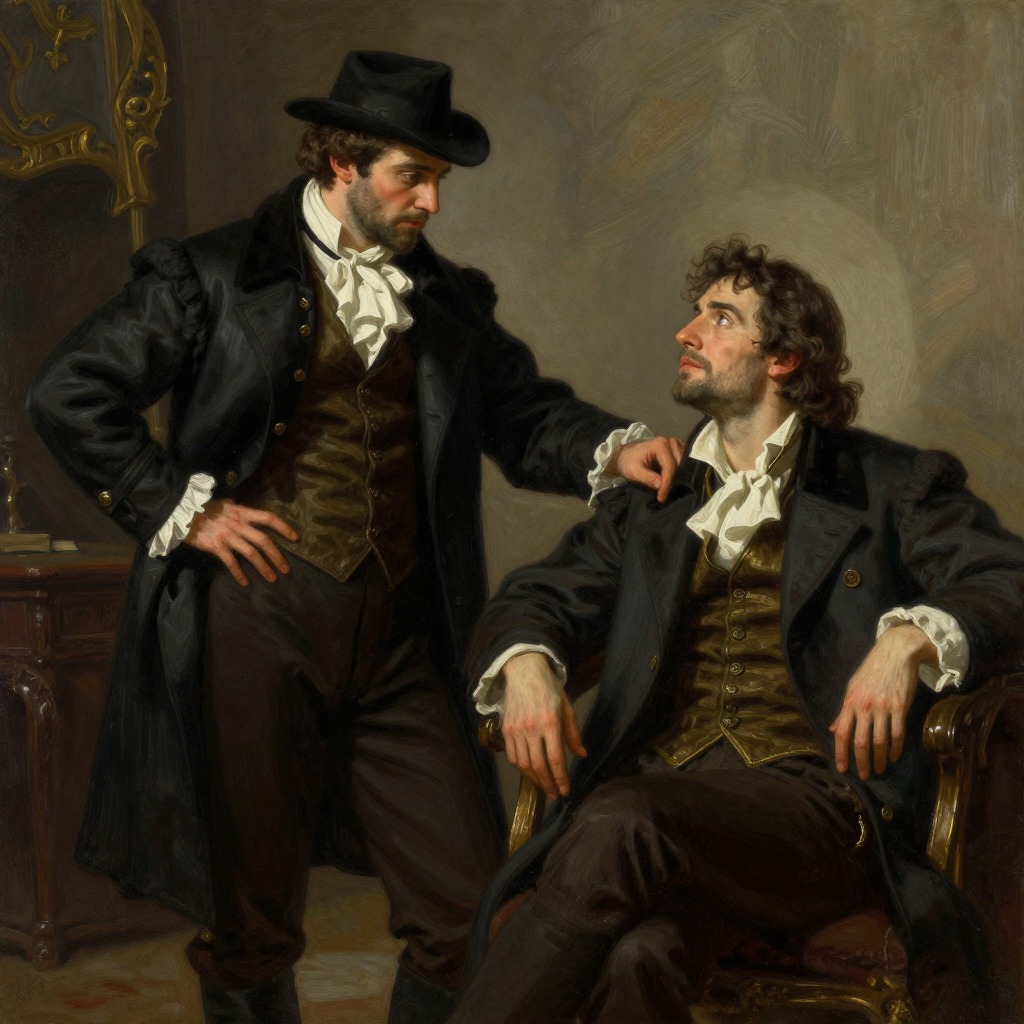
Andrea's carefully constructed world collapses at the contract-signing ceremony. As the guests prepare to sign the marriage contract, the Count of Monte Cristo reveals that a blood-stained waistcoat, belonging to the murdered Caderousse, has been found. A letter in the pocket implicates Danglars in the affair. As the room erupts in confusion, Andrea attempts to flee, but he is cornered. A commissary of police arrives and announces that Andrea Cavalcanti is, in fact, a galley-slave named Benedetto, who escaped from confinement at Toulon and is accused of murdering his former companion, Caderousse. The revelation causes a scandal, and Andrea is arrested on the spot. He manages to escape from the scene, stealing valuables from the bride's trousseau as he flees, but is later captured at an inn in Compiegne after a dramatic chase through a chimney.
Trial and Confession
At his trial, Andrea initially maintains a cool and cynical demeanor, but he soon delivers a stunning confession. He reveals that he is not an orphan but the son of the king's attorney, Gerard de Villefort. He recounts the story of his birth: he was born on the night of September 27, 1817, in a house at Auteuil, and his father, believing him dead, buried him alive in the garden. He was rescued by a man named Bertuccio, who was seeking revenge against Villefort, and was raised in Corsica. This public accusation, supported by the horrified reaction of Villefort himself, leads to the magistrate's own confession of guilt and descent into madness. Andrea's testimony not only destroys his father but also reveals the depth of the conspiracy that has plagued the Villefort family. He is ultimately condemned for his crimes, his brief and brilliant career as a Parisian prince ending in infamy and imprisonment.
Narrative Role and Significance
Andrea Cavalcanti serves as a crucial instrument in the Count of Monte Cristo's plan for vengeance. He is a living embodiment of Villefort's past sins, a secret that the magistrate has tried to bury. By introducing Andrea into society and engineering his engagement to Eugenie Danglars, Monte Cristo sets in motion a chain of events that will expose the corruption of both the Villefort and Danglars families. Andrea's character also highlights the theme of identity and social performance. He is a master of disguise, able to convincingly play the role of a prince, yet his true nature as a violent and cunning criminal is never far beneath the surface. His dramatic fall from grace serves as a powerful example of the novel's central idea that the sins of the father will be visited upon the children, and that even the most carefully constructed facades can be shattered by the truth.