Fernand Mondego
Fernand Mondego is a central antagonist in Alexandre Dumas's The Count of Monte Cristo, whose life traces a dramatic arc from a poor Catalan fisherman to a disgraced peer of France. His actions, driven by jealousy and ambition, set the novel's revenge plot in motion and ultimately lead to his own ruin.
Identity and Background
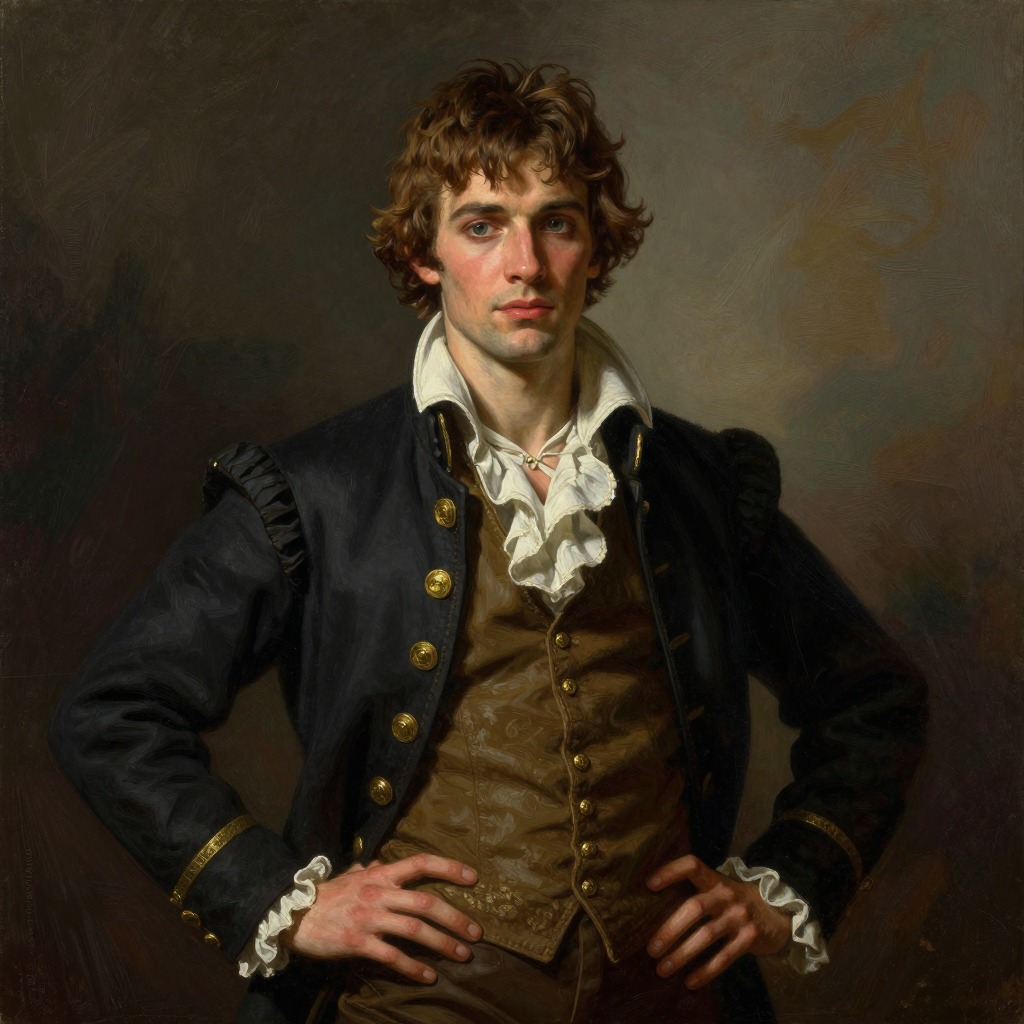
Fernand Mondego is introduced as a tall, strapping young Catalan with a dark complexion, black eyes, and a fierce air, living in the Catalan village near Marseilles. He is deeply in love with his cousin, Mercedes, and expects to marry her according to the customs of their community. His initial appearance is that of a jealous and passionate suitor, who is visibly agitated when Edmond Dantes returns from his voyage and reunites with Mercedes. Fernand's love for Mercedes is possessive and desperate; he threatens to kill himself if she will not have him, and he is consumed by hatred for his rival. His social position is humble—a fisherman with no fortune—and his prospects are limited to the sea or military service.
The Conspiracy Against Dantes
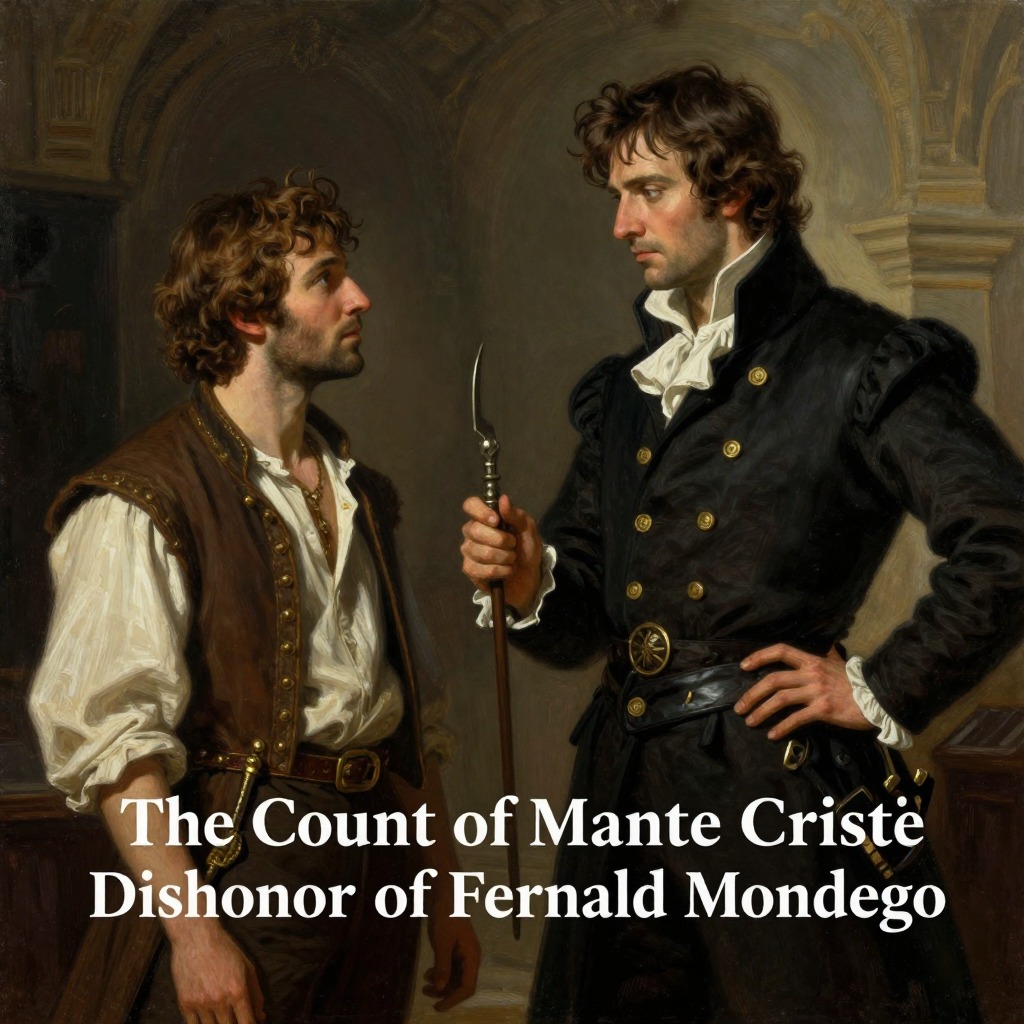
Fernand's jealousy makes him a willing tool in Danglars' plot to destroy Dantes. At the tavern of La Reserve, on the eve of Dantes' betrothal feast, Danglars manipulates Fernand by suggesting that Dantes' absence would solve his romantic problem. Danglars writes an anonymous denunciation accusing Dantes of being a Bonapartist agent, and it is Fernand who posts the letter. Although Caderousse, a drunken tailor, witnesses the act and later expresses remorse, Fernand actively participates in the conspiracy. When Dantes is arrested at his wedding feast, Fernand is present, his lips wearing a sinister smile. He later disappears from the scene, having set the trap that will imprison his rival for fourteen years.
Rise to Power and Fortune
After Dantes' imprisonment, Fernand's life takes a dramatic turn. He is conscripted into the army during the Hundred Days and serves at the Battle of Ligny. On the night after the battle, he is a sentry at the door of a general who is planning to defect to the English. Fernand agrees to accompany the general, deserting his post. This act of treason is rewarded by the Bourbons upon their restoration, and he returns to France with the rank of sub-lieutenant. He later serves in the Spanish war of 1823, where he meets Danglars and wins over royalist support, guiding his regiment through mountain gorges. For these services, he is made a colonel, receives the title of count, and is awarded the cross of an officer of the Legion of Honor. He then serves in Greece under Ali Pasha, and after Ali's death, he returns to France with a considerable fortune, eventually becoming a lieutenant-general and a peer of France. Throughout this ascent, he abandons his humble name of Fernand Mondego and adopts the title Count of Morcerf.
Marriage to Mercedes and Family Life
After Dantes' disappearance, Mercedes, believing her betrothed dead, eventually marries Fernand. The marriage takes place in the church of Accoules, the very church where she was to have married Dantes. They have a son, Albert de Morcerf. Despite his wealth and position, Fernand's marriage is built on a foundation of deceit and Mercedes' lingering grief. She never fully loves him, and their household is marked by a certain coldness. Fernand is an ambitious and proud man, but his past as a traitor and his role in Dantes' downfall remain hidden, creating a precarious foundation for his social standing.
Exposure and Downfall
The Count of Monte Cristo, revealed to be Edmond Dantes, systematically dismantles Fernand's life. The exposure comes through Haidee, the daughter of Ali Pasha, whom Monte Cristo has rescued and raised. At a hearing before the Chamber of Peers, Haidee testifies that Fernand, while serving Ali Pasha, betrayed the castle of Yanina to the Turks, sold her and her mother into slavery, and murdered Ali's faithful servant, Selim. She produces the record of her own sale, signed by the slave merchant El-Kobbir, which proves Fernand's treachery. Faced with this irrefutable evidence, Fernand is convicted of felony, treason, and conduct unbecoming a member of the House. He flees the chamber in disgrace.
Suicide and Legacy
Returning home, Fernand finds his wife and son have abandoned him, leaving the house. Overcome by shame and despair, he shoots himself. His suicide is reported by Monte Cristo to Maximilian Morrel with the cold observation that "a dead father or husband is better than a dishonored one." Albert, his son, learns the full truth of his father's crimes from Beauchamp, who has traveled to Yanina to verify the story. Albert is initially driven to challenge Monte Cristo to a duel, but after learning the extent of his father's guilt, he publicly apologizes to the count, acknowledging that Monte Cristo was justified in his revenge. Fernand's legacy is one of complete ruin: his title is disgraced, his fortune is given away by his wife and son, and his name becomes synonymous with treachery.