Gaspard Caderousse
Gaspard Caderousse is a tailor-turned-innkeeper whose envy, greed, and cowardice make him a minor but pivotal agent in the destruction of Edmond Dantes, and whose own life ends in a brutal murder that completes the count's first act of vengeance.
Identity and Background
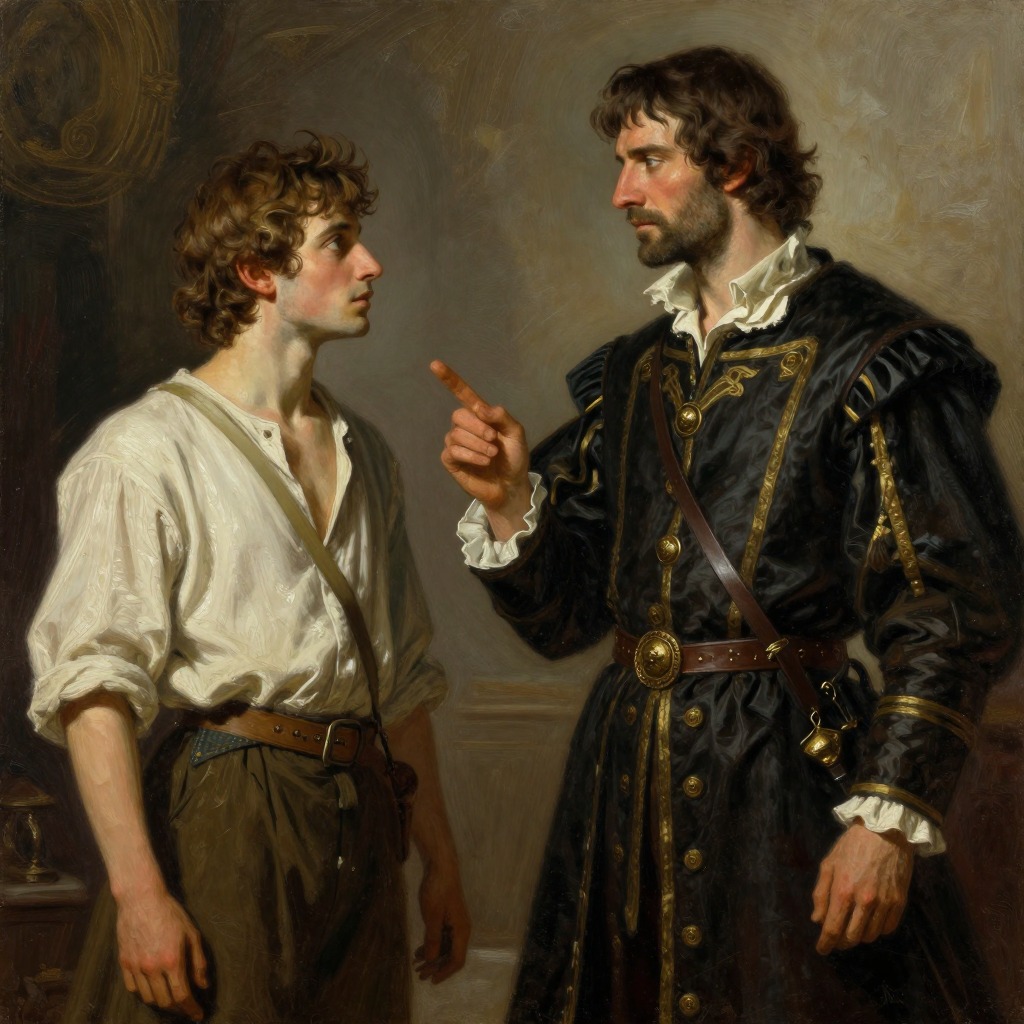
Caderousse first appears as a neighbor of the Dantes family in the Allees de Meillan in Marseilles, where he works as a tailor. He is a man of twenty-five or twenty-six, with a black beard, a broad Marseillaise accent, and a grin that displays his ivory-white teeth. He lives on the same floor as old Dantes, and his wife, known as La Carconte, is a pale, sickly woman from the village of Carconte near Arles. Caderousse is deeply in debt to Edmond Dantes for a loan of a hundred and forty francs, which old Dantes repays out of the two hundred francs Edmond left him, leaving the old man to live on sixty francs for three months. When Edmond returns from his voyage, Caderousse visits him, ostensibly to congratulate him, but his eyes gleam with greed as he looks at the gold and silver on the table. Edmond offers him money, but Caderousse refuses, though he later admits he could easily have accepted it, since he had put the first silver Edmond ever earned into his hands.
Role in the Conspiracy Against Dantes
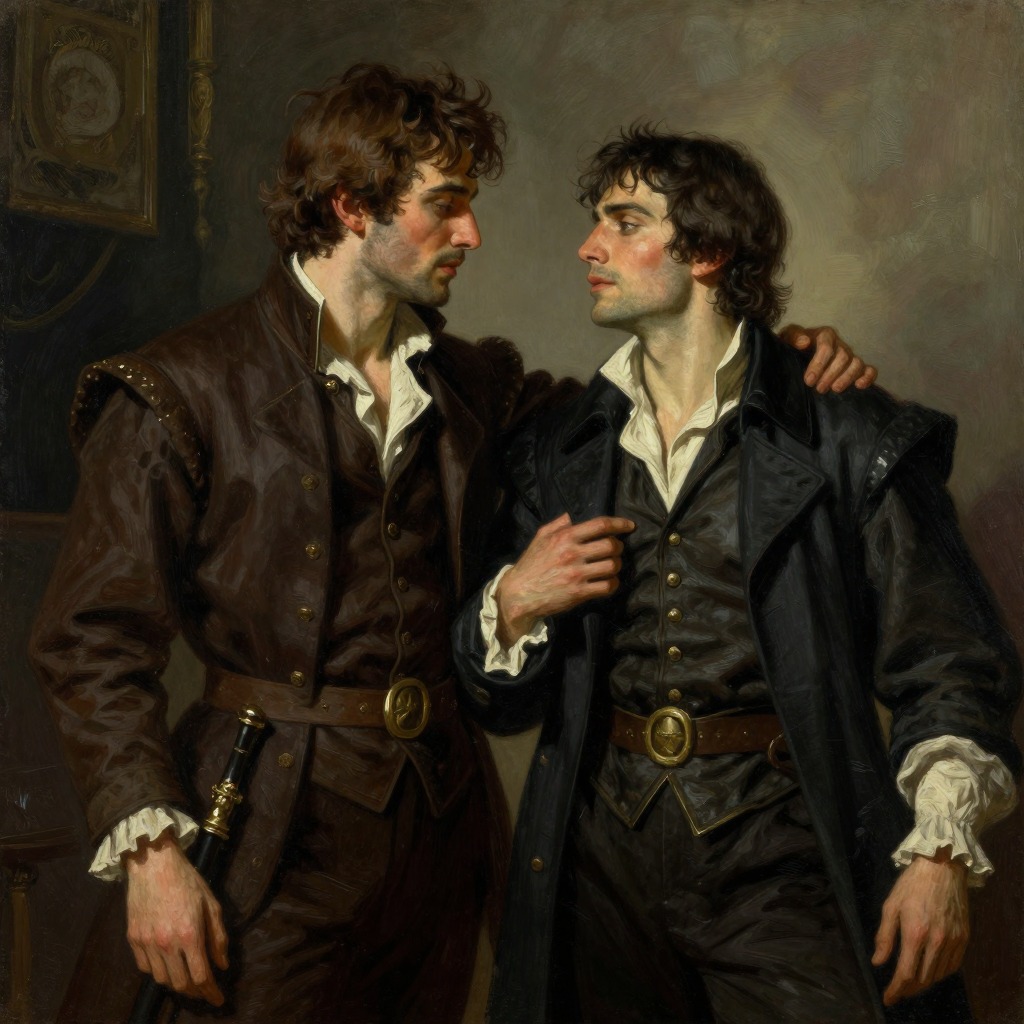
Caderousse is present at the critical moment when the conspiracy against Edmond Dantes is hatched. On the evening before the betrothal feast, he sits drinking with Danglars and Fernand under an arbor at La Reserve. Danglars, who has already conceived a hatred for Dantes, writes a denunciation with his left hand, accusing Dantes of being a Bonapartist agent. Caderousse, though drunk, instinctively understands the misery such a letter will cause. He reaches for the letter, but Danglars throws it into a corner of the arbor, pretending it is a jest. Fernand later picks up the crumpled paper and delivers it. Caderousse, despite his misgivings, does nothing to stop the plot. The next day, at the wedding feast, when the police arrive to arrest Dantes, Caderousse is the first to realize the connection between the arrest and the previous night's conspiracy. He confronts Danglars, who denies any involvement, but Caderousse knows the truth. He later threatens to tell everything, but Danglars silences him by appealing to his fear of being implicated as an accomplice.
Life After Dantes' Imprisonment
After Dantes' arrest, Caderousse's fortunes decline. He eventually leaves Marseilles and becomes the innkeeper of the Pont du Gard, a small roadside inn on the route from Bellegarde to Beaucaire. The inn is a failing business, ruined by the construction of a canal that diverts traffic. Caderousse, now a tall, bony man of forty to fifty-five, with dark, deep-set eyes and a hooked nose, spends his days at the door, hoping for customers who seldom come. His wife, La Carconte, is bedridden with a slow fever, and their poverty is evident. Caderousse has sold off his fine clothes and now wears only a red handkerchief twisted around his head. He is bitter and envious, especially of the success of his former acquaintances, Danglars and Fernand, who have become rich and powerful.
The Diamond and the Confession
Years later, a priest calling himself the Abbe Busoni visits the Pont du Gard inn. He tells Caderousse that Edmond Dantes has died in prison, but that before his death, Dantes entrusted him with a diamond worth fifty thousand francs, to be sold and the proceeds divided among his five friends: his father, Mercedes, Fernand, Danglars, and Caderousse himself. Caderousse, driven by greed, reveals the entire story of the conspiracy, confessing that Danglars wrote the denunciation and Fernand posted it. He also reveals that old Dantes died of starvation, and that Mercedes married Fernand. The abbe, after hearing the confession, gives Caderousse the diamond, taking in exchange the red silk purse that Morrel had left on old Dantes' chimney-piece. Caderousse, overjoyed, rushes to have the diamond appraised, but his wife warns him it might be false. The diamond is real, and Caderousse sells it for forty-five thousand francs, plus a gold chain and silver buckles.
Murder and Death
Caderousse, now in possession of the money, becomes a target for his former accomplice, Benedetto, the young man who had escaped from the galleys with him. Benedetto, now calling himself Andrea Cavalcanti, has been living in Paris as a wealthy count, and he fears that Caderousse will expose him. He gives Caderousse a monthly allowance to keep him quiet, but Caderousse, greedy for more, demands a larger sum. Benedetto, pretending to agree, gives Caderousse a plan of the Count of Monte Cristo's house, hoping that Caderousse will attempt a robbery and be killed. Caderousse breaks into the house, but is confronted by the count, who reveals himself as the Abbe Busoni. The count forces Caderousse to write a letter denouncing Benedetto, then lets him escape. As Caderousse climbs down the wall, he is ambushed and stabbed three times by Benedetto. He dies shortly after, having signed a deposition naming Benedetto as his murderer. His death is the first direct act of vengeance carried out by the Count of Monte Cristo, though it is executed through the hands of Benedetto.