Luigi Vampa
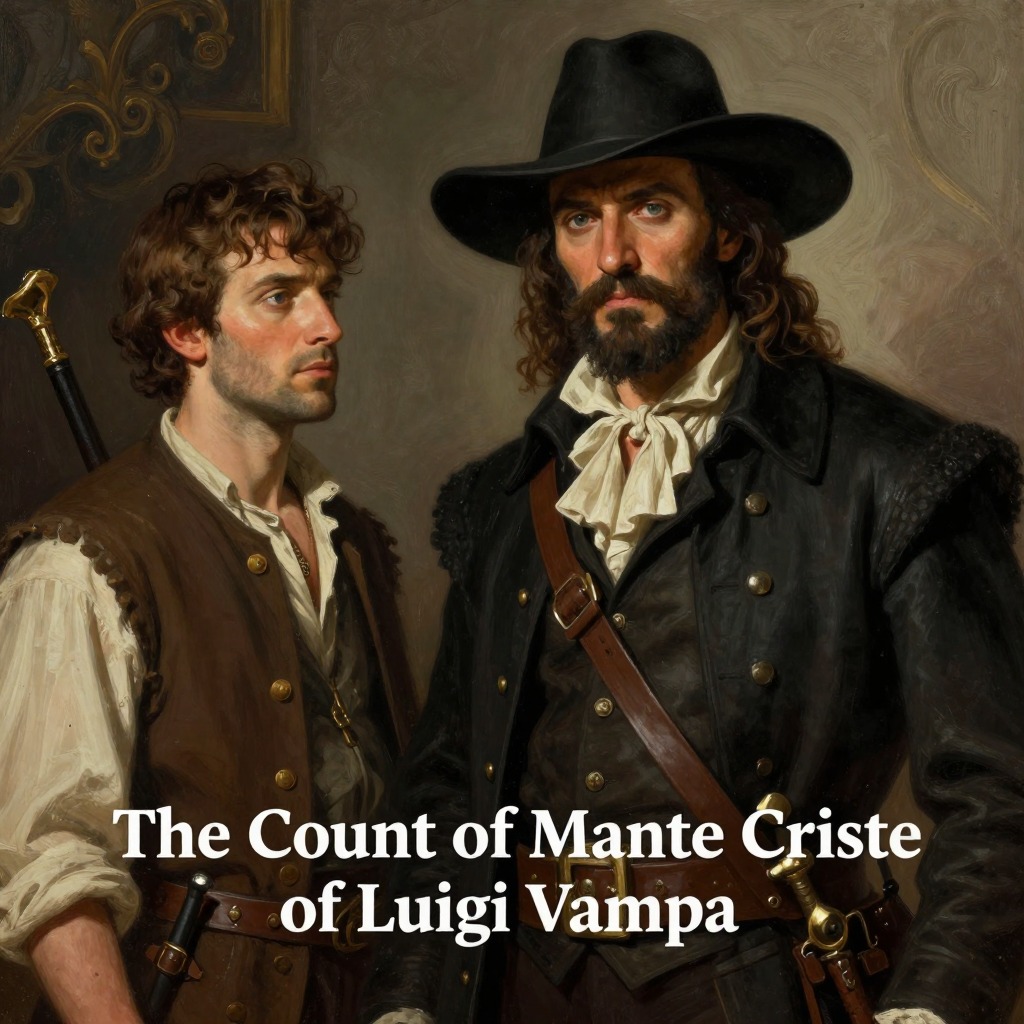
Luigi Vampa is the most famous bandit chief in the Rome of the novel, a figure whose name inspires terror throughout the Papal States. He is introduced as a young man of only twenty-two, already a legend, and his story is told by Signor Pastrini, the innkeeper of the Hotel de Londres, to the young French travellers Albert de Morcerf and Franz d'Epinay. Vampa's tale is one of remarkable transformation, from a precocious shepherd boy to the master of a band of outlaws, and it is a story that Monte Cristo, the mysterious count, knows intimately, having once saved Vampa's life and later used him as a tool in his own designs.
Origins and Rise to Power
Vampa was born in Pampinara, the son of a shepherd, and entered the service of the Count of San-Felice at the age of five. Even as a child, he displayed extraordinary precocity. At seven, he begged the curate of Palestrina to teach him to read, and within three months he had mastered the skill, learning his lessons on the road to Borgo. He then taught himself to write, using a nail heated and sharpened as a stylus, and soon progressed to carving wood, showing the artistic talent of a young Giotto. His abilities caught the attention of the Count of San-Felice, who took him into his household, giving him a small wage that Vampa used to buy books and pencils. Alongside his intellectual growth, he developed a fierce independence and a talent for marksmanship, eventually acquiring a gun and perfecting his aim until he could shoot a wolf at ten yards. His reputation as the most adroit, strongest, and most courageous young man in the region grew, and he became inseparable from Teresa, a beautiful orphan shepherdess, whom he loved and planned to marry.
The turning point in Vampa's life came when he and Teresa sheltered the fugitive bandit chief Cucumetto from the carbineers. Vampa's act of defiance, refusing the reward offered for Cucumetto's capture, and his later jealousy when Teresa danced with a nobleman at a ball, set him on a path of violence. When Cucumetto, driven by lust for Teresa, abducted her, Vampa shot him dead with his unerring rifle. He then assumed Cucumetto's identity, dressing in the dead man's clothes, and presented himself to the bandit gang, declaring, "I come to ask to be your captain." Within an hour, Luigi Vampa was chosen captain, vice Cucumetto deceased.
The Bandit Chief and His Code
As chief, Vampa commanded a band of twenty or more brigands, operating from the Catacombs of Saint Sebastian and the mountains around Rome. He was a man of contradictions: a ruthless outlaw who read Caesar's Commentaries and Plutarch's Lives, yet who adhered to a strict code of conduct. He was known for his intelligence and his ability to evade the police, moving between the mountains, the waters, and the islands, including Monte Cristo, with impunity. His methods were precise and cruel: he would capture travellers, set a ransom, and if not paid by the deadline, he would execute them without mercy. Yet he also showed a strange sense of honor, as when he released Albert de Morcerf after learning he was a friend of the Count of Monte Cristo, apologizing for the mistake and even offering to guide his guests back to the surface.
Vampa's relationship with Monte Cristo is central to his role in the novel. The count had once saved Vampa's life, capturing him and his band but letting them go on the condition that they respect the count and his friends. This debt of gratitude, and the fear of the count's power, made Vampa an unwitting ally. When Albert was kidnapped, it was Monte Cristo who secured his release, and later, when the bandit Peppino was condemned to death, it was Monte Cristo who obtained his pardon, a favor that Vampa acknowledged with profound gratitude. In the end, Vampa becomes the instrument of Monte Cristo's final act of mercy, holding Danglars captive and starving him until the banker repents, before releasing him on the count's orders.
Significance and Legacy
Luigi Vampa represents the lawless, romanticized world of the Italian bandit that fascinated the Parisian imagination of the time. He is a figure of both danger and fascination, a man who has risen from humble origins through intelligence and force of will, yet who remains bound by a code of honor that sets him apart from mere criminals. His story, as told by Pastrini, serves to illustrate the dangers of the Roman countryside and the power of Monte Cristo, who moves effortlessly in this world of outlaws and smugglers. Vampa's character also highlights the theme of social mobility and the arbitrary nature of justice, as he, like the count, has taken the law into his own hands. His eventual role in Danglars' punishment underscores the novel's moral that even the most powerful must face the consequences of their actions, and that providence, or the count's version of it, works in mysterious ways.