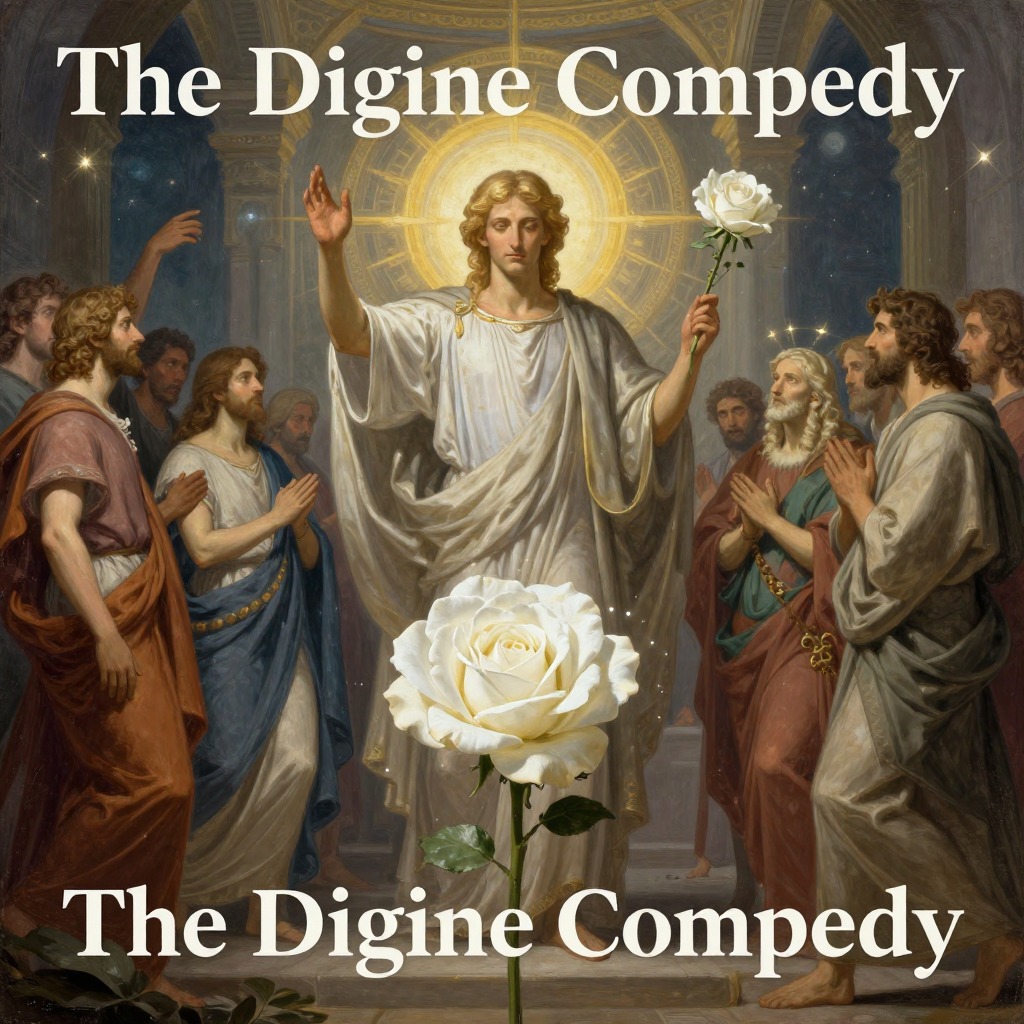
Adam
Adam, the first man and the father of the human race, appears in the Heaven of the Fixed Stars in Dante's Paradiso to speak with the pilgrim. As the sole human being created directly by God and the one whose disobedience brought sin into the world, his testimony provides the authoritative, first-person account of humanity's earliest history, directly addressing questions of original sin, the purpose of the Incarnation, and the mutability of human institutions. His presence in Paradise, redeemed and glorified, is the ultimate proof that the Fall, though catastrophic, was not final, and that divine grace can restore what was lost.
Identity and Creation
Adam identifies himself as the "first soul that ever the first virtue did create" (Paradiso, Canto XXVI). He was placed by God in the "lofty garden" of the Earthly Paradise, the same garden that Dante has just traversed at the summit of Mount Purgatory. Adam's creation was an act of direct divine power, and he was endowed with a nature that was, in its original state, perfect and good. He was the "apple, that mature alone hast been produced," a unique being who came into existence not through generation but through the immediate hand of God.
Life in Eden and the Fall
Adam explains that the cause of his exile from Paradise was not the act of eating the fruit itself, but the "o'erstepping of the bounds"—the transgression of the divine command. He specifies that he remained in the Garden of Eden for a relatively short time: from the first hour of his creation until the sixth hour, a period of only six hours. This brief sojourn in a state of innocence underscores the swiftness of the Fall and the fragility of human obedience. The consequence of his sin was not merely his own expulsion but the corruption of all his descendants, a condition that required the Incarnation and sacrifice of Christ to remedy.
Language and Its Mutability
One of the most remarkable revelations Adam makes concerns the nature of human language. He states that the language he spoke was entirely extinct before the construction of the Tower of Babel under Nimrod. Language, he explains, is a natural human capacity, but its specific forms are a matter of human convention and art, subject to change over time. He notes that the name of God itself changed: in his time, the Chief Good was called "El" on earth, but later it was called "Eli." This observation underscores the contingency and impermanence of all human institutions, including language, in contrast to the eternal and unchanging nature of God.
Chronology and the Length of Human History
Adam provides precise chronological data about his life. He states that he spent 4,302 years in Limbo, the first circle of Hell, waiting for Christ's Harrowing of Hell. This period is measured by the circuits of the sun. He further notes that he lived on earth for 930 years, a figure that aligns with the biblical account. This detailed chronology situates Adam's life within the grand sweep of salvation history, from Creation to the coming of Christ, and emphasizes the long duration of humanity's waiting for redemption.
Narrative Role and Thematic Significance
Adam's appearance in the Heaven of the Fixed Stars serves as the culmination of Dante's examination on the three theological virtues of Faith, Hope, and Charity, which he has just undergone before Saints Peter, James, and John. As the first man, Adam is the ultimate human witness to the truths of creation, sin, and the need for redemption. His testimony confirms the doctrines that Dante has professed and provides a direct, personal link between the pilgrim and the origins of the human story. Adam's presence in Paradise, redeemed and glorified, is the ultimate proof that the Fall, though catastrophic, was not final, and that divine grace can restore what was lost. His discourse on the mutability of language also serves as a subtle commentary on the nature of poetry and the poet's own craft, which is itself a human art subject to change and renewal.