Ali
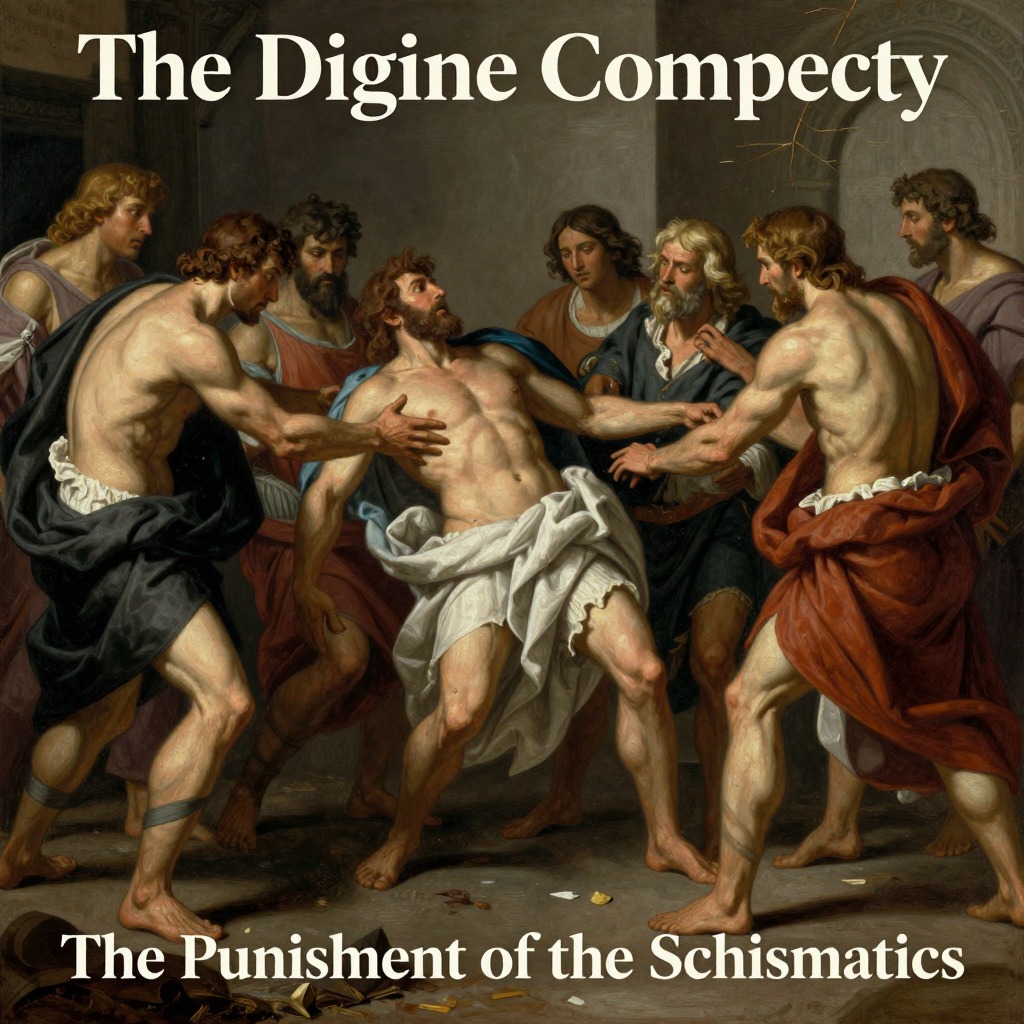
Ali appears in the ninth bolgia of Malebolge, the eighth circle of Hell, where schismatics are punished. He is introduced in the company of Mahomet, and both are subjected to a gruesome contrapasso: their bodies are perpetually split open by a demon's sword, only to heal and be cleft again as they circle the pit. This punishment mirrors the division they sowed in the world. Mahomet, who speaks first, is described as "rent from the chin to where one breaketh wind," his entrails hanging out, while Ali is "cleft in the face from forelock unto chin." The two figures are presented as the archetypal schismatics, their physical mutilation a direct consequence of their role in splitting the religious community.
Punishment and Contrapasso
The contrapasso for schism is a literal, perpetual dismemberment. A devil stands behind the sinners, wielding a sword that cleaves each one as they pass. The wounds close again before the next circuit, ensuring an endless cycle of splitting and healing. Ali's punishment is specifically a vertical cleft through his face, a visible and permanent mark of his sin. This physical division is a direct reflection of the spiritual division he caused, making the punishment a perfect example of Dante's poetic justice.
Narrative Role and Significance
Ali's presence in the Inferno serves to condemn the act of schism, which Dante viewed as a particularly grave sin against the unity of the Church. By placing Ali alongside Mahomet, Dante links the founder of Islam with a figure who, in the Christian tradition, is associated with a major split within the early faith. The episode also serves as a platform for Mahomet to deliver a prophecy about the fate of Fra Dolcino, a contemporary schismatic, further emphasizing the poem's political and religious commentary. Ali himself does not speak, but his mutilated form is a powerful visual symbol of the consequences of religious division.
Thematic Significance
The punishment of Ali and Mahomet underscores the poem's central theme of divine justice. The physical splitting of their bodies is a literal enactment of the spiritual division they caused. This episode also highlights Dante's concern with the integrity of the Church and the dangers of heresy and schism. The graphic nature of the punishment serves to horrify the reader and reinforce the moral order of the afterlife, where every sin receives its appropriate and symbolic retribution.