Arnaldo Daniello
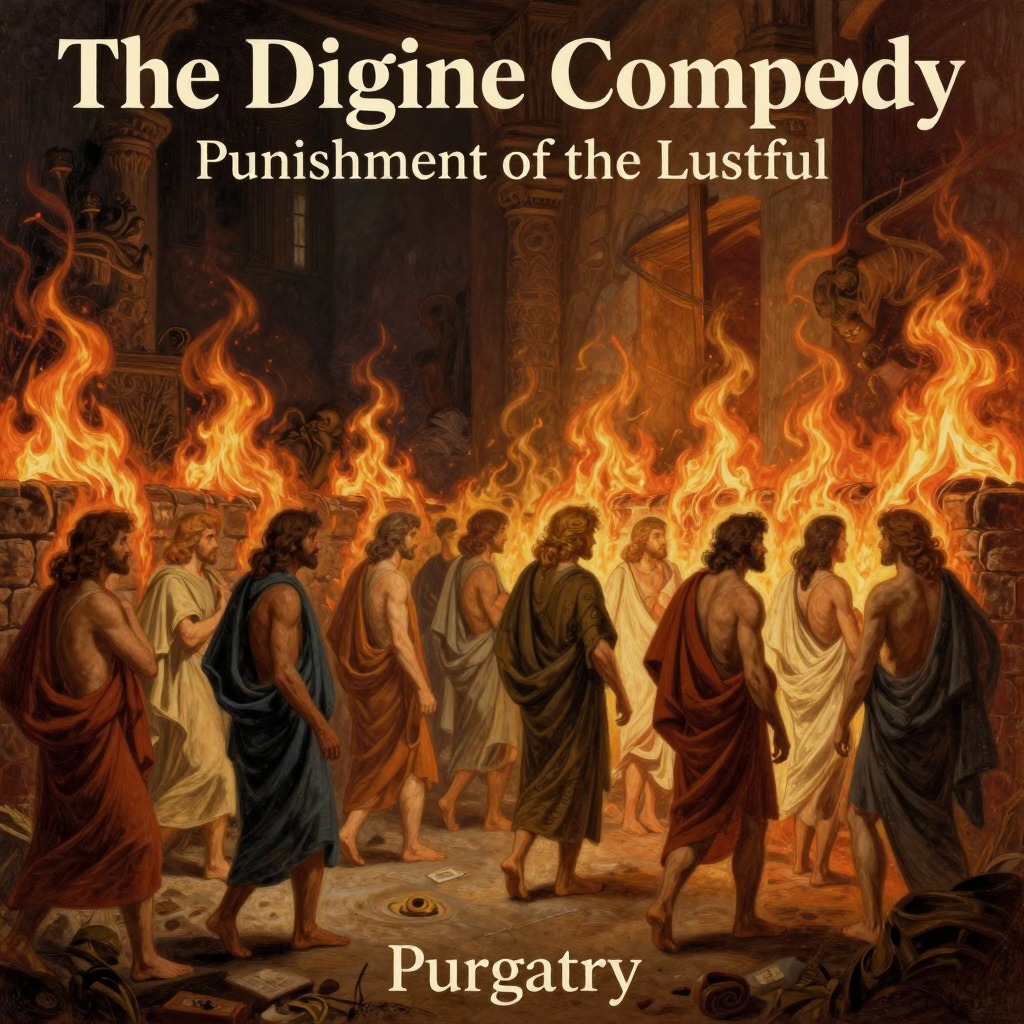
Arnaldo Daniello, the 12th-century Provençal troubadour also known as Arnaut Daniel, appears in the Divine Comedy as a penitent soul on the Seventh Terrace of Purgatory, where the sin of lust is purged by fire. He is the only poet in the poem who speaks in his own Occitan tongue, and his brief, poignant self-introduction crystallizes the Comedy's central themes of artistic legacy, the sweetness of earthly love, and the hope for heavenly joy. Dante presents him as the supreme craftsman of the vernacular love lyric, a judgment that echoes through the centuries and marks Arnaldo as a pivotal figure in the history of European poetry.
Identity and Poetic Legacy
Arnaldo Daniello is introduced in the index to the Purgatorio as one of the "Sodomites" on the Seventh Terrace, alongside Guido Guinicelli. When Dante meets him, Guido Guinicelli points to Arnaldo and declares him "of the mother tongue a better smith" — a poet who "mastered all" verses of love and proses of romance. Guinicelli rebukes those who think the Lemosin (Limousin) poet surpasses Arnaldo, insisting that truth, not clamor, has finally prevailed. This places Arnaldo at the apex of the troubadour tradition, a master whose technical skill and emotional depth set the standard for vernacular poetry. Dante's own poetic development is implicitly linked to this lineage: the "sweet new style" that Dante and his contemporaries practice is shown to be a direct descendant of Arnaldo's art.
Encounter on the Seventh Terrace
When Arnaldo himself speaks, he does so in his native Provençal, a unique moment in the Comedy that underscores the linguistic and cultural diversity of the medieval literary world. He addresses Dante with a courteous demand: "Tan m' abellis vostre cortes deman, / Que jeu nom' puesc ni vueill a vos cobrire; / Jeu sui Arnaut, que plor e vai chantan; / Consiros vei la passada folor, / E vei jauzen lo jorn qu' esper denan." ("So pleases me your courteous demand, / I cannot and I will not hide me from you. / I am Arnaut, who weep and singing go; / Contrite I see the folly of the past, / And joyous see the hoped-for day before me.") This self-portrait captures the essence of purgatorial experience: the simultaneous grief for past sin and the joyful anticipation of future redemption. Arnaldo weeps even as he sings, his art itself becoming a vehicle for both lament and hope.
Thematic Significance: Art, Love, and Purification
Arnaldo's presence on the Terrace of the Lustful is deeply significant. His poetry, celebrated for its exquisite treatment of earthly love, is here shown to be in need of purification. The fire that burns the penitent souls does not destroy their art but refines it, transforming the passion that once led them astray into a love directed toward God. Arnaldo's final words to Dante — "Ara vus prec per aquella valor, / Que vus condus al som de la scalina, / Sovenga vus a temprar ma dolor" ("Therefore do I implore you, by that power / Which guides you to the summit of the stairs, / Be mindful to assuage my suffering!") — are a plea for intercessory prayer, acknowledging that even the greatest poet cannot achieve salvation alone. He then hides himself in the purifying fire, a gesture that symbolizes the humility and hope at the heart of the purgatorial journey.
Narrative Role and Evaluation
Arnaldo Daniello serves as a culminating figure in Dante's exploration of poetic tradition. He is the last named poet encountered in Purgatory, and his appearance follows the discussion of the "sweet new style" with Buonagiunta da Lucca and the homage to Guido Guinicelli. By placing Arnaldo at this point, Dante asserts his own place within a lineage that stretches from the Provençal troubadours to the Italian poets of his own day. Arnaldo's mastery is acknowledged, but his sin is also exposed, reminding the reader that artistic excellence does not exempt one from moral failing. His transformation from a poet of earthly love to a penitent soul singing of heavenly hope encapsulates the Comedy's overarching movement from error to redemption.