Buonagiunta da Lucca
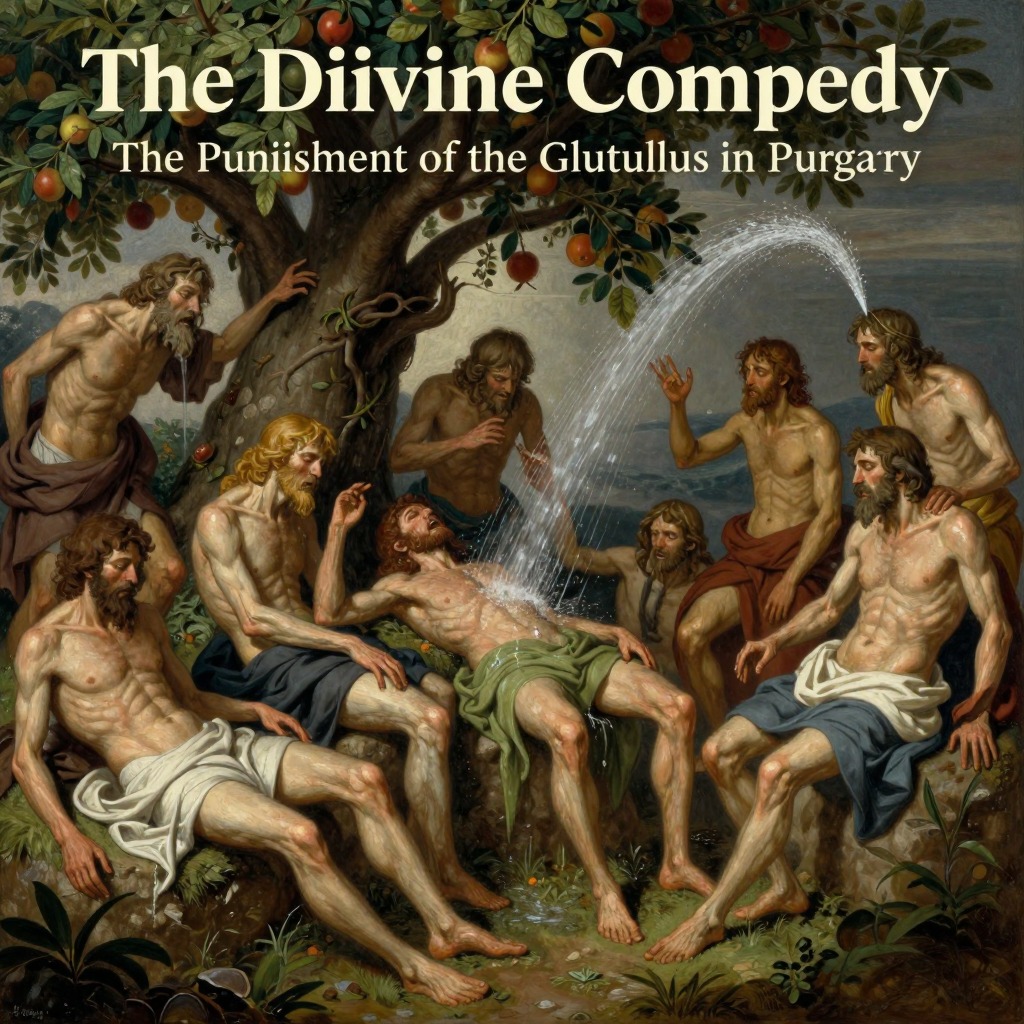
Buonagiunta da Lucca, a thirteenth-century Italian poet and notary, appears among the penitent gluttons on the sixth terrace of Purgatory, where his encounter with Dante becomes a pivotal moment for the poem's meditation on the history of vernacular love poetry and the emergence of the "sweet new style." Though physically emaciated by the purgatorial hunger that defines his terrace, Buonagiunta's role is primarily intellectual and literary: he recognizes Dante as the practitioner of a new poetic mode that he and his contemporaries could not achieve, and he offers a prophecy concerning a woman from Lucca who will make Dante view that city favorably. His presence in the poem marks a clear distinction between the older, more ornate school of Italian poetry and the direct, inspired style that Dante, through the influence of love itself, claims to practice.
Identity and Background
Buonagiunta da Lucca was a poet and a notary active in the thirteenth century, known for his compositions in the vernacular. In the poem, he is identified by Forese Donati, who points him out to Dante among the crowd of penitent gluttons, describing him as "Buonagiunta, of Lucca" . His historical reputation as a poet of the older school is confirmed by his own words in the encounter: he speaks of himself as one who, along with "the Notary" (Giacomo da Lentini) and Guittone d'Arezzo, was held "short of the sweet new style" that Dante now represents . This places him within the generation of Italian poets who preceded the stylistic revolution associated with Dante and his circle.
Encounter on the Sixth Terrace
Dante first notices Buonagiunta because the Lucchese poet seems to take "most cognizance" of him among the other shades . Buonagiunta murmurs something that Dante cannot fully catch, but he hears the name "Gentucca" from that place . When Dante invites him to speak, Buonagiunta responds with a prophecy: "A maid is born, and wears not yet the veil, who to thee shall pleasant make my city, howsoever men may blame it" . This prediction, that a woman named Gentucca will one day make Lucca agreeable to Dante, is a gesture of goodwill and a promise of future hospitality from a city that the poet might otherwise disdain.
The Discussion of Poetic Style
The most significant aspect of the encounter is Buonagiunta's recognition of Dante's poetic innovation. He asks Dante directly if he is the one who "forth evoked the new-invented rhymes, beginning, 'Ladies, that have intelligence of love?'" . Dante's reply is a famous statement of his poetic method: "One am I, who, whenever Love doth inspire me, note, and in that measure which he within me dictates, singing go" . Buonagiunta immediately understands the distinction: "O brother, now I see the knot which me, the Notary, and Guittone held short of the sweet new style that now I hear. I do perceive full clearly how your pens go closely following after him who dictates, which with our own forsooth came not to pass" . This exchange explicitly contrasts the artificial, learned poetry of the earlier school with the inspired, love-directed verse of the "dolce stil novo."
Thematic Significance
Buonagiunta da Lucca functions as a literary-historical marker within the Divine Comedy, representing the older generation of Italian poets whose work, however accomplished, lacked the direct inspiration from love that Dante claims for his own. His humble acknowledgment of Dante's superiority—"and he who sets himself to go beyond, no difference sees from one style to another" —is a moment of critical self-awareness and generosity that contrasts with the pride often associated with the sin of gluttony being purged on this terrace. The prophecy of Gentucca also ties Buonagiunta to the theme of future exile and hospitality, suggesting that even cities Dante might initially dislike will offer him kindness. After this exchange, Buonagiunta, "as if satisfied, held his peace" , and the penitent souls, driven by their purgatorial hunger and desire, hurry onward in their disciplined procession.