Constantine
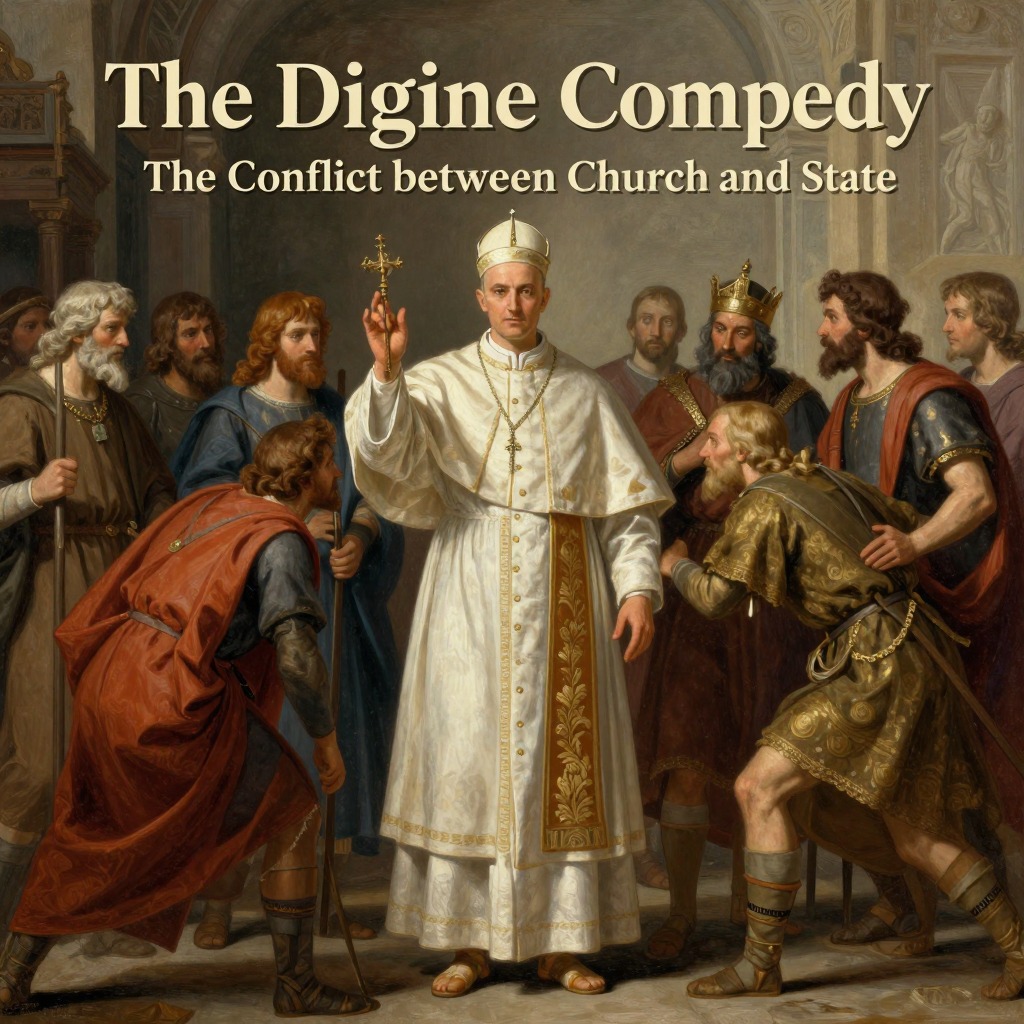
Constantine I, the Roman emperor who legalized Christianity and founded Constantinople, appears in the Divine Comedy not as a character but as a pivotal historical figure whose actions are repeatedly invoked to diagnose the political and spiritual ills of Dante's own time. His reign represents the ideal of a secular ruler who respected the Church's spiritual mission without usurping its authority, yet his alleged Donation of Constantine—the grant of temporal sovereignty over the Western Roman Empire to Pope Sylvester I—is condemned as the original sin that corrupted the papacy and entangled it in worldly affairs. Dante's treatment of Constantine thus serves as a touchstone for the poem's central argument about the proper separation of spiritual and temporal power.
The Donation of Constantine as the Root of Corruption
The most damning reference to Constantine occurs in the Inferno, where Dante, standing before the upside-down Pope Nicholas III in the circle of the simoniacs, delivers a fierce invective against the Church's greed for temporal wealth. He cries out, "Ah, Constantine! of how much ill was mother, / Not thy conversion, but that marriage dower / Which the first wealthy Father took from thee!" (Inferno XIX, 115-117). The "marriage dower" is the Donation of Constantine, the supposed grant of imperial lands and authority to Pope Sylvester I. Dante argues that it was not Constantine's conversion to Christianity that caused harm, but his gift of temporal power—a gift that transformed the papacy from a poor, spiritual institution into a wealthy, corrupt one. This single act, in Dante's view, set the Church on a path of avarice and political ambition that led to the simony, nepotism, and moral decay he denounces throughout the poem.
The Ideal of Imperial Authority Separate from the Church
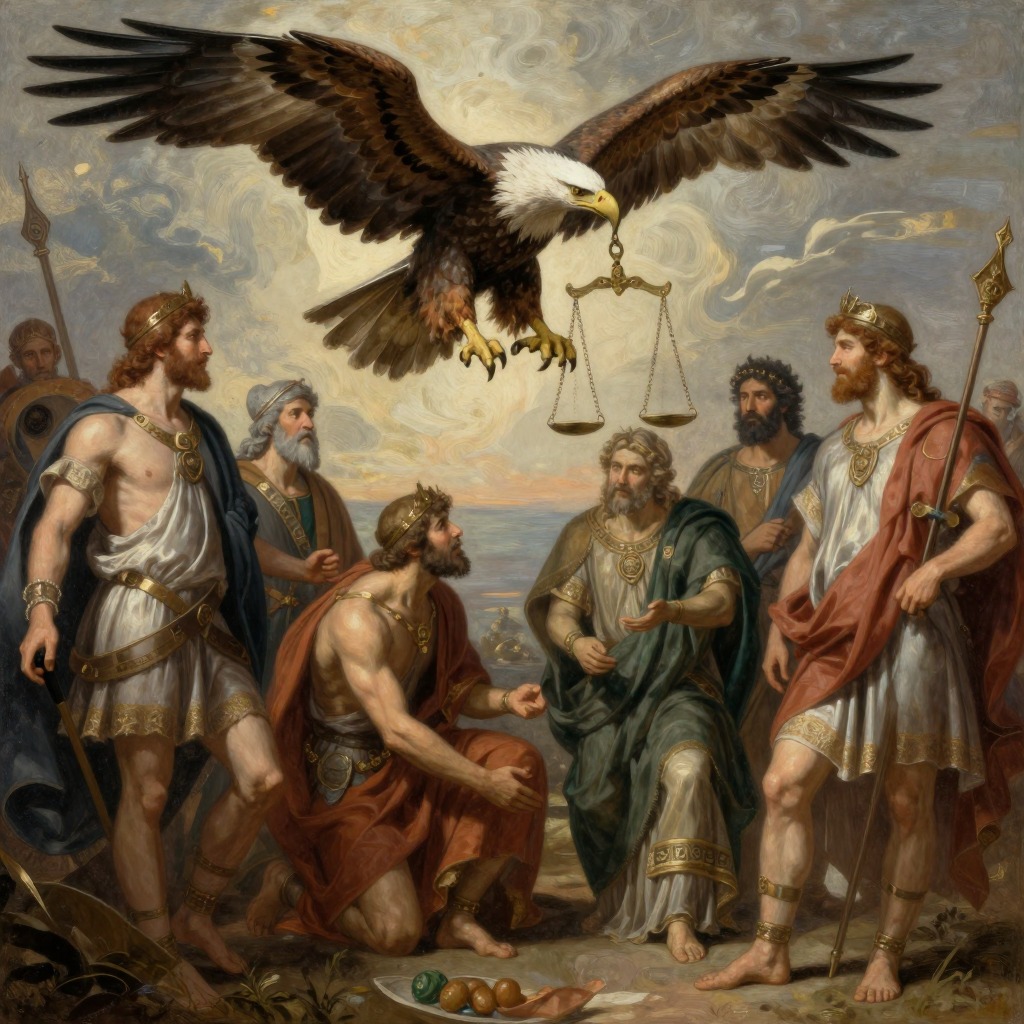
In the Purgatorio, the theme of Constantine's legacy is developed more systematically through the discourse of Marco Lombardo. When Dante asks why the world has become so corrupt, Marco replies that the cause is not the stars but human misrule, and he traces the disaster to the fusion of spiritual and temporal authority. He declares, "Rome, that reformed the world, accustomed was / Two suns to have, which one road and the other, / Of God and of the world, made manifest. / One has the other quenched, and to the crosier / The sword is joined, and ill beseemeth it / That by main force one with the other go" (Purgatorio XVI, 106-111). The "two suns" are the Pope (spiritual authority) and the Emperor (temporal authority), each meant to guide humanity along its proper path. Constantine's Donation, by giving the Pope temporal power, "quenched" one of these suns, merging the sword and the crosier and creating a monstrous confusion of roles. Marco explicitly blames the Church for this usurpation: "Hence, if the present world doth go astray, / In you the cause is, be it sought in you" (Purgatorio XVI, 82-83). Constantine himself is not blamed for his conversion, but his political gift is seen as the catastrophic error that destroyed the balance of powers.
The Contrast with Constantine's Own Reign
Dante's critique of the Donation does not extend to Constantine's personal faith or his role as a Christian emperor. In the Paradiso, the emperor Justinian, recounting the history of the Roman Eagle, notes that Constantine "turned the eagle against the course of heaven" by moving the imperial capital from Rome to Constantinople (Paradiso VI, 1-3). This act, while not condemned in itself, is presented as a deviation from the Eagle's proper westward course. Yet Constantine is never placed among the damned; his error is political, not personal. The poem implicitly contrasts the humble, spiritually minded Church of the early popes—"Came Cephas, and the mighty Vessel came / Of the Holy Spirit, meagre and barefooted, / Taking the food of any hostelry" (Paradiso XXI, 127-129)—with the wealthy, power-hungry papacy that the Donation enabled. Constantine's own reign, before the Donation, is thus held up as a model of proper imperial conduct: the emperor governs the temporal realm, while the Church tends to the spiritual, each respecting the other's sphere.
Narrative Role and Thematic Significance
Constantine functions in the Comedy as a historical exemplum of the dangers of mixing spiritual and temporal authority. His name is invoked at key moments of political and moral argument—in the Inferno to condemn simony, in the Purgatorio to explain the world's corruption, and implicitly in the Paradiso to define the proper order of Christendom. He is not a character who speaks or appears, but a figure whose legacy is debated and whose actions are weighed. Through Constantine, Dante articulates his vision of a reformed Christendom in which the Emperor rules the secular world and the Pope guides souls, each independent and supreme in its own domain. The Donation of Constantine, whether historical or legendary, becomes the emblem of everything that went wrong when the Church abandoned its spiritual mission for earthly power. Constantine himself, the emperor who both Christianized Rome and, in Dante's view, inadvertently corrupted the papacy, stands as a tragic figure—a well-intentioned ruler whose gift unleashed centuries of conflict and decay.