Dante Alighieri
Dante Alighieri, the Florentine poet who serves as both the protagonist and the narrator of the Divine Comedy, is a figure whose journey from the dark wood of error to the vision of God defines the poem's spiritual and literary architecture. Midway upon the journey of his life, he finds himself lost within a dark forest, having abandoned the straightforward pathway. His subsequent pilgrimage through the three realms of the afterlife—Hell, Purgatory, and Paradise—is at once a personal quest for salvation, a political commentary on his times, and an allegorical representation of the soul's ascent to God. As a character, Dante is defined by his intense emotional responses, his intellectual curiosity, his deep attachments to his native Florence, and his gradual transformation from a fearful and bewildered man into a purified soul ready for divine union.
Identity and Background
Dante Alighieri is a historical figure, a Florentine poet and philosopher born in 1265, who in the poem presents himself as a living man granted a unique vision of the afterlife. He is a Tuscan, a native of Florence, a city he loves and laments, and he is deeply learned in classical literature, philosophy, and theology. He reveres Virgil as his master and author, the source of the beautiful style that has done him honor, and he is a devoted follower of Beatrice, the woman he loved from his youth and who becomes his guide through Paradise. His identity is also shaped by his political exile from Florence, a fate that is prophesied to him during his journey and that colors his perspective on justice and corruption.
Life and Plot Trajectory
Dante's journey begins in the dark forest, where he is assailed by three beasts—a panther, a lion, and a she-wolf—that block his attempt to climb a sunlit hill. The Roman poet Virgil appears to him, sent by Beatrice at the behest of the Virgin Mary and Saint Lucia, and offers to guide him through the eternal places. Dante first descends through the nine circles of Hell, witnessing the punishments of the damned and conversing with many historical and mythological figures. He then ascends the mountain of Purgatory, where he meets souls undergoing purification, and finally, with Beatrice as his guide, he rises through the nine spheres of Paradise to the Empyrean, where he is granted a vision of God. The entire journey takes place over the course of Easter week in the year 1300.
Key Actions and Objectives
Dante's primary objective is to escape the dark forest and the threat of the she-wolf, and to reach the blessedness of Heaven. He agrees to follow Virgil through Hell and Purgatory, and later to follow Beatrice through Paradise, in order to achieve this. Along the way, he actively questions the souls he meets, seeking to understand the nature of sin, punishment, and redemption. He also learns about the future of Florence and his own exile. His actions include fainting from pity at the story of Paolo and Francesca, boldly rebuking the simoniac Pope Nicholas III, and weeping with shame before Beatrice's reproaches. His ultimate goal is to return to the world and write down what he has seen, so that his poem may lead others to salvation.
Relationships and Conflict
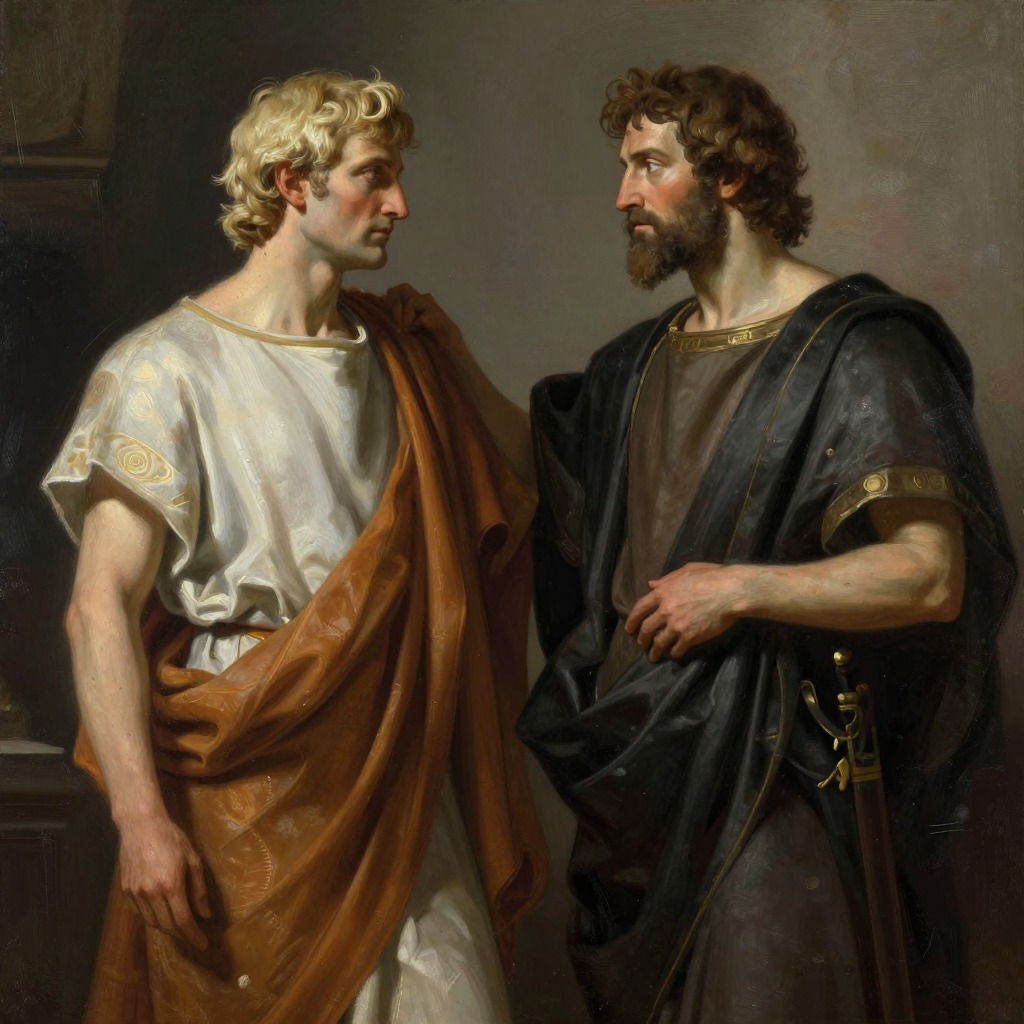
Dante's relationship with Virgil is that of a devoted student to a revered master; Virgil is his guide, his comfort, and his source of wisdom through Hell and most of Purgatory. The departure of Virgil, who cannot enter Paradise because he lived before Christianity, is a moment of profound grief for Dante. His relationship with Beatrice is the central emotional and spiritual axis of the poem. She is the object of his lifelong love, the one who intercedes for him in Heaven, and the one who ultimately leads him to God. Her initial sternness and reproaches for his past sins cause him great shame, but her smile and beauty become sources of ineffable joy. Dante also experiences conflict with many of the damned souls he encounters, such as Filippo Argenti, Bocca degli Abati, and Vanni Fucci, and he feels pity, horror, and sometimes righteous anger. His internal conflict is between his human weaknesses—fear, pity, intellectual doubt—and the divine purpose of his journey.
Change and Ending
Dante undergoes a profound transformation over the course of the poem. He begins lost, fearful, and full of pity for the damned, but Virgil teaches him to harden his heart against sin and to trust in divine justice. In Purgatory, he is purged of his own sins, symbolized by the seven P's carved on his forehead by the angel at the gate, which are gradually erased as he ascends. His confession to Beatrice and his passage through the rivers Lethe and Eunoe complete his purification. By the end of the poem, he has become a soul prepared for the vision of God. The final vision, in which he sees the threefold circle of the Trinity and the human form within it, leaves him with a transformed will and desire, moved by the love that moves the sun and the other stars.
Narrative Role and Evaluation
Dante is both the protagonist and the narrator of the Divine Comedy, a dual role that allows him to be both the subject of the journey and the poet who retrospectively shapes the experience into art. His character serves as a universal Everyman, representing the human soul's journey from sin to salvation, but he is also a highly specific individual with a personal history, political loyalties, and a distinctive poetic voice. His emotional reactions—fear, pity, anger, joy, shame—make the abstract theological landscape of the afterlife vivid and relatable. The poem is a record of his education in sin, virtue, and divine love, and his ultimate success in achieving the beatific vision serves as a model for the reader's own spiritual aspiration. His journey is the structural backbone of the entire work, and his personal story of exile and hope gives the poem its urgent, autobiographical dimension.