Empress Constance
Empress Constance is a blessed spirit whom Dante encounters in the Heaven of the Moon, the first and slowest of the celestial spheres, where she appears together with Piccarda Donati. Her story—a nun torn from the cloister to become the wife of Henry VI and the mother of Frederick II—exemplifies the poem's exploration of broken vows, the nature of true freedom, and the serene acceptance of one's place in the divine order. Though placed in the lowest heaven, Constance radiates a joy that is complete, teaching Dante that in Paradise all souls are equally content, their happiness measured not by rank but by their perfect conformity to God's will.
Identity and Background
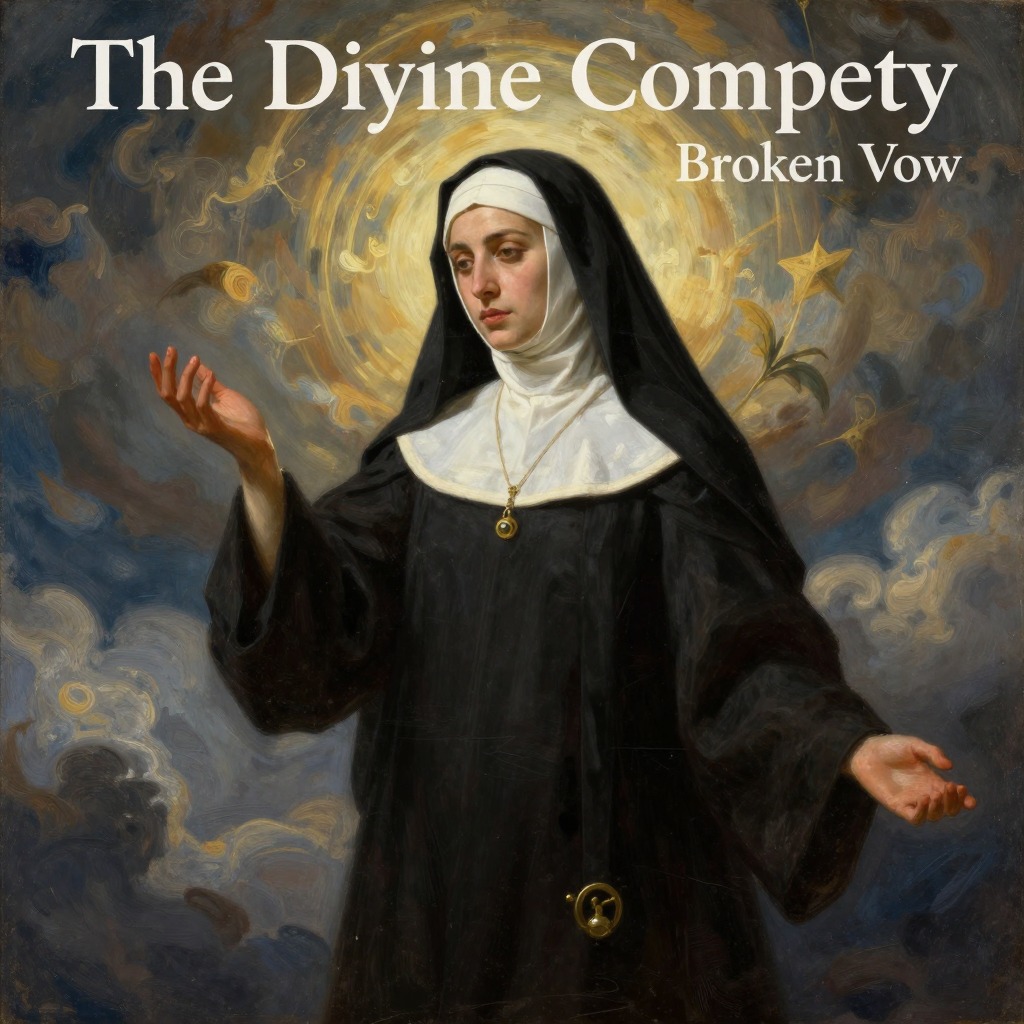
Constance was a nun who had taken religious vows but was forced from her convent to marry. As Piccarda explains, she was "a nun" and "from her head / Was ta'en the shadow of the sacred wimple." Despite being returned to the world "against her wishes and against good usage," she "never was divested" of the "heart's veil"—her inner commitment to her sacred calling. She is identified as "of great Costanza," who "from the second wind of Suabia / Brought forth the third and latest puissance," meaning she was the wife of Henry VI of the Hohenstaufen dynasty and the mother of Frederick II, Holy Roman Emperor. Her forced marriage was a political act designed to produce an heir for the empire.
Life and Plot Trajectory
Dante first learns of Constance indirectly when Piccarda, speaking in the Heaven of the Moon, uses her own story as a parallel. Piccarda says that what she says of herself applies equally to Constance: both were nuns who were forcibly removed from their convents. Constance's life was marked by this violent rupture—she was taken from the religious life she had chosen and compelled into a marriage that served dynastic purposes. Yet her soul remained faithful to its original vow, and she is now blessed in Paradise, her inner devotion having outlasted the external coercion she suffered.
Key Actions and Objectives
Constance's defining action is not something she did but something she endured: she was torn from the cloister and forced to marry, yet she never surrendered her inner fidelity to God. As Piccarda states, "Of the heart's veil she never was divested." This distinction between external compliance and internal steadfastness is central to Dante's understanding of moral responsibility. Constance's objective in Paradise is simply to be where God has placed her, rejoicing in the divine will that has assigned her to the slowest sphere. When Dante asks whether the souls in lower heaven desire a higher place, Piccarda—speaking for both herself and Constance—replies that their will is "quieted by virtue / Of charity, that makes us wish alone / For what we have, nor gives us thirst for more." Constance's peace is the peace of perfect acceptance.
Relationships and Conflict
The central conflict of Constance's life was between her own will and the external force that removed her from the convent. This tension is explored theologically in Paradiso IV, where Beatrice explains that violence does not excuse a soul if the will does not resist absolutely. Constance's case is distinguished from that of a martyr: she yielded to force, though her inner commitment remained intact. Her relationship with Piccarda is one of shared experience and mutual understanding—both were nuns forced into the world, and both now shine in the same sphere. Her relationship with her son, Frederick II, is mentioned only indirectly, as the historical consequence of her marriage.
Change and Ending
Constance's journey from the cloister to the imperial court and finally to Paradise traces a movement from coerced action to freely embraced submission to God. In the Heaven of the Moon, she appears as a "splendour" that "reveals / Itself on my right side, and is enkindled / With all the illumination of our sphere." She sings "Ave Maria" and then vanishes "as through deep water something heavy." Her ending is one of quiet beatitude: she has no further story because she has arrived at the state where all desire is fulfilled in God. Her presence in the slowest sphere is not a punishment but a gift, for she receives exactly the measure of grace that suits her.
Narrative Role and Evaluation
Constance serves as a key example in Dante's theological argument about vows, violence, and the will. Alongside Piccarda, she illustrates that souls in Paradise are arranged hierarchically according to their capacity for grace, yet all are perfectly happy because their wills are wholly united with God's. Her story also provides a historical anchor, linking the celestial realm to the political turmoil of the Hohenstaufen dynasty. Beatrice uses Constance's case to clarify the distinction between absolute will and conditional will, showing that a soul may be forced externally while remaining internally free. Constance thus functions as a living proof of the principle that "in His will is our peace"—a peace that transcends the injustices of earthly life.