Marco Lombardo
Marco Lombardo is a soul encountered by Dante and Virgil on the third terrace of Purgatory, where the sin of Wrath is purged. A courtly Lombard who knew the world and loved excellence, Marco delivers a sustained discourse on the causes of human depravity, arguing that the corruption of the world stems not from the stars but from evil leadership, particularly the Church's usurpation of temporal power. His speech constitutes one of the poem's most explicit statements on free will and the proper separation of spiritual and secular authority.
Identity and Background
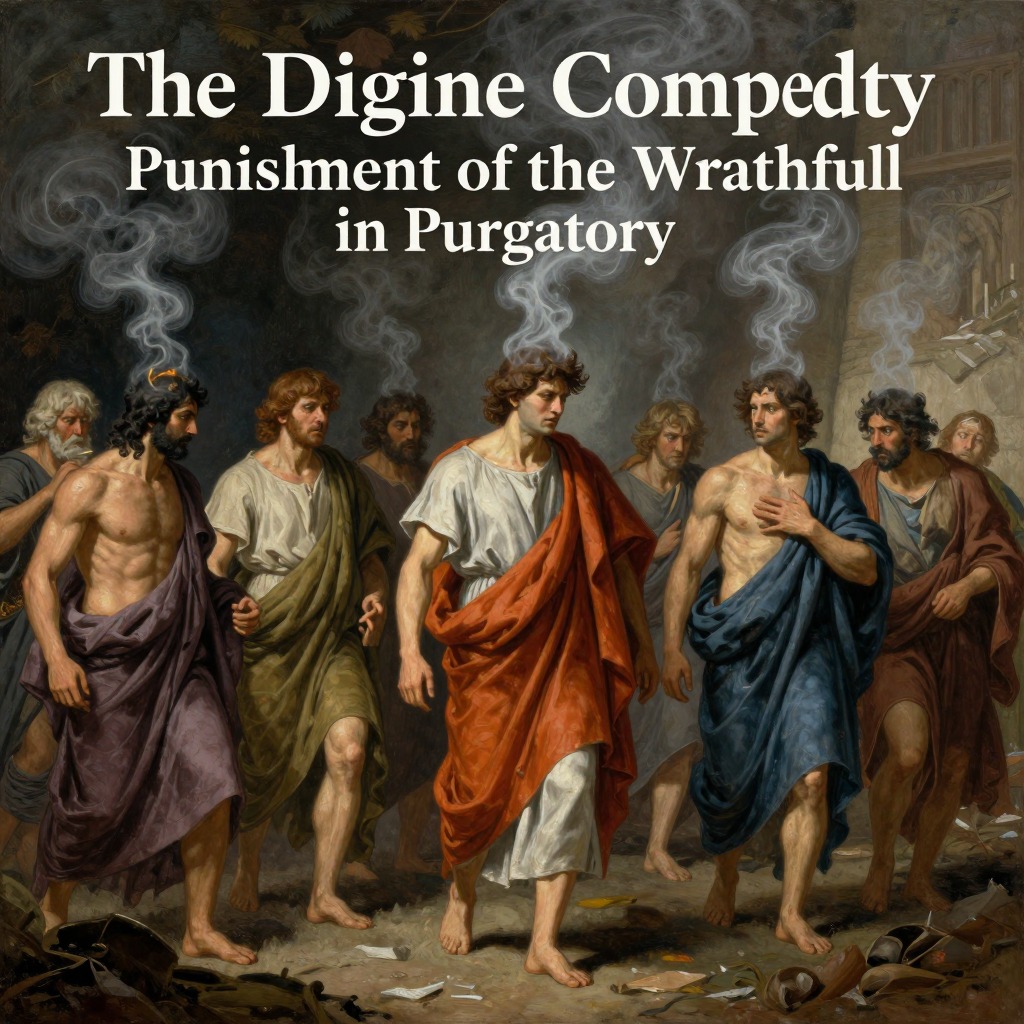
Marco Lombardo identifies himself as a Lombard who "knew the world, and loved that excellence, at which has each one now unbent his bow." He speaks with the authority of a man who has seen the decline of virtue firsthand. His presence on the terrace of the Wrathful indicates that he is purging the sin of anger, though his discourse reveals a righteous indignation at the state of the world rather than personal malice. He is encountered in the thick smoke that envelops the third terrace, a fitting punishment for those whose anger clouded their reason in life.
Discourse on Free Will and the Cause of Evil
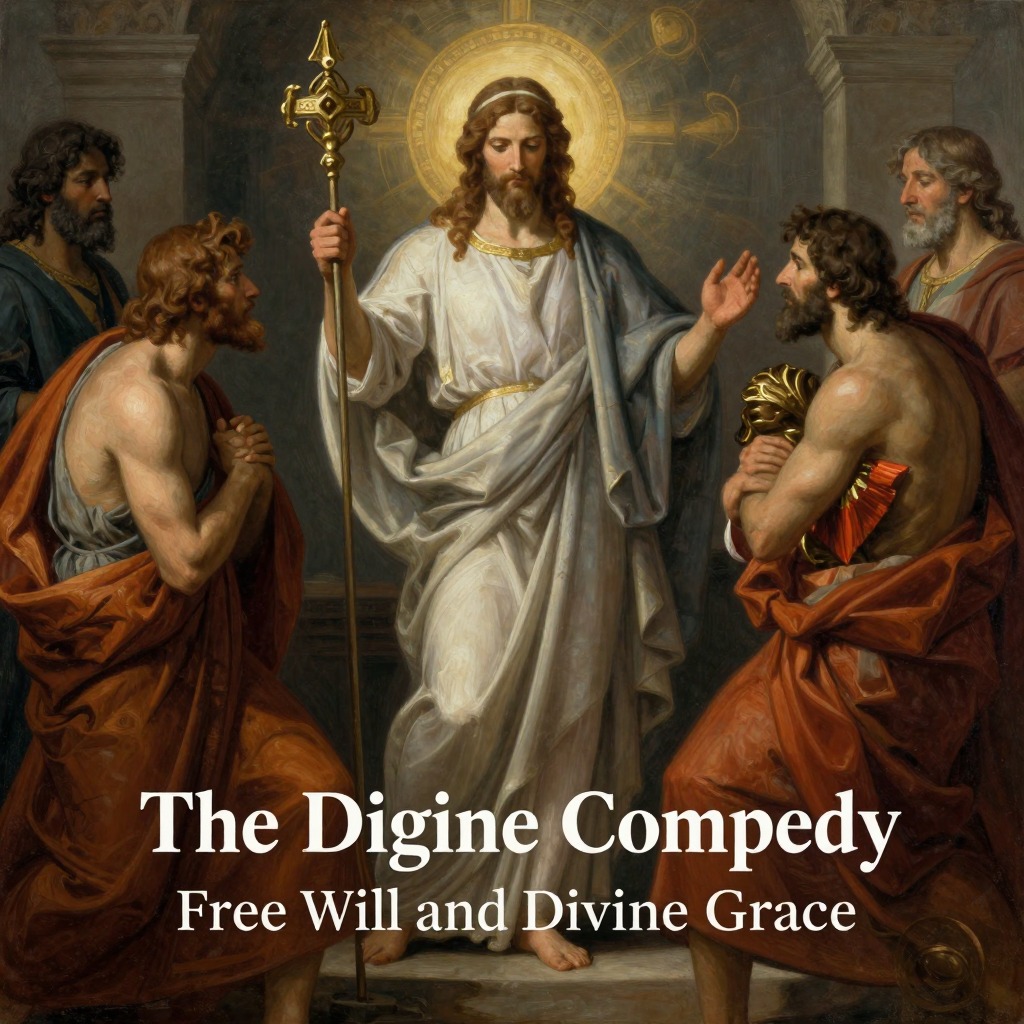
When Dante asks him to explain why the world is "utterly deserted by every virtue" and "with iniquity is big and covered," Marco delivers a philosophical response that directly addresses the question of moral responsibility. He rejects the deterministic view that all human actions are governed by the heavens, arguing that if this were so, "in you would be destroyed free will, nor any justice would there be in having joy for good, or grief for evil." He insists that while the heavens may initiate movements, "light has been given you for good and evil, and free volition; which, if some fatigue in the first battles with the heavens it suffers, afterwards conquers all, if well 'tis nurtured." This affirmation of human freedom is central to the poem's moral framework.
Critique of Church and State
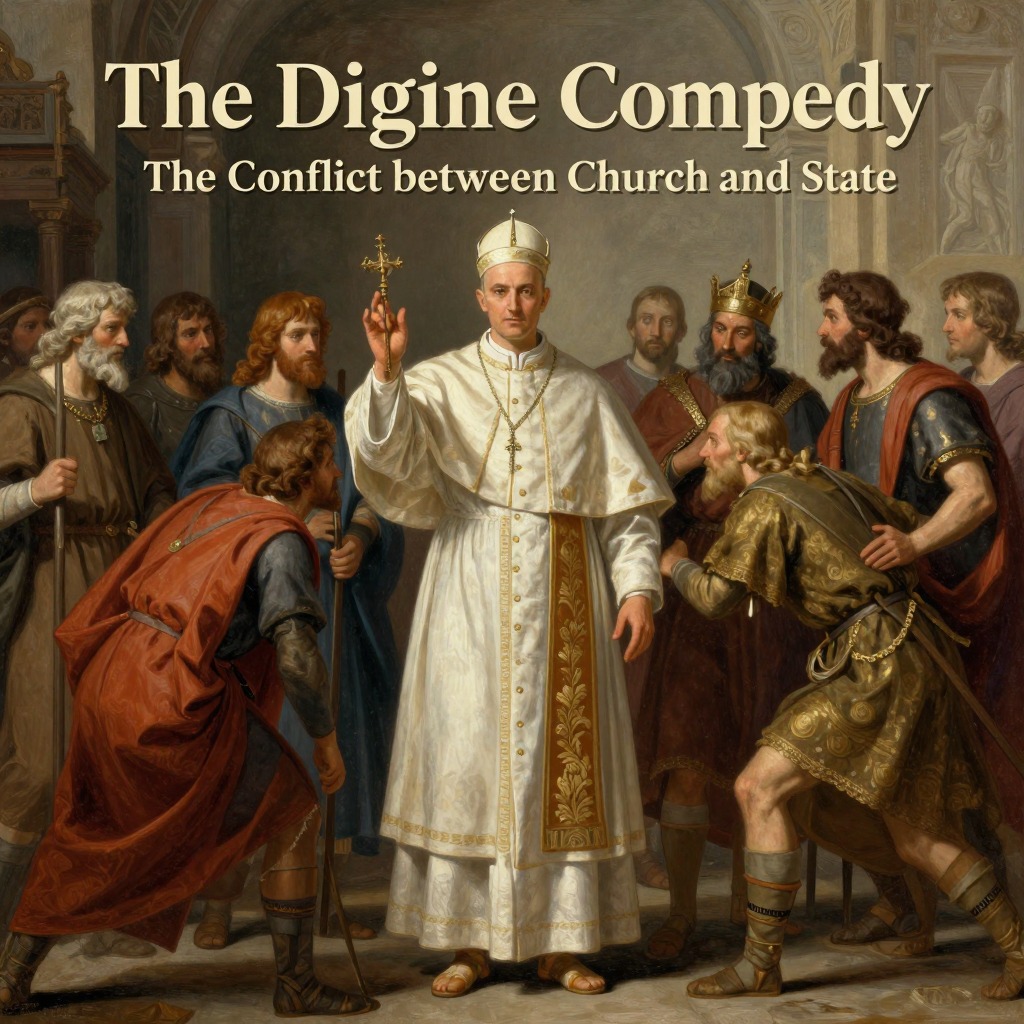
Marco traces the world's corruption to the confusion of spiritual and temporal authority. He recalls that Rome, which once reformed the world, "accustomed was two suns to have, which one road and the other, of God and of the world, made manifest." But now, he laments, "one has the other quenched, and to the crosier the sword is joined, and ill beseemeth it that by main force one with the other go." The Church, by usurping the authority of the empire, has fallen into the mire. He names the region "laved by Po and Adige" as a place where "valour and courtesy used to be found, before that Frederick had his controversy," but now only three old men remain as exemplars of the old virtues: Currado da Palazzo, good Gherardo, and Guido da Castel.
The Simple Soul and the Need for Law
Marco offers a psychological account of how the soul, created by God, is initially innocent but easily led astray. He describes the soul as issuing "from the hand of Him, who fondles it before it is, like to a little girl weeping and laughing in her childish sport." This simple soul, knowing nothing except that it proceeds from a joyous Maker, "gladly it turns to that which gives it pleasure." It is cheated by trivial goods and runs after them unless guided by law and a king who can discern the tower of the true city. The laws exist, he says, but no one applies them, because the shepherd who precedes "can ruminate, but cleaveth not the hoof"—a reference to the clergy's failure to lead by example.
Narrative Role and Significance
Marco Lombardo serves as a mouthpiece for Dante's own political and theological convictions. His speech echoes themes developed throughout the poem: the primacy of free will, the necessity of a just emperor, and the disastrous consequences of the Church's temporal ambitions. His critique of the papacy's entanglement in secular affairs anticipates the more vehement condemnations delivered by St. Peter in Paradiso. Marco's discourse also provides a philosophical foundation for the structure of Purgatory itself, where souls are purged of sins that arise from misdirected love, a love that can be corrected by reason and grace.