Matilda
Matilda is the beautiful lady who appears in the Earthly Paradise at the summit of Mount Purgatory, serving as Dante's guide to the river Lethe and the threshold of Beatrice's arrival. She embodies the innocence and joy of the prelapsarian state, and her role is to prepare the pilgrim for the final stage of his purification by leading him through the waters of forgetfulness.
Identity and Appearance
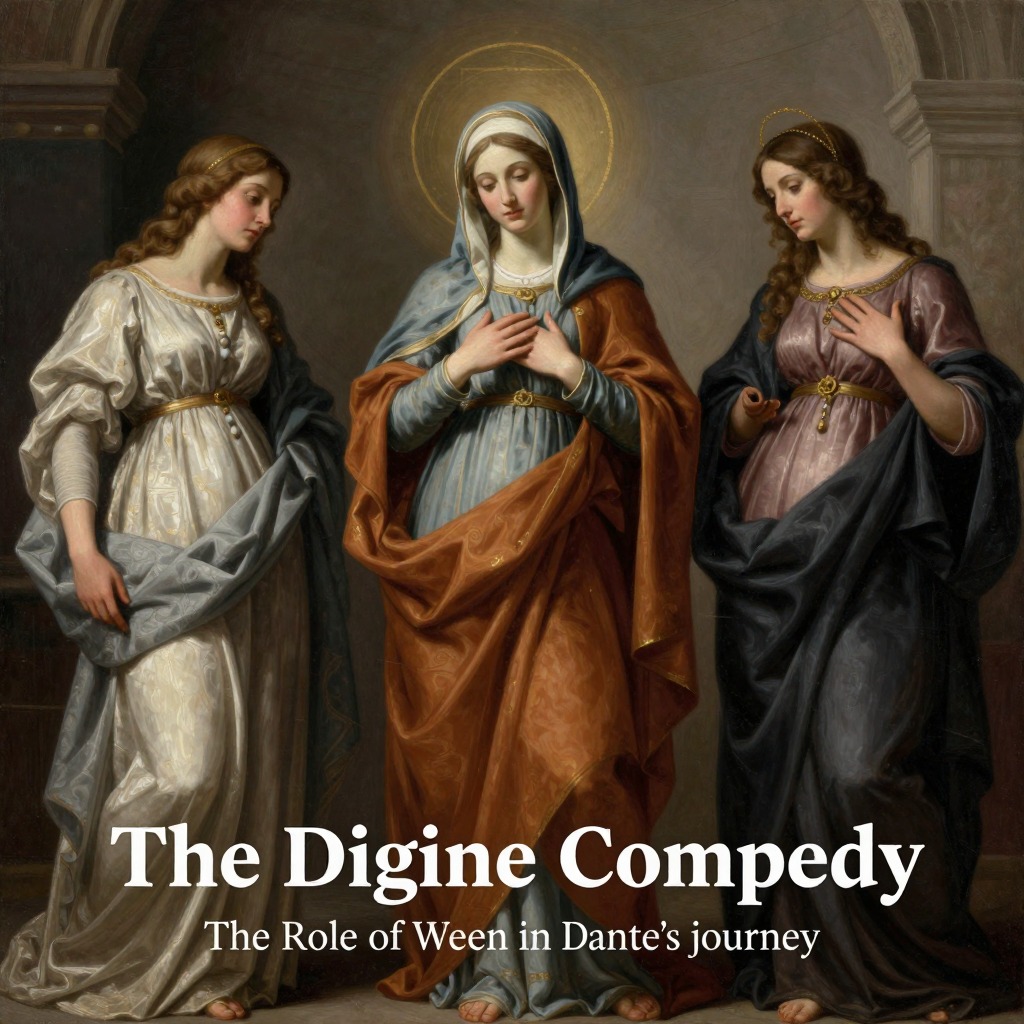
Matilda is introduced in the Earthly Paradise, a place of perpetual spring and innocence. She is first seen walking alone along the bank of a stream, singing and gathering flowers, with which her path is painted. Her movements are graceful and modest: she turns towards Dante with feet together, like a lady dancing, and casts down her eyes like a modest maiden. She is described as a lady all alone, and her beauty is such that Dante compares her to Proserpina at the moment she was lost, and to Venus when transfixed by her own son's arrow. She is the first inhabitant of the Earthly Paradise that Dante encounters, and she immediately establishes the tone of the place as one of serene, natural joy.
Role as Guide to Lethe
Matilda's primary function is to lead Dante to the river Lethe and to immerse him in its waters. After Beatrice's stern reproach and Dante's confession, Matilda appears above him and says, "Hold me, hold me." She draws him into the stream up to his throat, moving lightly over the water like a shuttle. She then embraces his head and plunges him under, forcing him to swallow the water. This act of immersion is the final purification from the memory of sin, and Matilda is the agent of this cleansing. She then draws him forth, dripping, and leads him into the dance of the four cardinal virtues, who cover him with their arms. She is thus the direct instrument of the ritual that prepares Dante for the vision of Beatrice unveiled.
Relationship with Beatrice and the Virtues
Matilda is explicitly identified as a handmaid of Beatrice. The four nymphs who dance around Dante after his immersion explain that they were appointed as Beatrice's handmaids before she descended to the world, and that they will lead Dante to her eyes. Matilda, however, is the one who physically performs the immersion. Later, when Beatrice speaks of the rivers Lethe and Eunoe, she instructs Matilda to lead Dante to the Eunoe, saying, "Lead him to it, and, as thou art accustomed, revive again the half-dead virtue in him." Matilda obeys without excuse, taking hold of Dante and moving, and telling Statius to come with him. She is thus a trusted and obedient servant of Beatrice, entrusted with the final stages of Dante's purification.
Narrative and Thematic Significance
Matilda represents the state of original innocence that humanity lost through the Fall. She is the first human soul Dante meets in the Earthly Paradise, and her joyful, carefree activity—singing, gathering flowers, moving lightly—embodies the perfect harmony with nature that existed before sin. She is also a figure of the active life, in contrast to the contemplative life represented by Beatrice. In her first speech, she explains the nature of the Earthly Paradise, describing how the wind, the river, and the plants all participate in a divine order that is free from the disturbances of the lower world. She is the guide who leads Dante from the purgatorial process of purification to the direct encounter with divine revelation, making her an essential bridge between the human effort of the mountain and the grace of Paradise.