Oderisi d' Agobbio
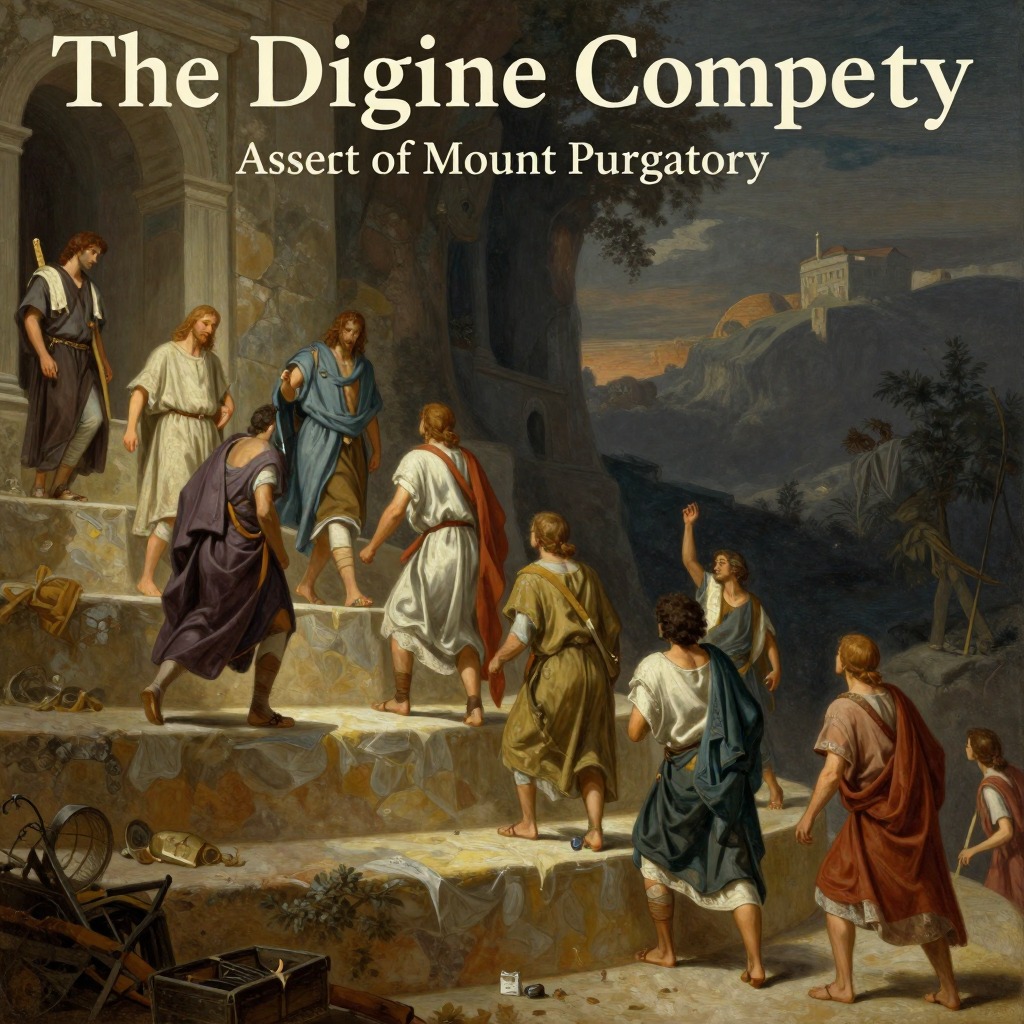
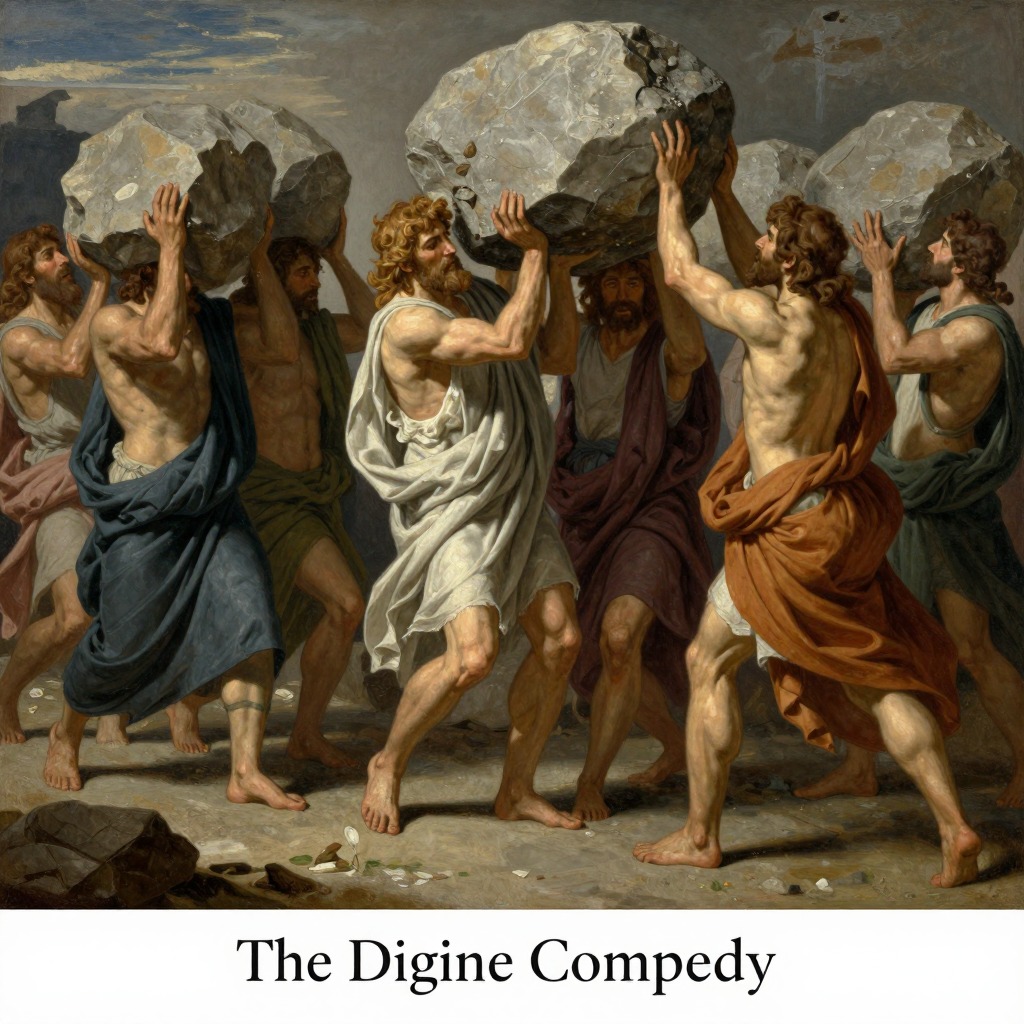
Oderisi d' Agobbio is a penitent soul on the first terrace of Mount Purgatory, where the sin of pride is purged. A once-renowned manuscript illuminator from Agobbio (modern Gubbio), he appears in Canto XI of the Purgatorio to deliver a profound meditation on the transience of earthly fame and the vanity of artistic ambition, using his own superseded reputation as a case study. His encounter with the pilgrim Dante Alighieri provides the poem's most explicit critique of worldly glory and a key lesson in humility, as Oderisi himself has learned through the purgatorial process that the renown he once prized is no more than a breath of wind.
Identity and Background
Oderisi identifies himself as a former master of the art of illumination, which he calls the art "which in Paris is called illuminating." He was once considered the honor of Agobbio in that craft. However, he now confesses that the leaves touched by the brush of Franco Bolognese are "more laughing" than his own, and that all the honor now belongs to Franco, with Oderisi's own share only partial. This admission of another's superiority is a direct reversal of the pride that defined his earthly life. He explains that he would not have been so courteous while living, because he was consumed by "the great desire of excellence" on which his heart was bent. It is for this pride that he now pays the forfeiture on the terrace of the proud, though he acknowledges that he would not be here at all if he had not, having the power to sin, turned to God.
Life and Plot Trajectory
Oderisi's role in the narrative is entirely didactic and reflective. He does not recount a dramatic life story of events and actions, but rather presents a philosophical and moral argument about the nature of fame. He uses his own case as a springboard to discuss the fleeting nature of artistic and political reputation. He points out that in painting, Cimabue once thought he would hold the field, but now Giotto has the cry, so that Cimabue's fame is growing dim. Similarly, one Guido (Guido Guinicelli) has taken from the other (Guido Cavalcanti) the glory of their tongue, and he suggests that another may already be born who will chase them both from the nest. Oderisi then extends this lesson to political power, pointing to Provenzan Salvani, who once had all Tuscany resounding with his name but now is scarcely lisped of in Siena, where he was once lord. Oderisi's trajectory is not one of action but of a soul learning to see its own insignificance in the face of eternity.
Key Actions and Objectives
Oderisi's primary action is his speech to Dante, which serves as a warning against pride. He does not ask for prayers or intercession for himself, but instead instructs Dante on the nature of worldly renown. His objective is to impart the lesson that "mundane rumour" is nothing but a breath of wind that comes now this way and now that, and changes name because it changes side. He asks Dante a rhetorical question: what more fame will a person have if their old flesh peels off from them, than if they had died before leaving childhood behind, even after a thousand years? He compares a thousand years to the eternal as a twinkling of an eye is to the slowest circle in heaven. His objective is to instill in Dante a proper humility, which Dante acknowledges, saying that Oderisi's true speech fills his heart with good humility and assuages a great tumor.
Relationships and Conflict
Oderisi's relationship with Dante is that of a teacher to a student. He is one of the few souls in Purgatory who does not ask Dante to carry a message to the living, but instead uses his own experience to correct Dante's potential vanity. The conflict is internal and intellectual: the struggle between the desire for earthly fame and the recognition of its ultimate worthlessness. Oderisi also references a relationship with Provenzan Salvani, the soul walking ahead of him, who was once a powerful lord in Siena. Oderisi explains that Salvani is here because he presumed to bring all of Siena into his hands. When Dante questions how Salvani could have ascended to Purgatory so quickly, given that he was a late penitent, Oderisi explains that Salvani performed a single act of profound humility—begging publicly in the Campo of Siena to raise ransom for a friend—which released him from the long wait in Ante-Purgatory. This story reinforces Oderisi's theme of the power of humility over pride.
Change and Ending
Oderisi himself has undergone a complete transformation. The proud artist who would not have been courteous to a rival is now the humble soul who freely acknowledges Franco Bolognese's superiority. His change is not a dramatic event but a gradual purgation, a stripping away of the vanity that once defined him. He ends his speech by pointing out Provenzan Salvani and then falls silent, having completed his lesson. Dante, deeply affected, continues his ascent with a new understanding of the emptiness of worldly glory. Oderisi's final contribution is to have planted the seed of humility in Dante's heart, a necessary preparation for the pilgrim's journey upward.
Narrative Role and Evaluation
Oderisi d' Agobbio serves as a crucial moral and thematic voice in the Purgatorio. He is the poem's primary exponent of the vanity of earthly fame, a theme that resonates throughout the entire Comedy. His speech is a masterful piece of rhetoric, using concrete examples from art and politics to illustrate an abstract philosophical point. He is not a character who drives the plot, but one who deepens the poem's spiritual and intellectual argument. His presence on the terrace of pride is perfectly fitting, as his sin was the very one he now helps Dante to avoid. Through Oderisi, Dante Alighieri critiques his own ambition as a poet, acknowledging that even the "sweet new style" he champions may one day be surpassed. Oderisi thus functions as a mirror for the poet himself, a reminder that all human achievement, no matter how brilliant, is subject to the erosion of time and the judgment of eternity.