Martha
Martha is one of Augustus Waters's two older half-sisters, both of whom live in Chicago and are married to what Augustus vaguely describes as "very fancy lawyer dudes. Or banker dudes." She is twenty-eight years old. Along with her sister Julie, Martha arrives in Indianapolis during the last weeks of Augustus's life, driving in from Chicago with her husband and three young sons. Her presence marks the shift from the intimate circle of Hazel, Isaac, and Augustus's parents to a wider, more conventional family gathering around the dying boy.
Identity and Background
Martha is introduced as part of a pair: she and Julie are the daughters of Mark and Cindy Waters from an earlier marriage, making them Augustus's half-sisters. They are significantly older than Augustus—old enough to have established careers and families of their own. Martha is married to a man named Dave, and she has three boys, all under the age of ten. The family lives in Chicago, and their arrival at the Waters home is a major event, bringing with it the noise and chaos of young children. Martha's role in the story is defined almost entirely by her relationship to Augustus as a grieving sister, and her interactions with him are filtered through a lens of sentimental, almost maternal affection.
Role During Augustus's Final Days
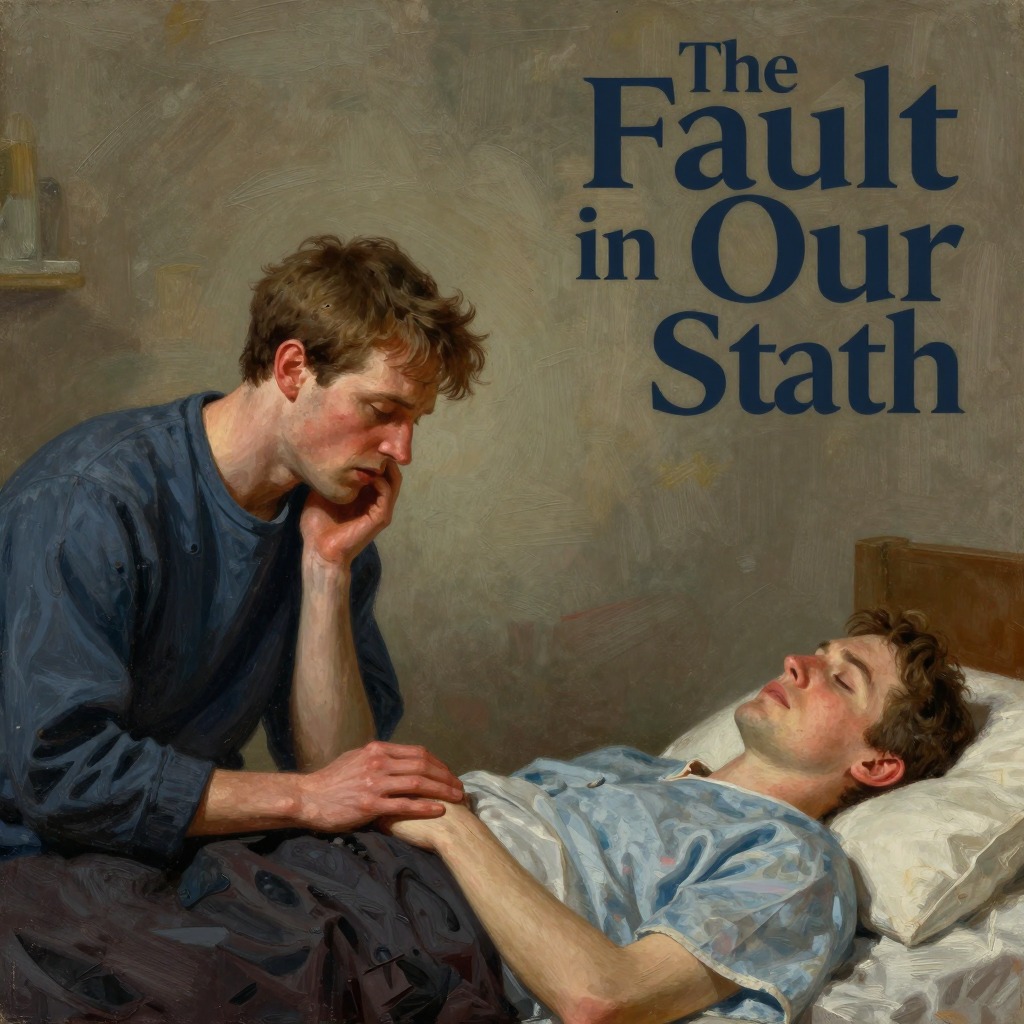
Martha appears most prominently during the last good day Hazel spends with Augustus. When Hazel arrives at the Waters house, Martha and Julie are already there, sitting on the edge of Augustus's hospital bed and speaking to him in a voice that Hazel finds infantilizing. Martha leans in toward Augustus and coos, "Our beautiful Gussy," a phrase that Hazel silently critiques as inappropriate, wondering if Augustus has simply pressed his pain pump to avoid the "Attack of the Well-Meaning Sisters." When Augustus wakes, he immediately asks for Hazel, and the family wheels him outside. There, Martha kneels beside him and tells him, "You've always had such beautiful eyes," a comment that Augustus deflects with his characteristic dark humor. Hazel, uncomfortable with the saccharine tone, interrupts Martha to say, "He's not that smart," prompting a brief, bantering exchange between Hazel and Augustus that restores their usual dynamic. Martha's presence, while loving, highlights the gap between the public, sentimental version of Augustus that his family wants to preserve and the private, ironic, and fiercely intelligent person Hazel knew.
At the Funeral
Martha speaks at Augustus's funeral, delivering a eulogy that follows the minister's remarks and Hazel's own address. The service is held in a small side room of the church, and Martha's words are part of a program that includes Isaac, a high school friend, and the minister. Hazel, sitting in the audience, does not record the content of Martha's speech, but the overall service strikes her as generic and unsatisfying—"It looked like any other funeral." Martha's participation, like that of the other speakers, is a conventional expression of grief that fails to capture the specific, complicated person Augustus was. After the service, Martha and her family join the rest of the Waters clan at the house, where her three boys run around the kitchen, shouting and playing, their noise and energy providing a sorely needed counterpoint to the oppressive silence of the grieving adults. Hazel observes that the children's chaotic presence seems to help Augustus's parents, who begin holding hands at the table.
Narrative Significance
Martha functions as a representative of the wider, conventional world of family and social expectation that surrounds Augustus's illness and death. Her well-meaning but cloying affection, her focus on Augustus's physical beauty, and her participation in a funeral that feels hollow to Hazel all underscore the central tension of the novel: the difficulty of truly knowing and honoring a person in the face of societal scripts about how to grieve. Martha's presence, along with Julie's, also emphasizes the isolation of Hazel's position—she is the one person who loved Augustus in a way that his family, for all their love, cannot fully replicate or understand. The contrast between Martha's sentimental "Gussy" and Hazel's sharp, loving banter defines the difference between public mourning and private, authentic connection.